1853–1912
Bakumatsu
The end of the bakufu and the Meiji Restoration (1853-1912) — Perry's arrival, the loyalist movement, and the birth of modern Japan.
-- 17 SUBJECTS ON FILE
SUBJECTS IN THIS ERA

SA-0071 / 1810
Ogata Kōan
The rangaku (Dutch learning) scholar who trained Fukuzawa Yukichi and Ōmura Masujirō at Tekijuku, and built the foundation of modern Japanese medicine and Western learning
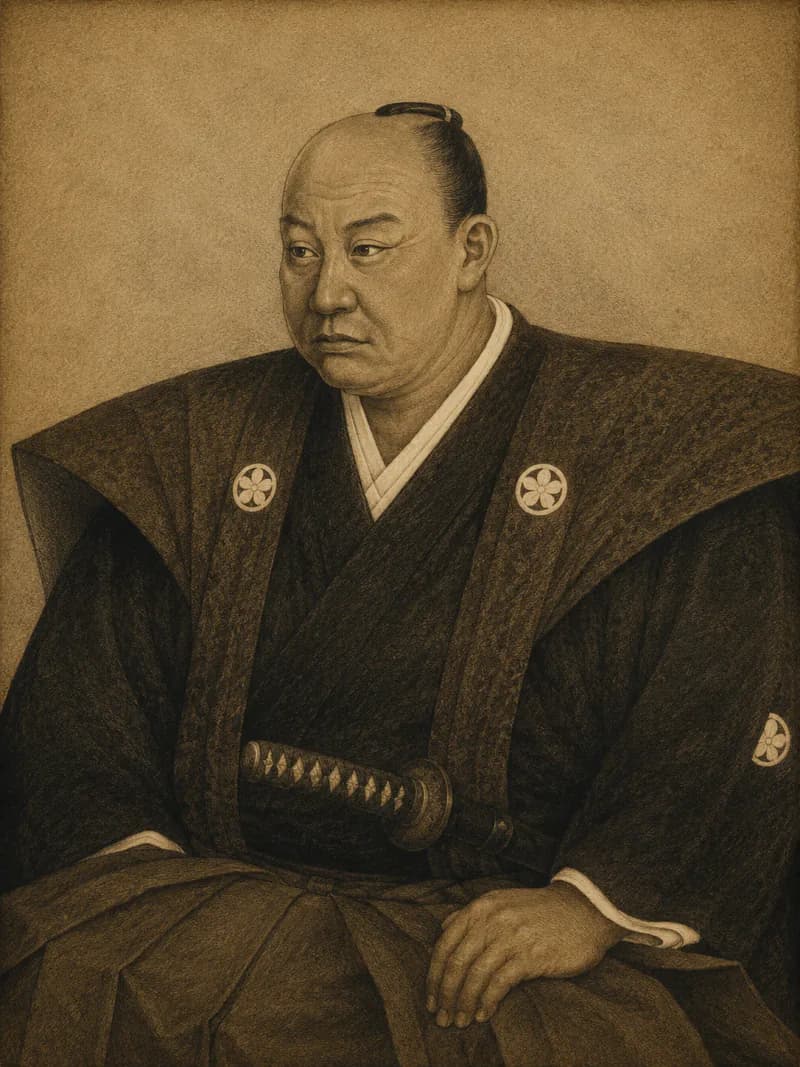
SA-0027 / 1815
Ii Naosuke
The Tairō who signed the unequal treaties — and was assassinated for it at the gates of Edo Castle
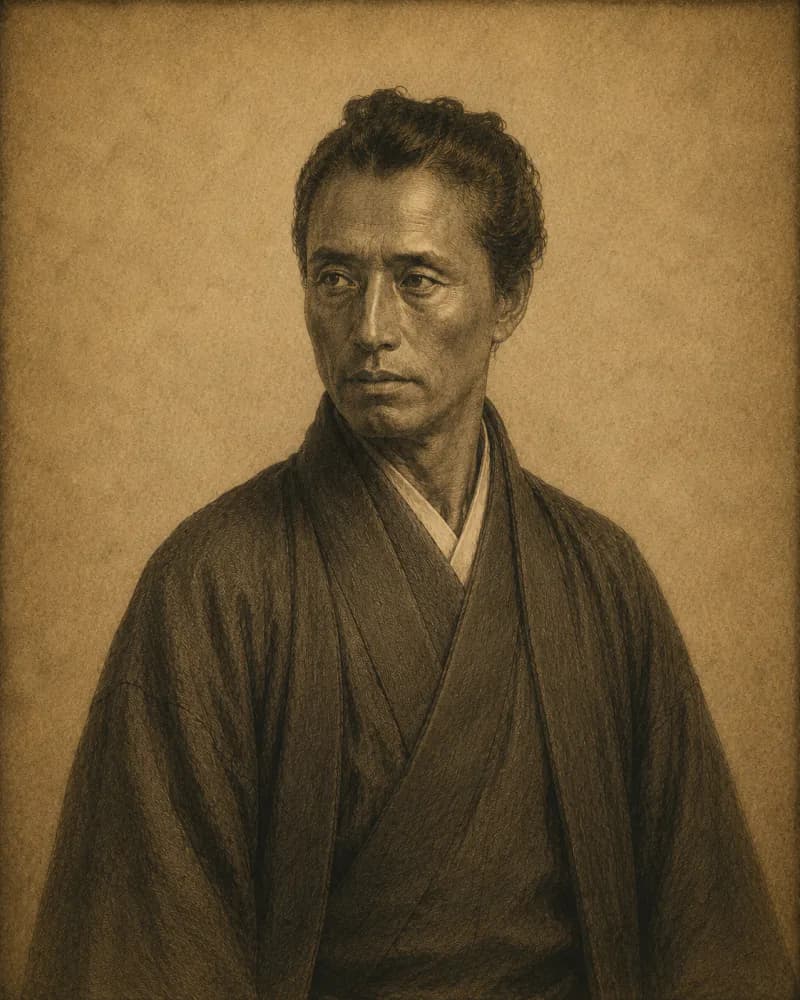
SA-0045 / 1823
Katsu Kaishū
The last navy minister of the shogunate who delivered the bloodless surrender of Edo and was Sakamoto Ryōma's master
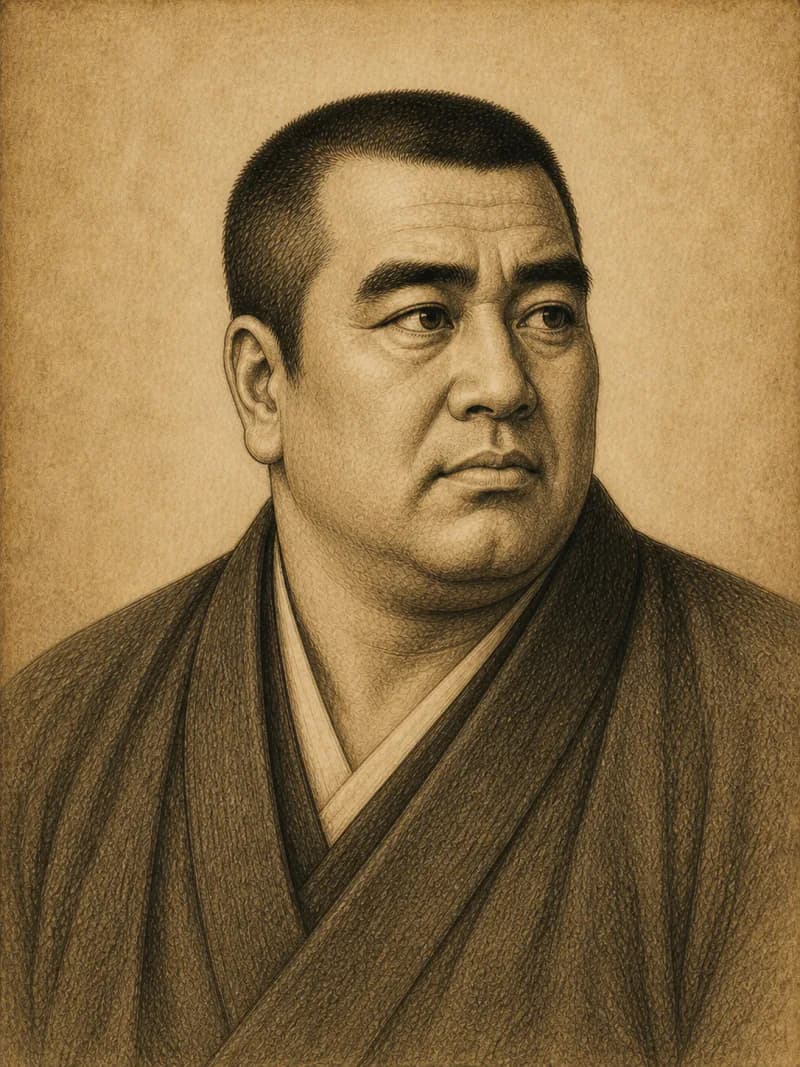
SA-0021 / 1828
Saigō Takamori
The architect of the Meiji Restoration who died fighting against the Meiji government he had built
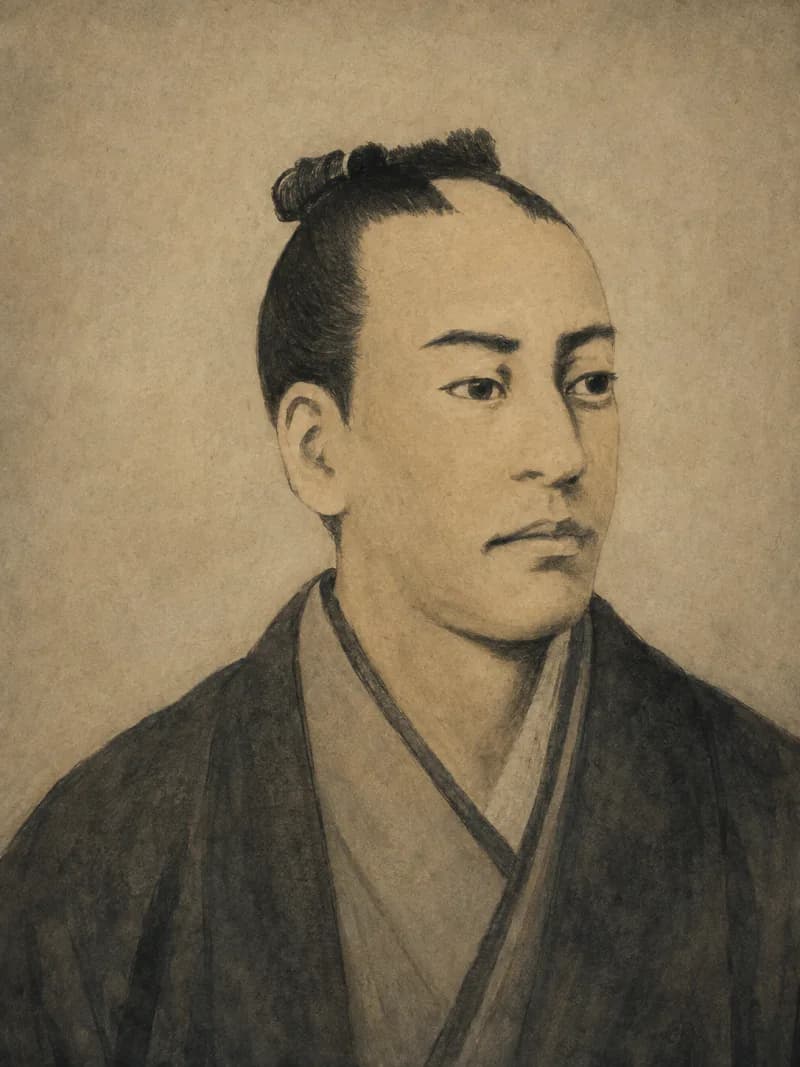
SA-0067 / 1829
Takechi Hanpeita
The shishi who led the Tosa Loyalist Party and directed the Bakumatsu 'tenchū' politics, and took his own life under Yamauchi Yōdō's suppression
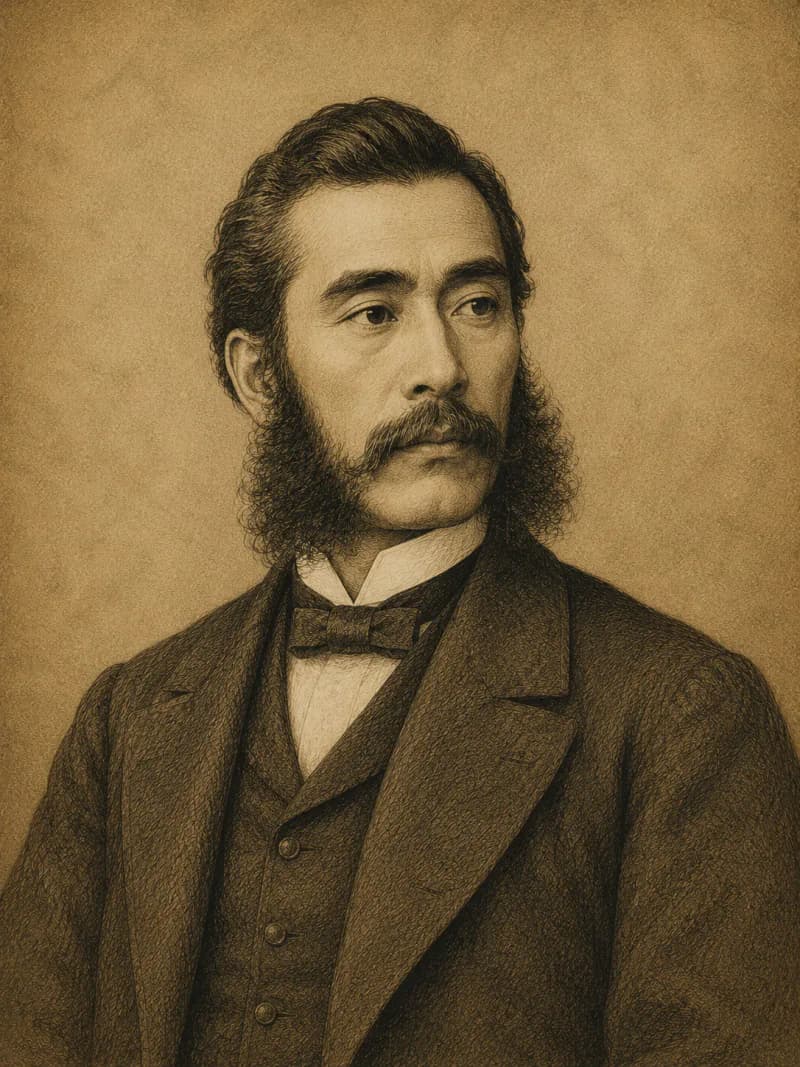
SA-0026 / 1830
Ōkubo Toshimichi
The architect of the Meiji state who outmaneuvered Saigō and was assassinated nine months later
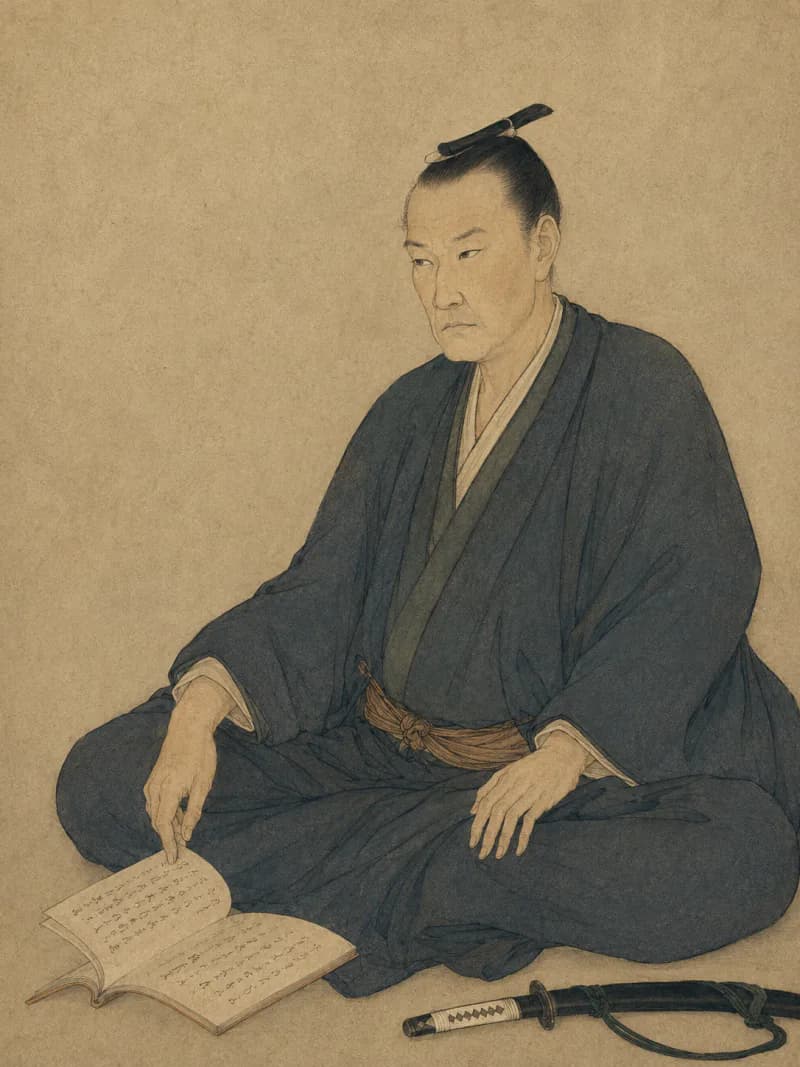
SA-0036 / 1830
Yoshida Shōin
The Shōka Sonjuku teacher whose two-and-a-half-year school drove the Meiji Restoration
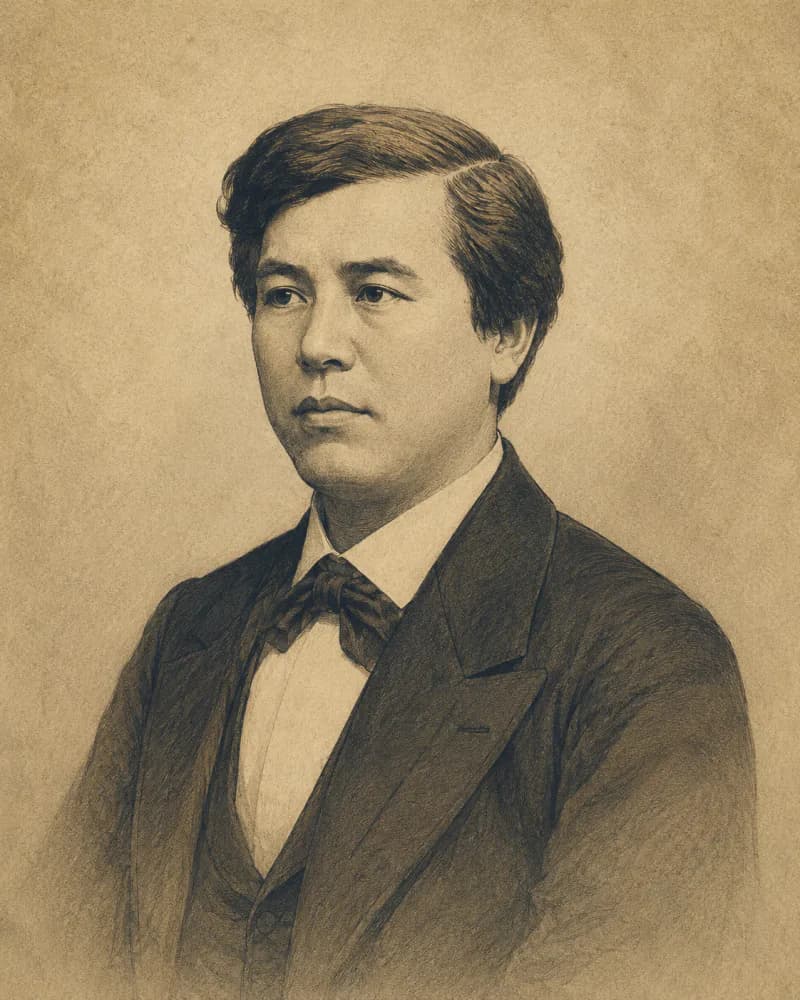
SA-0038 / 1833
Kido Takayoshi
The Chōshū statesman behind the Satsuma-Chōshū Alliance and the Five Charter Oath
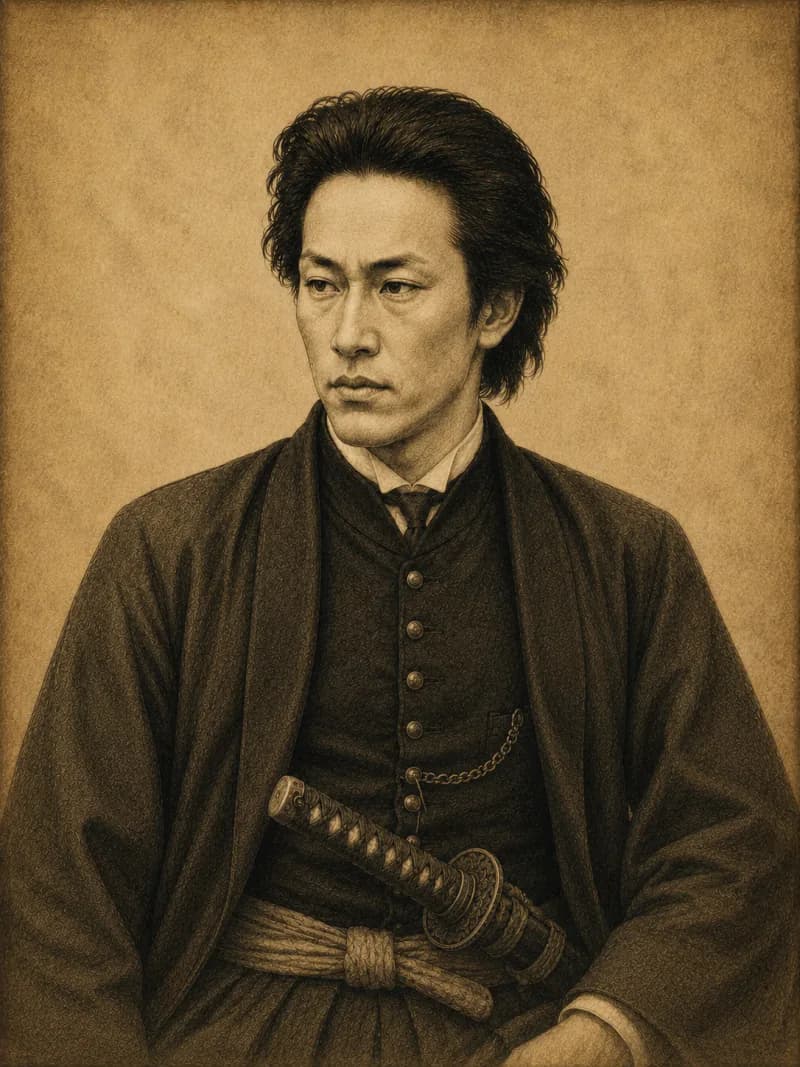
SA-0031 / 1835
Hijikata Toshizō
Vice-commander of the Shinsengumi who fought the shogunate's losing war to its very last day
- I
SA-0083 / 1835
Iwasaki Yatarō
The great Meiji entrepreneur who rose from the lowest warrior stratum of Tosa and built the Mitsubishi zaibatsu through shipping
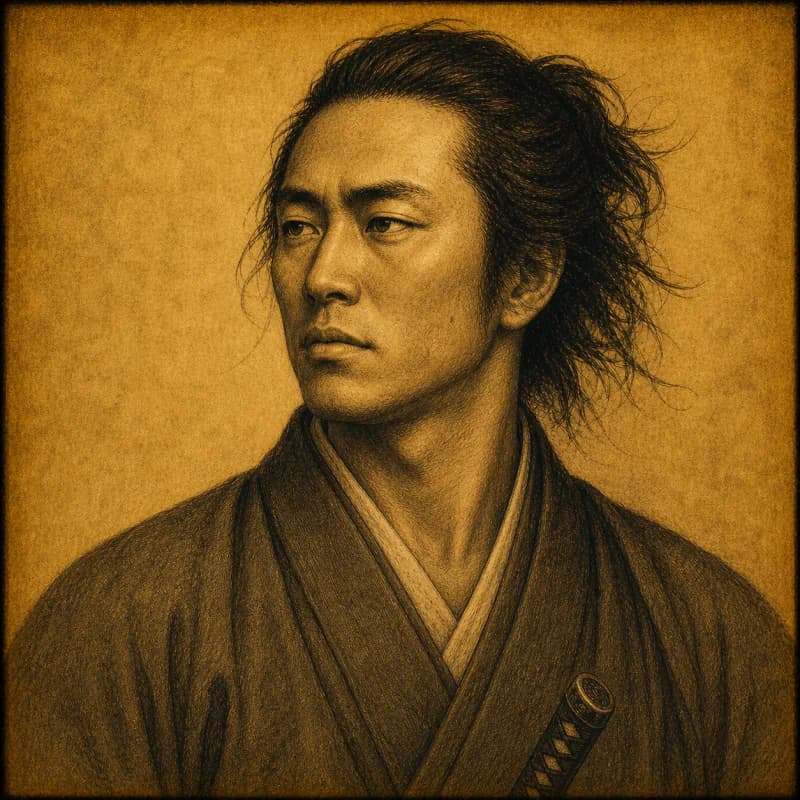
SA-0008 / 1836
Sakamoto Ryōma
The low-rank samurai who engineered the fall of the shogunate
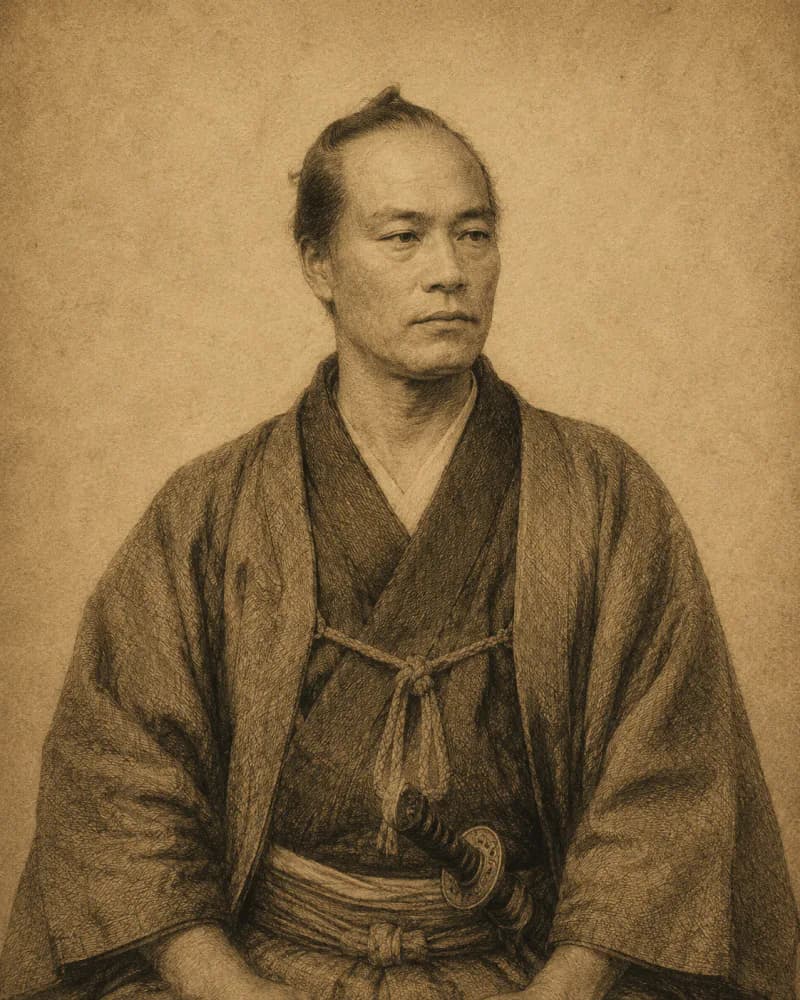
SA-0046 / 1836
Yamaoka Tesshū
One of the 'Three Boats' of the Bakumatsu who opened the road to the bloodless surrender of Edo and founded the Mutō-ryū
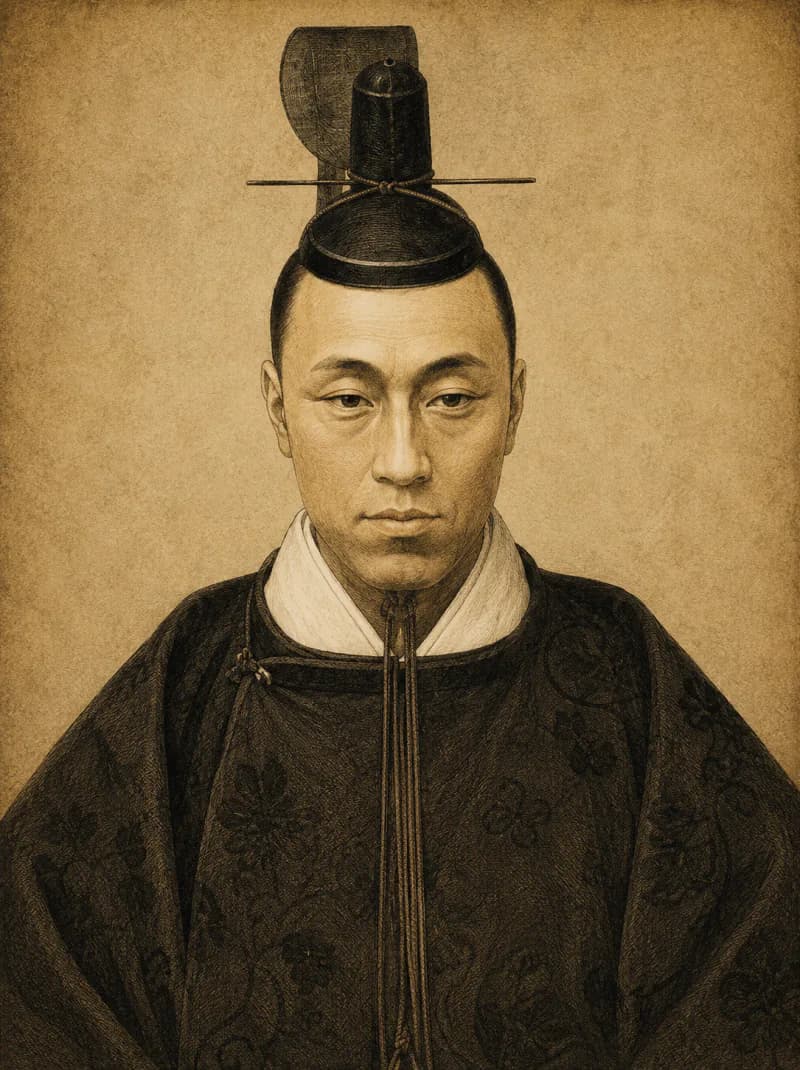
SA-0022 / 1837
Tokugawa Yoshinobu
The last shogun who chose to surrender power rather than fight a civil war he believed Japan could not afford
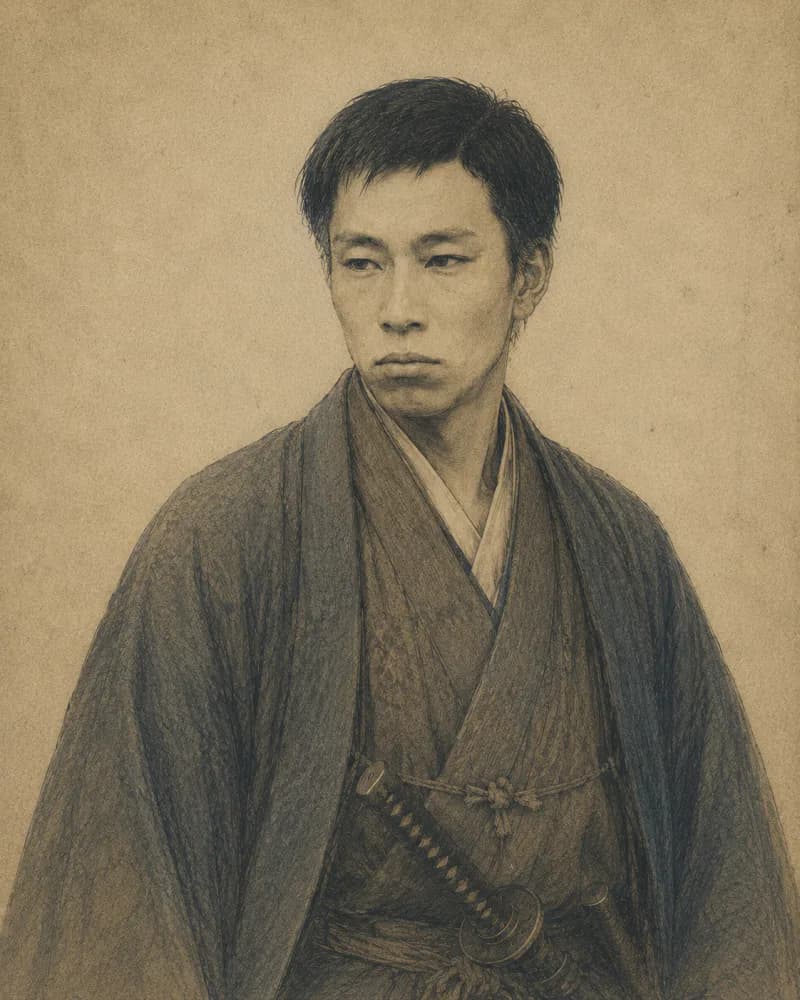
SA-0037 / 1839
Takasugi Shinsaku
The Shōka Sonjuku graduate whose Kiheitai militia and Kōzanji coup drove Chōshū to topple the bakufu
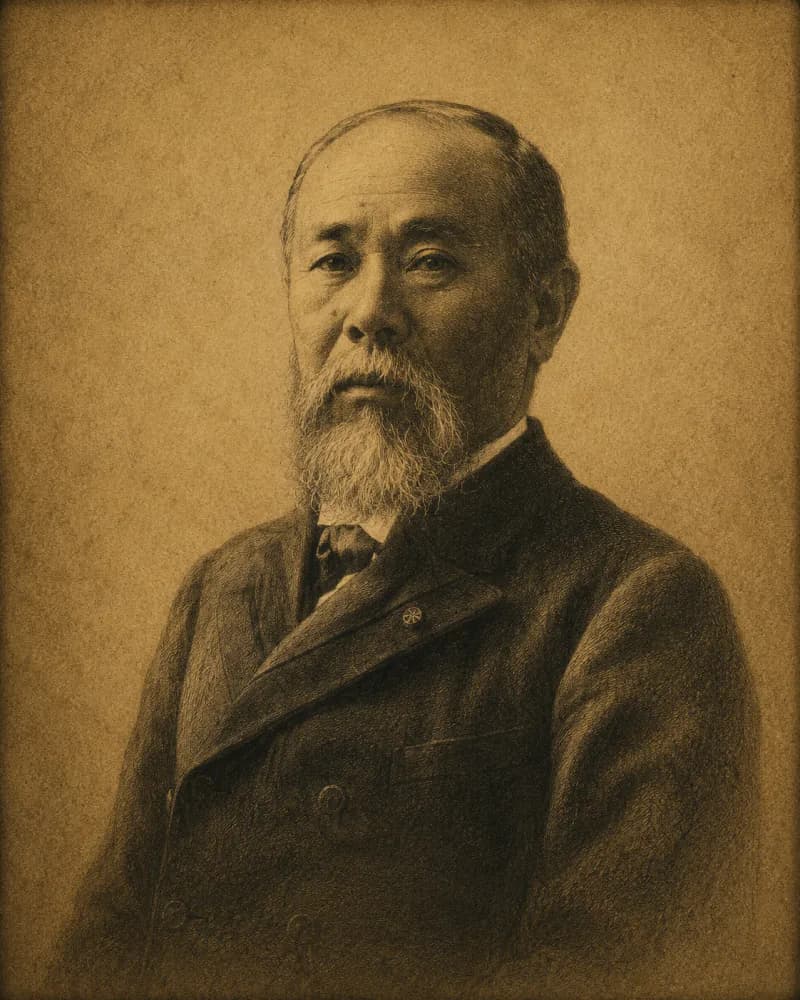
SA-0047 / 1841
Itō Hirobumi
The first prime minister of Japan and chief drafter of the Meiji Constitution — Shōin's last and youngest student
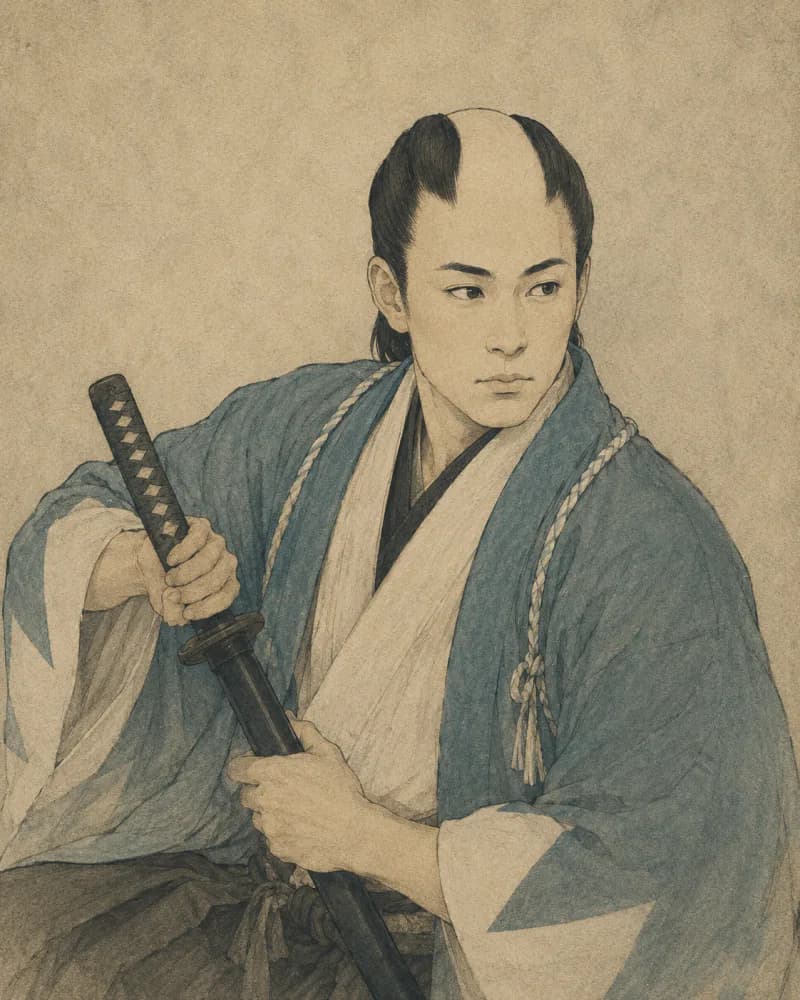
SA-0035 / 1842?
Okita Sōji
First-captain of the Shinsengumi — and the tubercular swordsman who never fought the Boshin War
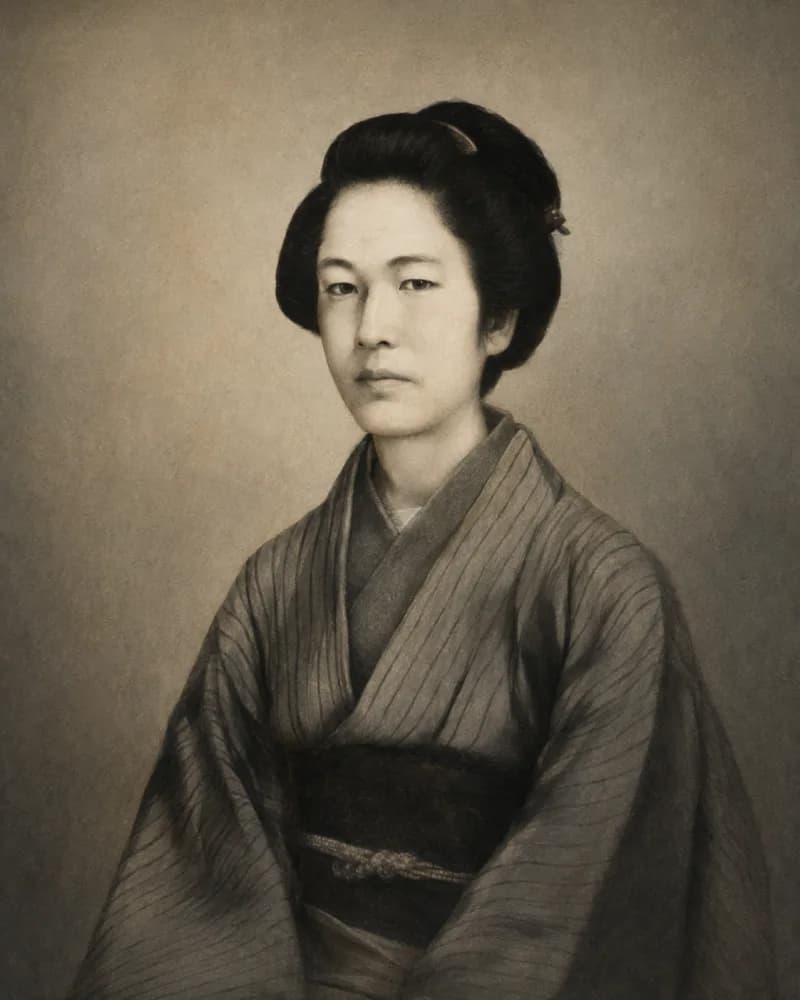
SA-0068 / 1847
Nakano Takeko
The twenty-one-year-old female warrior who led a naginata women's corps at the Aizu Boshin War and fell in battle
REPORTS FROM THIS ERA
Senchū Hassaku: The Eight Points That Quietly Wrote the Meiji Constitution
In 1867, Sakamoto Ryōma drafted an eight-point memo on a steamship between Nagasaki and Hyōgo. He was thirty-one, on the run, and three months from assassination. The memo became the blueprint for modern Japan.
Kumamoto Castle: The Castle That Outlived the Last War
Built between 1601 and 1607 by Katō Kiyomasa, Kumamoto Castle was so well engineered that 270 years later, when Saigō Takamori besieged it for fifty-five days during the 1877 Satsuma Rebellion, he could not take it. Its architecture is one of the few practical samurai legacies still readable in stone.
Shiroyama: The End of the Samurai Class
On September 24th, 1877, the man who had built the Meiji government died fighting against it. Saigō Takamori's last stand at Shiroyama is conventionally dated as the end of the samurai class — and the conventional dating is correct.
Why the Last Shogun Surrendered: Tokugawa Yoshinobu and the Taisei Hōkan
On November 9th, 1867, the fifteenth Tokugawa shogun voluntarily returned political authority to the Emperor. He believed it would preserve the Tokugawa as senior partners in a new constitutional order. He was wrong about that. He was right about everything else.
The Architect Who Crushed His Best Friend: Ōkubo Toshimichi and the Building of Modern Japan
Between 1868 and 1878, Ōkubo Toshimichi imposed the institutional design that became the modern Japanese state. The political price was the destruction of his lifelong friend Saigō Takamori. Nine months after Saigō's death, Ōkubo himself was killed by men who blamed him for everything the new state had taken from them.
Snow at Sakuradamon: The Assassination That Ended the Bakufu
On the morning of March 24th, 1860, eighteen ronin from Mito and Satsuma killed the Tairō Ii Naosuke outside the main gate of Edo Castle. The killing was personal revenge for his Ansei Purge. The political consequence was that the Tokugawa Bakufu became unrecoverable.
Goryōkaku: Where the Last Samurai Republic Died
On May 11, 1869, in the star-shaped fortress at Hakodate in northern Japan, Hijikata Toshizō and the seven thousand troops of the Republic of Ezo lost their final battle. The first and last republic in Japanese history had survived seven months.
The Ikedaya Incident: One Night That Set Back the Bakumatsu by a Year
On a hot July night in 1864, a tiny police unit called the Shinsengumi surrounded a Kyoto inn at Sanjō and fought its way into a meeting of Chōshū, Tosa, and Higo loyalists. The Bakumatsu opposition lost a year of momentum in two hours.
Kyokuchū Hatto: The Five-Article Code That Made the Shinsengumi Feared
Do not violate the way of the warrior. Do not desert the unit. Do not engage in private financial dealings. Do not pursue private litigation. Do not engage in private quarrels. Five rules. The penalty for any of them was seppuku — and Hijikata Toshizō meant it.
The Coughing at Ikedaya: When Did Okita Sōji Find Out He Was Dying?
On the night of July 8, 1864, Shinsengumi first-captain Okita Sōji was sword-fighting Chōshū loyalists on the second floor of the Ikedaya inn. Suddenly blood spilled from his mouth. The end of Okita the swordsman had begun.
The Black Cat at Sendagaya: What Okita Sōji Could Not Cut
In the spring of 1868, Okita Sōji was convalescing in the Edo neighborhood of Sendagaya, in the house of a gardener. The story that he tried, and failed, to strike a black cat in the garden is the standard symbolic image of the prodigy of the sword brought low by disease.
First Captain's Sword: What Okita Sōji Actually Did
Okita Sōji's documented combat participation amounts to a handful of engagements — Ikedaya, the Kinmon Incident, the Itō Kashitarō assassination, Toba-Fushimi. In each of them he was the man the unit trusted most.
Ryūkonroku: The Letter Yoshida Shōin Wrote Five Days Before His Execution
On October 27, 1859, Yoshida Shōin was beheaded at Edo's Tenmachō prison. The five days before that, in his cell, he had completed a five-thousand-character letter to his students. The Ryūkonroku compressed the core of his thought and the direction of the coming Meiji Restoration into a single short text.
The Failed Stowaway: Why Shōin Tried to Board Perry's Ship
On the night of March 27, 1854, with Perry's returning fleet anchored at Shimoda, Yoshida Shōin and a disciple rowed a small boat out to the American flagship and asked to be taken to the United States. They were refused, turned themselves in, and went to prison. What had they been risking their lives for?
Shōka Sonjuku: The Two-and-a-Half-Year School That Made the Meiji Restoration
Yoshida Shōin ran the Shōka Sonjuku for only two and a half years, from 1857 to 1858. In that time the school produced almost the entire operational leadership of the Meiji Restoration — Takasugi, Kusaka, Itō Hirobumi, Yamagata. A small private academy that bent the course of Japanese history.
The Kiheitai: How a Mixed-Class Militia Beat the Tokugawa Army
The Kiheitai that Takasugi Shinsaku founded at Shimonoseki in 1863 was the direct prototype of a modern conscript army in Japan — a militia open to peasants and townsmen as well as samurai. Three years later, in the Four-Border War, this class-blind force repulsed the regular army of the bakufu.
The Kōzanji Coup: How Eighty Men Turned a Domain to Rebellion in One Night
In December 1864 the Chōshū domain had submitted to the First Chōshū Expedition and was on the road to surrender. At Kōzanji Temple in Shimonoseki, Takasugi Shinsaku raised arms with eighty-odd men and, within three months, recaptured the domain government and put Chōshū back at the head of the anti-bakufu coalition. The night that fixed the direction of the Meiji Restoration.
Twenty-Seven Years: What the Restoration Owed Takasugi, Even After His Early Death
On April 14, 1867, Takasugi Shinsaku died at Shimonoseki. He was twenty-seven. He missed the arrival of the Meiji Restoration by about ten months. The legacy of a revolutionary who died early — and what the history that followed his death made of it.
From the Practice Hall to the Cabinet: The Two Lives of Katsura Kogorō
Katsura Kogorō (later Kido Takayoshi) was a swordsman skilled enough to be made head student of Edo's Renpeikan dōjō. The same man, in his thirties, concluded the Satsuma-Chōshū Alliance; in his forties, he designed the institutions of the new Meiji state. Two lives in one career, an unusual arc among the Restoration leadership.
Inside the Satsuma-Chōshū Alliance: What Kido Saw From the Chōshū Side
In January 1866, Satsuma and Chōshū concluded an alliance in Kyoto. The compact made the toppling of the bakufu possible. The Chōshū-side principal was Katsura Kogorō — the future Kido Takayoshi. Behind the celebrated role of Ryōma the broker lies the reality of the negotiation as the principal himself experienced it.
The Five Charter Oath: The Night Kido Drafted the Constitutional Spine of Modern Japan
On April 6, 1868, in the Shishinden of the Kyoto Imperial Palace, the Meiji Emperor promulgated the Five Charter Oath. The five articles — beginning with 'Deliberative assemblies shall be widely established and all matters decided by public discussion' — became the institutional starting point of modern Japan. The original drafters were Kido Takayoshi and Yuri Kimimasa.
The Bloodless Surrender of Edo: The Day Saigō and Katsu Saved a City of a Million
On March 14, 1868, Katsu Kaishū and Saigō Takamori met at the Satsuma estate. The direct negotiation that averted the planned total assault on Edo Castle the following day. A single day's meeting that saved the lives and property of a million Edo residents from war.
The Kanrin-maru: How Katsu Kaishū Built Modern Japan's Navy
In 1860, Katsu Kaishū commanded the Kanrin-maru across the Pacific with a Japanese crew. From naval training at Nagasaki, to the Kanrin-maru voyage to America, to the Kobe Naval Training Center — Katsu Kaishū's life was itself the founding history of Japan's modern navy.
Ryōma's Master: How Katsu Kaishū Trained Sakamoto Ryōma
In 1862, the Tosa-domain rōnin Sakamoto Ryōma came to assassinate the shogunal retainer Katsu Kaishū. The two talked through the night, and Ryōma sheathed his sword and became Katsu's student. The single night's meeting became the origin of the Satsuma-Chōshū Alliance and the restoration of imperial rule four years later.
The Sunpu Meeting: The Day Yamaoka Tesshū Walked Alone Into Saigō's Camp
On March 9, 1868, Yamaoka Tesshū walked alone into the new government army's occupied Sunpu and met Saigō Takamori. The framework of the bloodless surrender of Edo was set on that single day at Sunpu, leading to the Katsu-Saigō meeting five days later. The day a no-rank shogunal retainer moved history.
Mutō-ryū: The Day Yamaoka Tesshū Integrated the Sword and Zen
In 1880, Yamaoka Tesshū founded the Ittō Shōden Mutō-ryū, a school integrating sword, Zen, and calligraphy. On the lineage of Tsukahara Bokuden's Mutekatsu-ryū and Kamiizumi Nobutsuna's Shinkage-ryū, it was an attempt to reconstruct the thought of swordsmanship for the Meiji era.
Chamberlain to Emperor Meiji: How Yamaoka Tesshū Supported the Young Emperor
From 1872 to 1882, Yamaoka Tesshū served as chamberlain to Emperor Meiji for ten years. He bore the role of transmitting the spiritual culture of modern Japan to the young emperor — then in his late teens — and exerted a deep influence on the formation of Emperor Meiji's character. A rare ten years in which a master of sword and Zen served as the emperor's close attendant.
First Prime Minister: The Day Itō Hirobumi Took the Top of Japan at Forty-Four
On December 22, 1885, Itō Hirobumi became Japan's first prime minister. At forty-four, he was one of the youngest heads of government in the world at the time. What lay behind the extraordinary career in which a son of a poor farming family, student of Shōin, reached the top of modern Japan in twenty-eight years?
Drafting the Meiji Constitution: How Itō Hirobumi Wrote the Blueprint of a State
On February 11, 1889, the Constitution of the Empire of Japan was promulgated. The center of the drafting was Itō Hirobumi. From the European constitutional research from 1882, through discussions with the Austro-German legal scholars Gneist, Stein, and Mosse, to the joint work with the drafting team of Inoue Kowashi, Itō Miyoji, and Kaneko Kentarō — the seven years in which one statesman wrote the blueprint of a state.
Harbin Station: The Day Itō Hirobumi Was Shot by a Korean Independence Activist
On October 26, 1909, the first Resident-General of Korea, Itō Hirobumi, was shot by the Korean independence activist An Jung-geun at Harbin station and died at sixty-eight. The assassination on the eve of the Japan-Korea annexation has continued as the deepest historical point of contention in Japan-Korea relations to the present.
From Sawayama to Hikone: How the Foundation for the Ii Family's 250 Years Was Built
After Ii Naomasa died in 1602, in the generations of his sons Naokatsu and Naotaka the base was moved from Sawayama to a new castle at Hikone, and the Hikone domain of 300,000 koku was established. The course by which the foundation Naomasa built became the starting point of the Ii family — continuing through the Edo period as the foremost of the fudai daimyō and producing great elders.
Founding the Tosa Loyalist Party: In 1861, Hanpeita Gathered Two Hundred Comrades
In August 1861, Takechi Hanpeita, having finished his training in Edo and returned to Tosa, founded the Tosa Loyalist Party centered on his sword school. An organization of nearly two hundred rural warriors, rōnin, and lower-ranking retainers would become one of the cores of the Bakumatsu upheaval for the next three years.
Two Men from the Same Home: Why Did Takechi Hanpeita and Sakamoto Ryōma Choose Different Roads?
Takechi Hanpeita and Sakamoto Ryōma were both from the Tosa domain gōshi class and had been close from youth. The way the roads of the two — Hanpeita choosing intra-domain politics and Ryōma choosing to leave the domain — divided symbolizes two different types of Bakumatsu shishi.
The Purge of Yamauchi Yōdō: In 1865, the Thirty-Seven-Year-Old Hanpeita Committed Seppuku
In the coup of August 18, 1863, the Loyalist faction fell from the court, and in Tosa too, the suppression of the Loyalist Party by former lord Yamauchi Yōdō began. After about two years in prison, on May 11, 1865, Hanpeita was ordered to commit seppuku. The end of the Tosa Loyalist Party.
The Women's Martial Arts of Aizu: Where Did Takeko Learn the Naginata?
The Aizu domain was a rare domain that gave full-fledged martial-arts education to women retainers as well. Trained by Takahashi Shūtarō at the Edo residence, Nakano Takeko grew within this tradition into a top-level naginata practitioner.
Namida-bashi: On August 25, 1868, Takeko Led the Jōshigun and Fell to Gunfire
On August 25, 1868, at Yanagibashi (later Namida-bashi, Bridge of Tears) near Aizu-Bange, the roughly twenty members of the Jōshigun led by Nakano Takeko engaged the New Government army. In half an hour of combat, Takeko cut down several enemies with her naginata and then fell to gunfire. She was twenty-one.
The Modern Nakano Takeko: How the Memory of the Defeated Was Venerated
The Boshin War ended in the victory of the New Government army, and for half a century thereafter, the memory of Aizu was suppressed as that of the defeated. But from the Taishō period onward, the story of Nakano Takeko and the Jōshigun revived in the popular memory of Aizu, and today has become an icon of the woman samurai known even overseas.
In 1838, Tekijuku Opened in Ōsaka: A Learning Community That One Rangaku Scholar Started
In 1838, Ogata Kōan opened the rangaku school 'Tekijuku' at Semba in Ōsaka. The small private school started by a twenty-nine-year-old young rangaku scholar would, over the next twenty-five years, produce three thousand disciples who would carry Japan's modernization from the Bakumatsu through early Meiji.
The Seed-Pox of 1849: The Day Kōan Started Japanese Public Health
In 1849, Ogata Kōan began cowpox inoculation (seed-pox) in earnest in Ōsaka. The organized introduction into Japan of vaccination against smallpox — humanity's greatest epidemic — became a watershed enterprise in the history of Japanese public health.
Tekijuku's Three Thousand Disciples: The Place Where Fukuzawa Yukichi and Ōmura Masujirō Were Born
Tekijuku sent out more than three thousand disciples across Kōan's lifetime. Fukuzawa Yukichi, Ōmura Masujirō, Hashimoto Sanai, Sano Tsunetami, Nagayo Sensai. Nearly all the human group that carried Japan's modernization from the Bakumatsu through early Meiji had passed through this small private school in Ōsaka.
Son of a Jige-Rōnin: The Man Who Rose from the Lowest Stratum
Iwasaki Yatarō was born into a jige-rōnin house that had even lost warrior status. The youth, who tasted poverty, humiliation, and even imprisonment, turned that frustration into an obsession to rise. It was the beginning of a scathing counterattack against a world where status decided everything.
The Founding of Mitsubishi: In 1873, He Turned the Chaos of Abolished Domains into Opportunity
When the abolition of the domains left the domain-run enterprises with nowhere to go, Iwasaki Yatarō took over their ships and set out into shipping. The Mitsubishi Shōkai he founded in 1873 began from the gamble of one man who saw an age of upheaval as opportunity.
The Shipping War: In 1885, the Overlord Fell in the Midst of Competition
Having gained enormous profit from the military transport of the Satsuma Rebellion, Iwasaki Yatarō became the overlord of the shipping world. But a fierce freight-rate competition with the government-affiliated Kyōdō Un'yu tormented him. The man who built Japan's greatest wealth departed the world with his aim unfinished, in the midst of that death-struggle.