SUBJECT FILE NO. SA-0046
BUSHI ARCHIVE
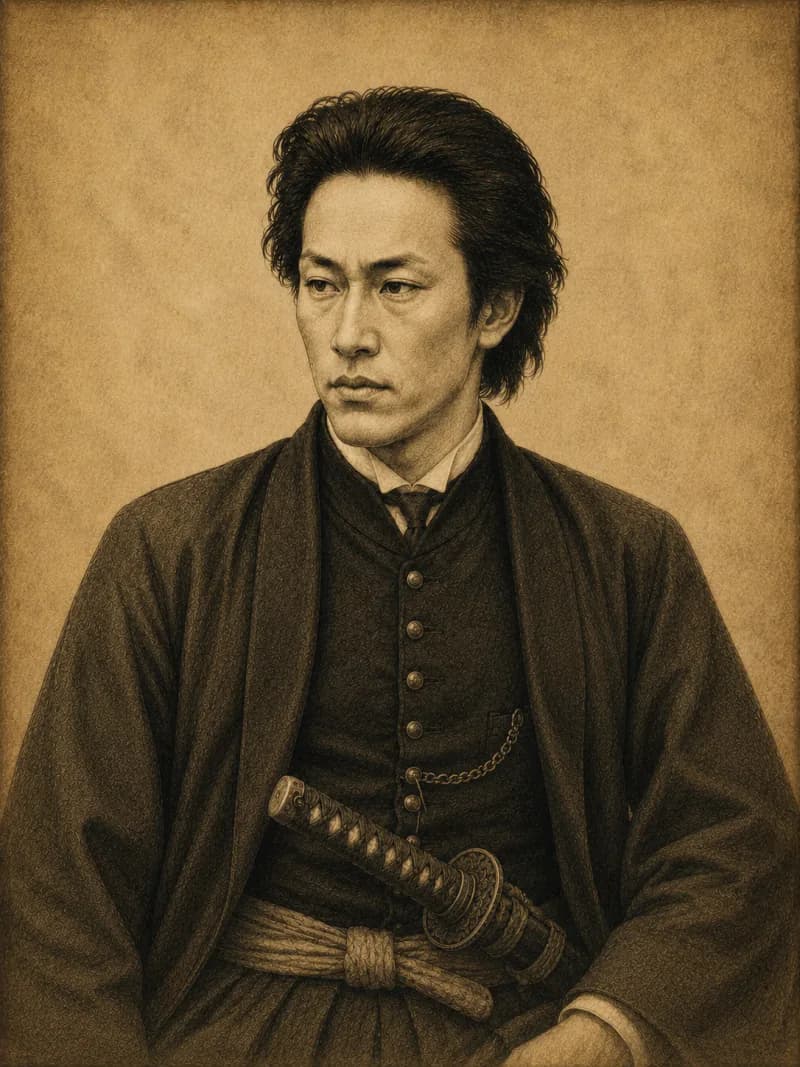
Yamaoka Tesshū
Yamaoka Tesshū
Shogunal retainer; Chamberlain to Emperor Meiji; founder of the Mutō-ryū
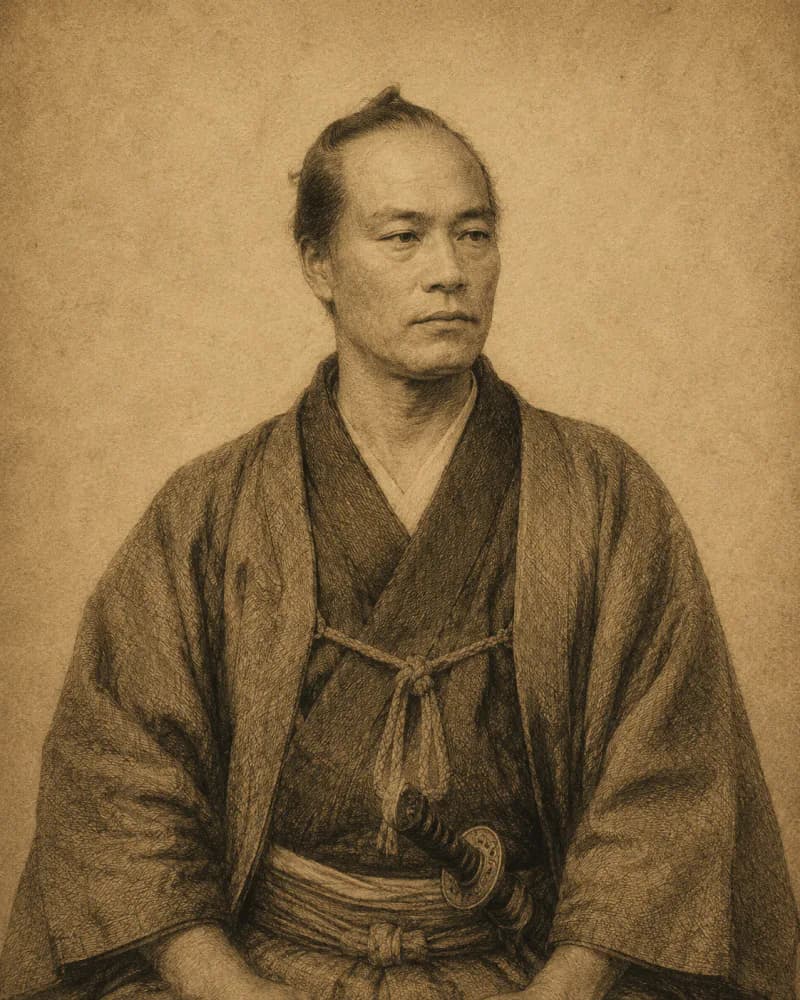
SECTION I -- SUBJECT PROFILE
| Name | Yamaoka Tesshū |
|---|---|
| English | Yamaoka Tesshū |
| Origin | Japan |
| Lifespan | 1836–1888 |
| Gender | Male |
| Century | 19th C. |
| Clan / Role | Swordsman |
| Title | Shogunal retainer; Chamberlain to Emperor Meiji; founder of the Mutō-ryū |
SECTION II -- OVERVIEW
Born in 1836 at Honjo Naka-no-Gō in Edo as the fourth son of the hatamoto Ono family. His given name was Yamaoka Tetsutarō and his pen name Tesshū.
He spent his youth in Hida Takayama, the posting of his father Ono Asauemon, and trained in the sword under Chiba Shūsaku and Inoue Hachirō.
During the Bakumatsu he served in the elite guard and the Fushimi pacification force. In March 1868, on the orders of Katsu Kaishū, he traveled alone to the new government army's camp at Sunpu (modern Shizuoka) and met Saigō Takamori.
There he negotiated the conditions of the bloodless surrender of Edo and laid the ground for the subsequent Katsu-Saigō meeting.
After the Restoration he served as a senior official in the Shizuoka domain and as deputy governor of Ibaraki Prefecture, then from 1872 spent ten years as chamberlain to Emperor Meiji.
In 1880 he founded the Mutō-ryū (Ittō Shōden Mutō-ryū), a school integrating sword, Zen, and calligraphy. He died at Tokyo in 1888, aged fifty-three.
SECTION III -- CHRONOLOGY
SECTION IV -- NOTABLE STATEMENTS
“The universe and the person are one — the sword too follows the law of the universe.”
SECTION V -- FIELD NOTES
[A]The Sunpu Meeting with Saigō
On March 9, 1868, Yamaoka Tesshū traveled alone into the new government army's occupied Sunpu and met its staff officer Saigō Takamori.
He presented the conditions of clemency for Tokugawa Yoshinobu and a bloodless surrender of Edo, and Saigō moved the discussion toward acceptance.
At the Sunpu meeting the path of the bloodless surrender of Edo was set, leading five days later to the Katsu Kaishū-Saigō meeting at Tamachi.
Tesshū, a shogunal retainer of no formal rank, was later honored as a figure who had walked into the enemy camp alone and moved history.
SECTION VI -- LEGACY & IMPACT
Yamaoka Tesshū was inscribed in history for the Sunpu meeting with Saigō Takamori on the eve of the bloodless surrender of Edo, in which he laid the ground for the subsequent Katsu-Saigō negotiation.
After the Restoration he served Emperor Meiji as chamberlain for ten years, exerting a deep influence on the formation of the spiritual culture of modern Japan.
He established a distinctive system of practice integrating sword, Zen, and calligraphy, and founded the Mutō-ryū (Ittō Shōden Mutō-ryū).
Zenshō-an, the temple he founded, still stands in Yanaka, Tokyo, and houses his grave. As one of the 'Three Boats' of the Bakumatsu — alongside Katsu Kaishū and Takahashi Deishū — and as the embodiment of bushidō, he continues to be honored to the present day.
SECTION VII -- MAJOR DEEDS
- [01]Sunpu meeting with Saigō (1868)
- [02]Chamberlain to Emperor Meiji (1872-1882)
- [03]Foundation of the Mutō-ryū (Ittō Shōden Mutō-ryū) (1880)
- [04]Foundation of Zenshō-an
- [05]Tesshū Zen Talks and Sword Talks
SECTION VIII -- REFERENCE MATERIALS
PRIMARY SOURCES & ARCHIVES
- PRIMARY
Tesshū Genkō-roku
Held by Zenshō-an
Talks of Yamaoka Tesshū transcribed by his students including Ogura Tessui
- SCHOLARSHIP
Yamaoka Tesshū
Yamamoto Hirofumi / Shin-Jinbutsuōraisha
Standard modern biography examining the life and thought of Tesshū
- ARCHIVE
Zenshō-an
Yanaka, Taitō-ku, Tokyo
Rinzai Zen temple founded by Tesshū; houses his grave and personal effects
Visit archive →
RECOMMENDED READING
SECTION X -- RELATED REPORTS
SA-RPT
The Sunpu Meeting: The Day Yamaoka Tesshū Walked Alone Into Saigō's Camp
On March 9, 1868, Yamaoka Tesshū walked alone into the new government army's occupied Sunpu and met Saigō Takamori. The framework of the bloodless surrender of Edo was set on that single day at Sunpu, leading to the Katsu-Saigō meeting five days later. The day a no-rank shogunal retainer moved history.
SA-RPT
Mutō-ryū: The Day Yamaoka Tesshū Integrated the Sword and Zen
In 1880, Yamaoka Tesshū founded the Ittō Shōden Mutō-ryū, a school integrating sword, Zen, and calligraphy. On the lineage of Tsukahara Bokuden's Mutekatsu-ryū and Kamiizumi Nobutsuna's Shinkage-ryū, it was an attempt to reconstruct the thought of swordsmanship for the Meiji era.
SA-RPT
Chamberlain to Emperor Meiji: How Yamaoka Tesshū Supported the Young Emperor
From 1872 to 1882, Yamaoka Tesshū served as chamberlain to Emperor Meiji for ten years. He bore the role of transmitting the spiritual culture of modern Japan to the young emperor — then in his late teens — and exerted a deep influence on the formation of Emperor Meiji's character. A rare ten years in which a master of sword and Zen served as the emperor's close attendant.
SECTION IX -- LINKED SUBJECTS
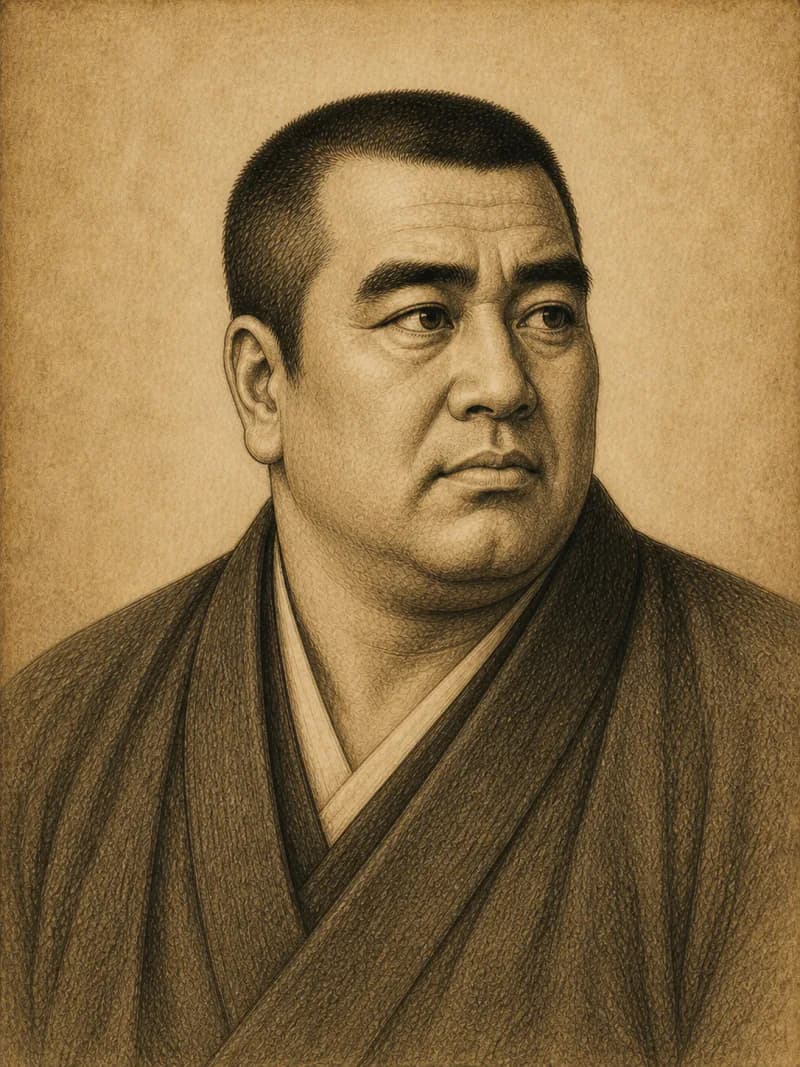
SA-0021 / JPN
Saigō Takamori
The architect of the Meiji Restoration who died fighting against the Meiji government he had built
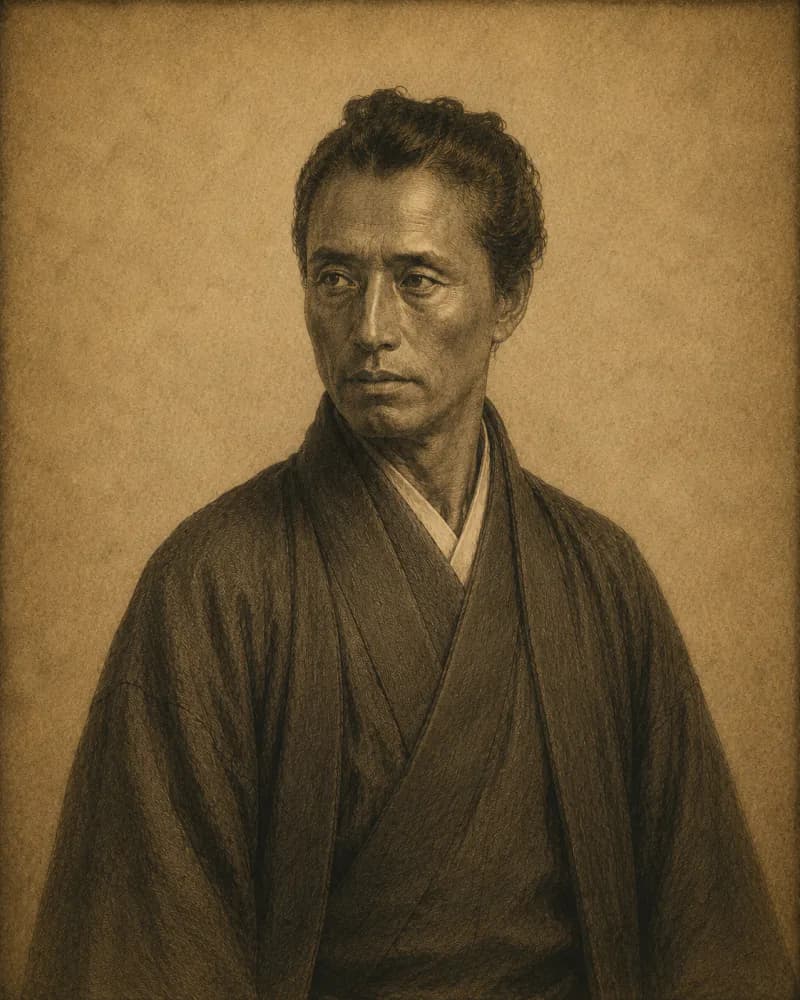
SA-0045 / JPN
Katsu Kaishū
The last navy minister of the shogunate who delivered the bloodless surrender of Edo and was Sakamoto Ryōma's master
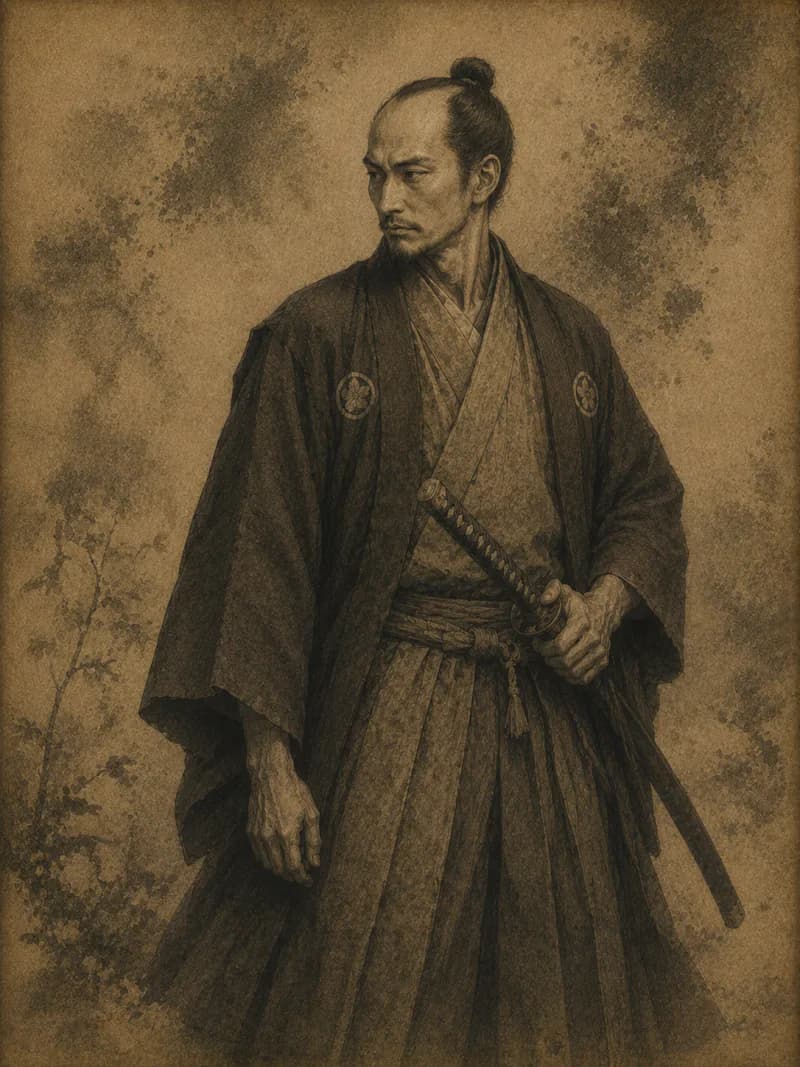
SA-0044 / JPN
Yagyū Munenori
The Yagyū Shinkage-ryū inheritor who turned the sword into the state's official way
SA-0007 / JPN
Miyamoto Musashi
The undefeated swordsman who wrote The Book of Five Rings
SA-0008 / JPN
Sakamoto Ryōma
The low-rank samurai who engineered the fall of the shogunate
SA-0022 / JPN
Tokugawa Yoshinobu
The last shogun who chose to surrender power rather than fight a civil war he believed Japan could not afford
SA-0027 / JPN
Ii Naosuke
The Tairō who signed the unequal treaties — and was assassinated for it at the gates of Edo Castle
SA-0031 / JPN
Hijikata Toshizō
Vice-commander of the Shinsengumi who fought the shogunate's losing war to its very last day