SUBJECT FILE NO. SA-0007
BUSHI ARCHIVE
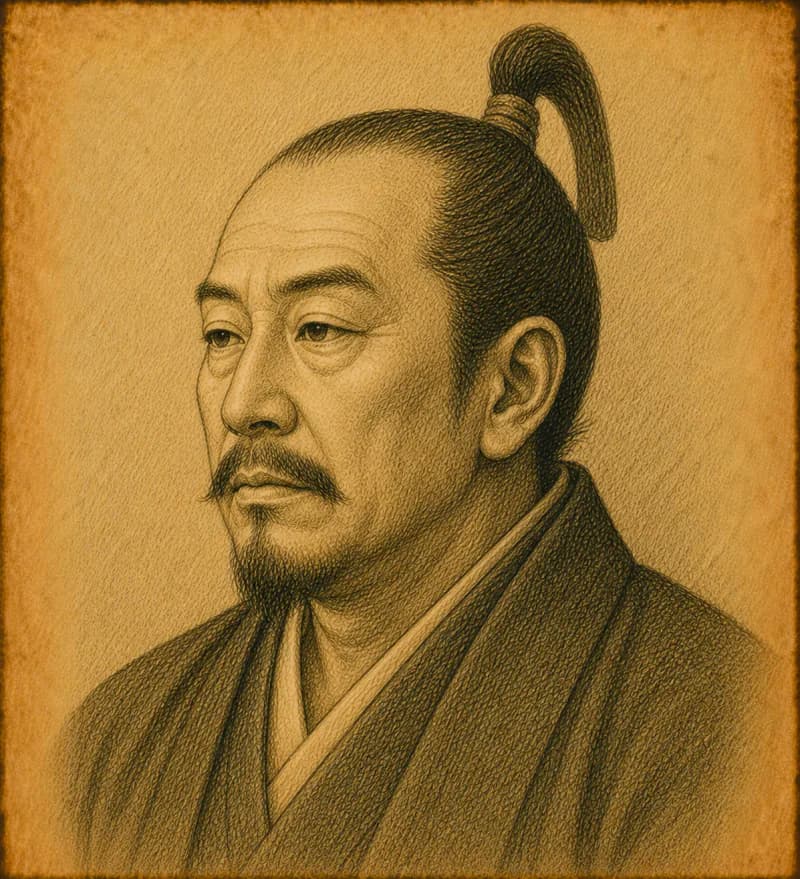
Miyamoto Musashi
Miyamoto Musashi
Kensei — Sword Saint
SECTION I -- SUBJECT PROFILE
| Name | Miyamoto Musashi |
|---|---|
| English | Miyamoto Musashi |
| Origin | Japan |
| Lifespan | 1584–1645 |
| Gender | Male |
| Century | 17th C. |
| Clan / Role | Swordsman |
| Title | Kensei — Sword Saint |
SECTION II -- OVERVIEW
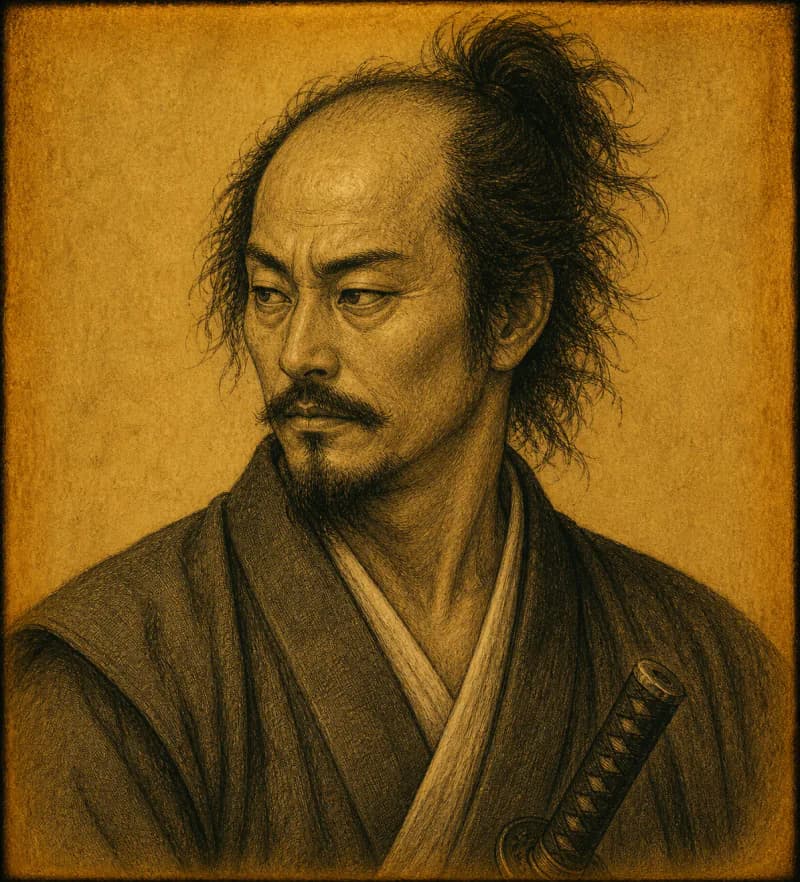
Born around 1584 in Harima Province, Musashi fought his first duel at thirteen and is said to have won more than sixty by his early thirties — never once defeated.
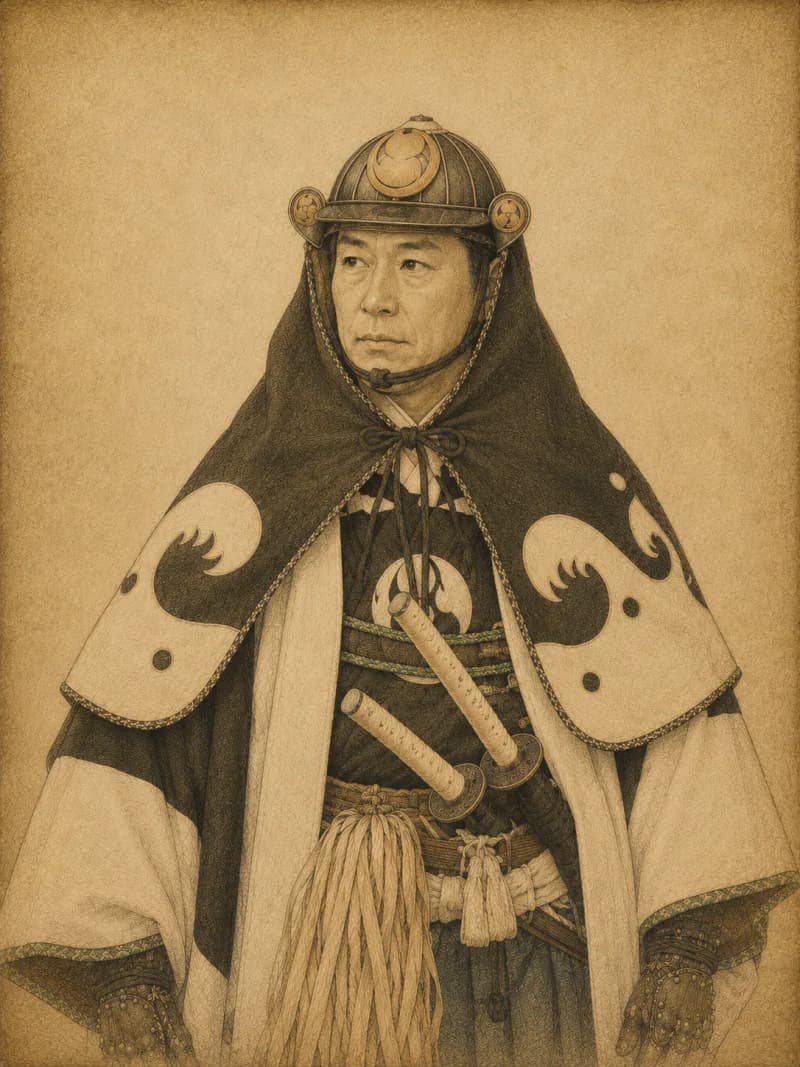
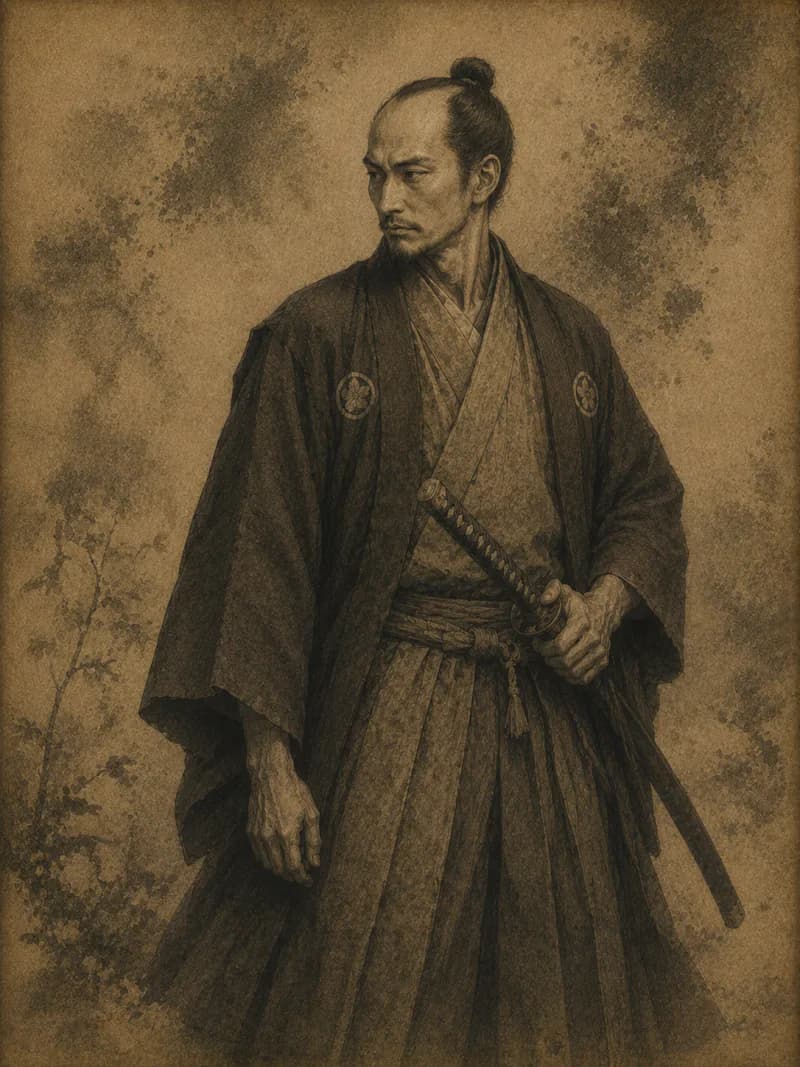
He served briefly with the Toyotomi side at Sekigahara, then drifted as a ronin, refining the two-sword style that became Niten Ichi-ryū.
His most famous duel, against Sasaki Kojirō on Ganryū Island in 1612, ended with Kojirō dead from a single blow of an oar Musashi had carved on the boat ride over.
In later life he turned philosopher and artist — his ink paintings of shrikes and Daruma rank with the masterpieces of Edo-era brushwork.
Shortly before his death in 1645 he completed Go Rin no Sho, The Book of Five Rings, a treatise on strategy that is still studied in business schools and dojos worldwide.
SECTION III -- CHRONOLOGY
SECTION IV -- NOTABLE STATEMENTS
“The Way is in training. Today is victory over yourself of yesterday.”
SECTION V -- FIELD NOTES
[A]The Wooden Oar
Arriving deliberately late to his duel with Kojirō, Musashi had carved an oversized wooden sword from a boat oar during the crossing.
He killed the master of the longsword in a single stroke before walking back into the surf.
SECTION VI -- LEGACY & IMPACT
Musashi became the archetype of the wandering swordsman and a national symbol of disciplined self-mastery. The Book of Five Rings remains one of the most translated texts of Japanese strategic thought, and his ink paintings hang in major museums worldwide.
SECTION VII -- MAJOR DEEDS
- [01]Niten Ichi-ryū two-sword style
- [02]Duel on Ganryū Island (1612)
- [03]Go Rin no Sho — The Book of Five Rings
- [04]Ink paintings: Shrike on a Withered Branch, Hotei
SECTION VIII -- REFERENCE MATERIALS
PRIMARY SOURCES & ARCHIVES
- PRIMARY
Go Rin no Sho (The Book of Five Rings)
Miyamoto Musashi
Musashi's own treatise on strategy, completed at Reigandō cave shortly before his death
- ARCHIVE
Kumamoto Prefectural Museum of Art — Musashi Collection
Kumamoto Prefectural Museum of Art
Original Musashi ink paintings including Shrike on a Withered Branch
Visit archive → - SCHOLARSHIP
Niten Ki
Toyoda Kagehide
Posthumous biography that is the source of major Musashi legends including the Ganryū Island duel
RECOMMENDED READING
SECTION X -- RELATED REPORTS
SA-RPT
The Five Rings: Inside Miyamoto Musashi's Philosophy of the Sword
Written in a cave in 1645 by an undefeated swordsman dying at sixty-one, Go Rin no Sho is half manual, half meditation, and entirely strange.
SA-RPT
Bushidō in Three Texts: Hagakure, Five Rings, and Shoshinshū
There is no single book of bushidō. There are three books, written in three eras, by three very different men — and they disagree with each other on almost everything.
SA-RPT
From Kashima to Everywhere: How Bokuden Created the Itinerant-Training Tradition
Tsukahara Bokuden spent most of his life at Kashima Shrine, but in his later years he traveled the provinces training students. The itinerant-training tradition he established laid down the route the later swordsmen — Kamiizumi Nobutsuna, Miyamoto Musashi — would all follow, and became the standard form of Japanese martial-arts training.
SA-RPT
Mutō-ryū: The Day Yamaoka Tesshū Integrated the Sword and Zen
In 1880, Yamaoka Tesshū founded the Ittō Shōden Mutō-ryū, a school integrating sword, Zen, and calligraphy. On the lineage of Tsukahara Bokuden's Mutekatsu-ryū and Kamiizumi Nobutsuna's Shinkage-ryū, it was an attempt to reconstruct the thought of swordsmanship for the Meiji era.
SA-RPT
Miyamoto Musashi in Modern Manga and Anime: From Yoshikawa to Baki Dou
From Yoshikawa Eiji's 1935 novel through Inoue Takehiko's Vagabond to Itagaki Keisuke's Baki Dou — how has the image of Musashi shifted across nine decades of Japanese fiction? A walk through the lineage in which a single historical figure has worn a different face in every generation.
SA-RPT
The Real Musashi vs. The Manga Musashi: Five Points of Difference
Two-sword style, height, personality, the Kojirō duel, the Yoshioka clan battles. What are the differences between the Musashi depicted in manga and anime and the Musashi remembered in the historical record? Five points of comparison for readers who came to Musashi through Baki Dou or other modern works.
SA-RPT
After Baki Dou: A History Reader's Guide to Miyamoto Musashi
An introduction to the historical Musashi for readers who came to him through Baki Dou. The highlights of his life, what the Niten Ichi-ryū actually is, the structure of the Book of Five Rings, the historical record on the Kojirō duel, and the current state of Musashi scholarship — a guide to understanding Musashi by the shortest route.