SUBJECT FILE NO. SA-0044
BUSHI ARCHIVE
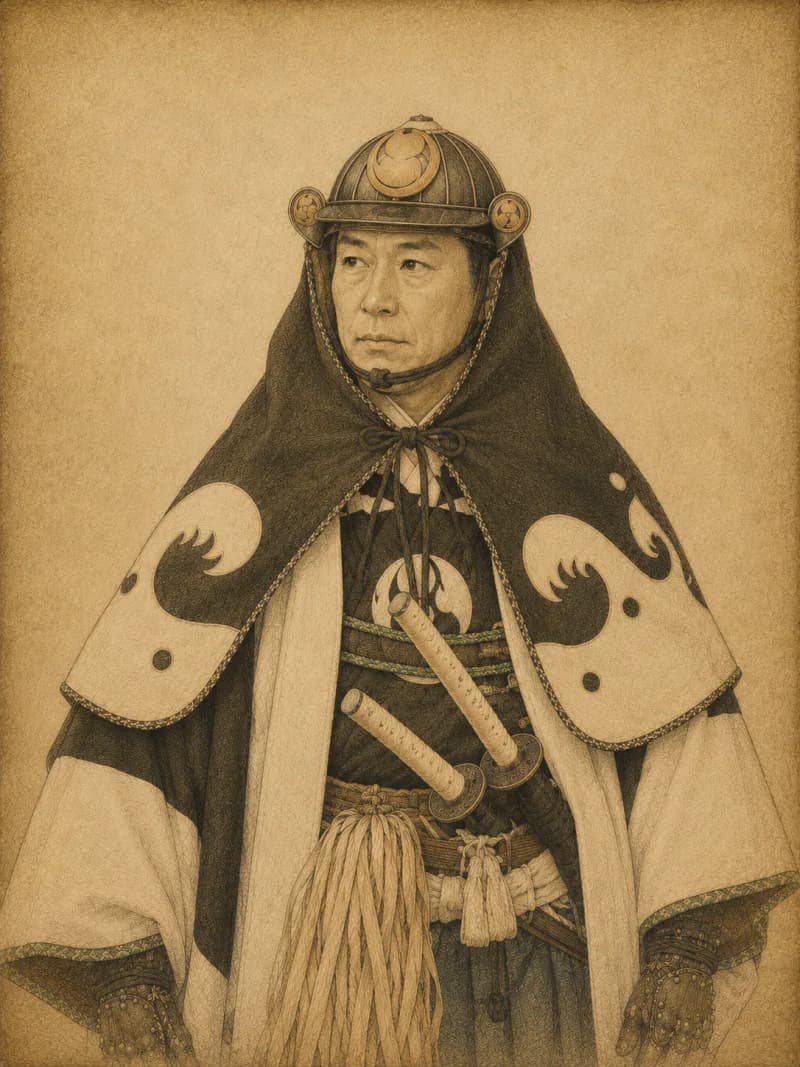
Yagyū Munenori
Yagyū Munenori
Sword Instructor to Tokugawa Hidetada and Iemitsu, and Ōmetsuke
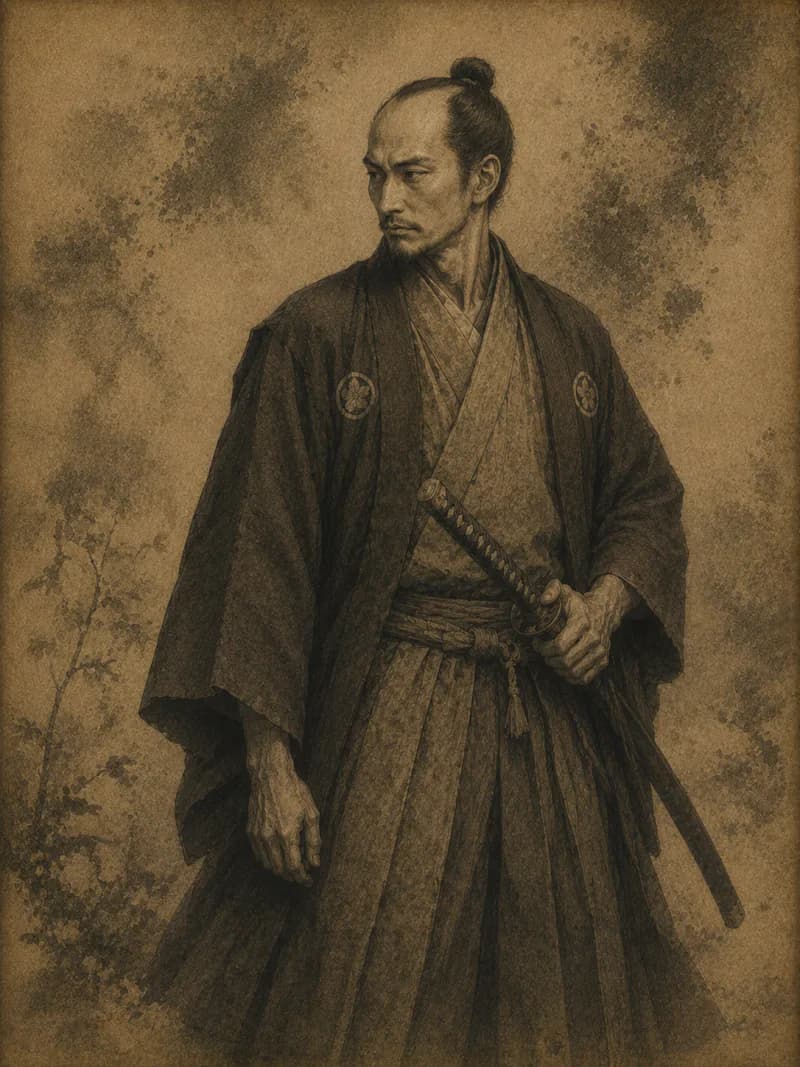
SECTION I -- SUBJECT PROFILE
| Name | Yagyū Munenori |
|---|---|
| English | Yagyū Munenori |
| Origin | Japan |
| Lifespan | 1571–1646 |
| Gender | Male |
| Century | 17th C. |
| Clan / Role | Swordsman |
| Title | Sword Instructor to Tokugawa Hidetada and Iemitsu, and Ōmetsuke |
SECTION II -- OVERVIEW
Born in 1571 at Yagyū-no-shō in Yamato Province (modern Yagyū-chō, Nara City), Munenori inherited the Yagyū Shinkage-ryū from his father Yagyū Munetoshi (Sekishūsai).
In 1601, at the call of Tokugawa Ieyasu, he entered Edo service and became sword instructor to the second shogun Hidetada.
In 1632, under the third shogun Iemitsu, he was promoted to ōmetsuke (great inspector) and given oversight of the bakufu's intelligence and covert-information organization.
In 1632 he completed the Heihō Kadensho — the family treatise on the sword — and reframed the technique of swordsmanship from 'the sword that kills' to 'the sword that gives life' (katsujinken).
The Yagyū Shinkage-ryū became, under Munenori, the official sword of the Tokugawa shogunate; for the next two and a half centuries it remained the central school of warrior-class swordsmanship.
He died at Edo in 1646, aged seventy-six.
SECTION III -- CHRONOLOGY
SECTION IV -- NOTABLE STATEMENTS
“The art of war is not the art of killing — it is the way of giving life.”
SECTION V -- FIELD NOTES
[A]The Sword That Gives Life
In the Heihō Kadensho, Munenori distinguished the technique of the sword into the 'killing sword' (satsujinken) and the 'life-giving sword' (katsujinken).
The accomplished swordsman, he argued, was the one who could win without killing — and that was the highest meaning of the art of war.
The thought was deepened through his exchanges with the Rinzai Zen monk Takuan Sōhō, and went on to become a defining concept not only of the later Yagyū Shinkage-ryū but of Japanese martial-arts thought generally.
SECTION VI -- LEGACY & IMPACT
Munenori's central achievement was to lift a single sword school — the Shinkage-ryū — into the status of state doctrine, the official sword of the Tokugawa government.
The Yagyū Shinkage-ryū became bakufu-recognized in his lifetime and remained at the center of warrior-class swordsmanship for the next two and a half centuries.
The katsujinken thought of the Heihō Kadensho formed the philosophical spine of kendō, carried forward in the twentieth century by figures including Yamaoka Tesshū and Kanō Jigorō.
The Yagyū family graves at Hōtoku-ji in Yagyū-chō are still visited by Shinkage-ryū practitioners today.
SECTION VII -- MAJOR DEEDS
- [01]Inheritance of Yagyū Shinkage-ryū (c. 1606)
- [02]Sword instruction of Shoguns Hidetada and Iemitsu
- [03]Heihō Kadensho (1632)
- [04]Ōmetsuke and the bakufu intelligence network
- [05]Systematization of katsujinken thought
SECTION VIII -- REFERENCE MATERIALS
PRIMARY SOURCES & ARCHIVES
- PRIMARY
Heihō Kadensho
Yagyū Munenori
Munenori's own family treatise on the sword — original text of the katsujinken thought
- SCHOLARSHIP
Nihon Kengō Tan
Tobe Shinjūrō / Chūōkōronshinsha (Chūkō Bunko)
Standard study of late-Sengoku and early-Edo swordsmen
- ARCHIVE
RECOMMENDED READING
SECTION X -- RELATED REPORTS
SA-RPT
Mutōdori: The Day Kamiizumi Took a Sword With Empty Hands
When Kamiizumi Nobutsuna fought Yagyū Munetoshi in Yamato Yagyū, in their third and final match Kamiizumi is said to have taken Munetoshi's blade away with his bare hand. The mutōdori technique is one of the inner teachings of the Shinkage-ryū, transmitted from Kamiizumi forward.
SA-RPT
Sword Instructor to the Shogun: How the Yagyū Shinkage-ryū Became State Doctrine
In 1605, Yagyū Munenori became sword instructor to the second Tokugawa shogun Hidetada. The Yagyū Shinkage-ryū inherited from his father Munetoshi became the official sword of the Tokugawa government. The reading of a rare case in which a single school became the official way of a state.
SA-RPT
The Heihō Kadensho: How 'The Sword That Gives Life' Was Written
In 1632, Yagyū Munenori completed the family treatise on the sword, the Heihō Kadensho. He distinguished the technique of the sword into 'killing sword' and 'life-giving sword,' and argued that the ultimate sword is the one that gives life. The thought was deepened through exchanges with the Zen monk Takuan Sōhō.
SA-RPT
Yagyū Domain and the Spy Network: What the Sword Instructor Was Watching
In 1632, Yagyū Munenori was promoted to ōmetsuke of the Tokugawa shogunate. Behind the official face of sword instructor, he also took on oversight of the bakufu intelligence organization. How does recent scholarship read the actual operation of the spy network anchored at Yagyū-no-shō?
SECTION IX -- LINKED SUBJECTS
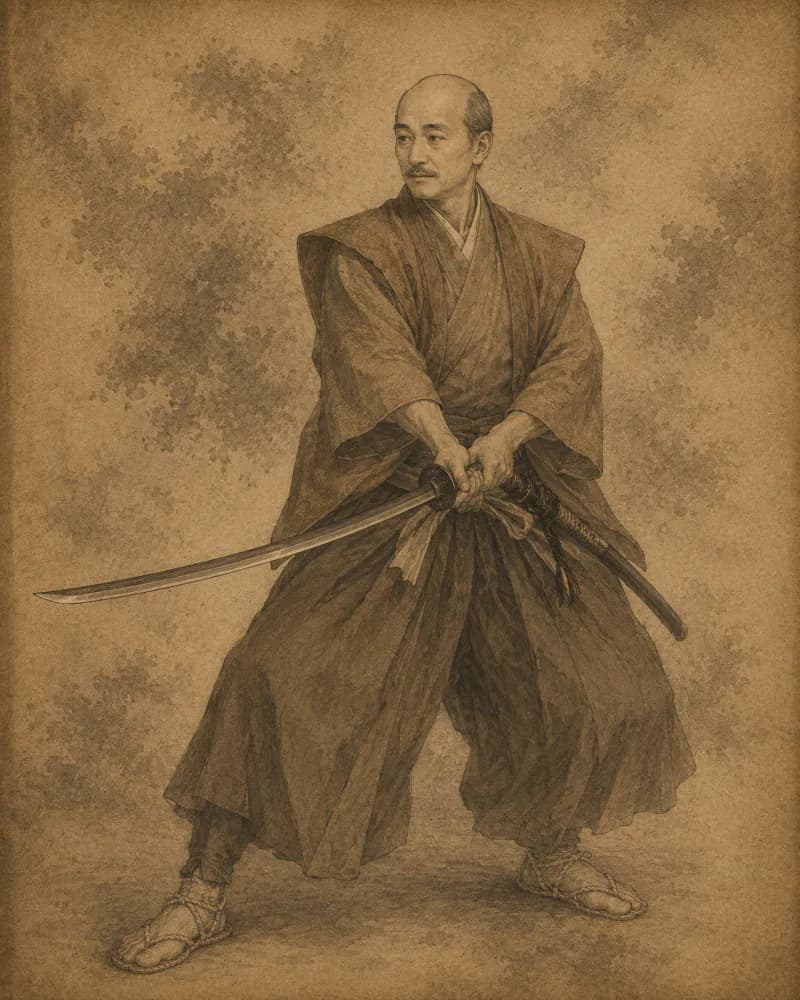
SA-0043 / JPN
Kamiizumi Nobutsuna
Founder of the Shinkage-ryū and teacher of the Sengoku 'sword-saint shogun'
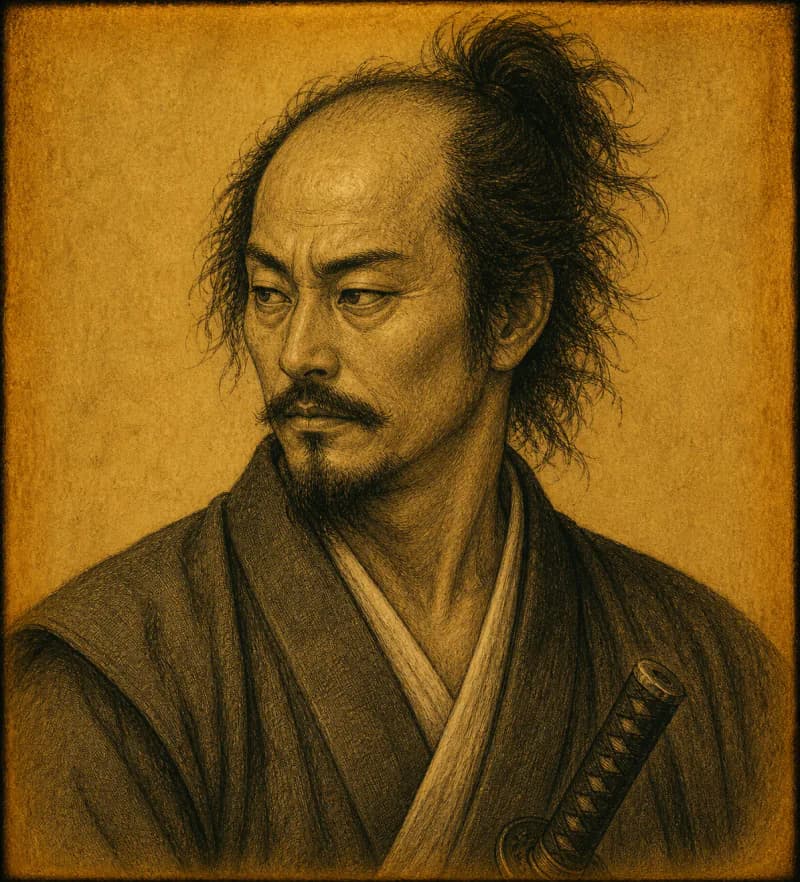
SA-0007 / JPN
Miyamoto Musashi
The undefeated swordsman who wrote The Book of Five Rings
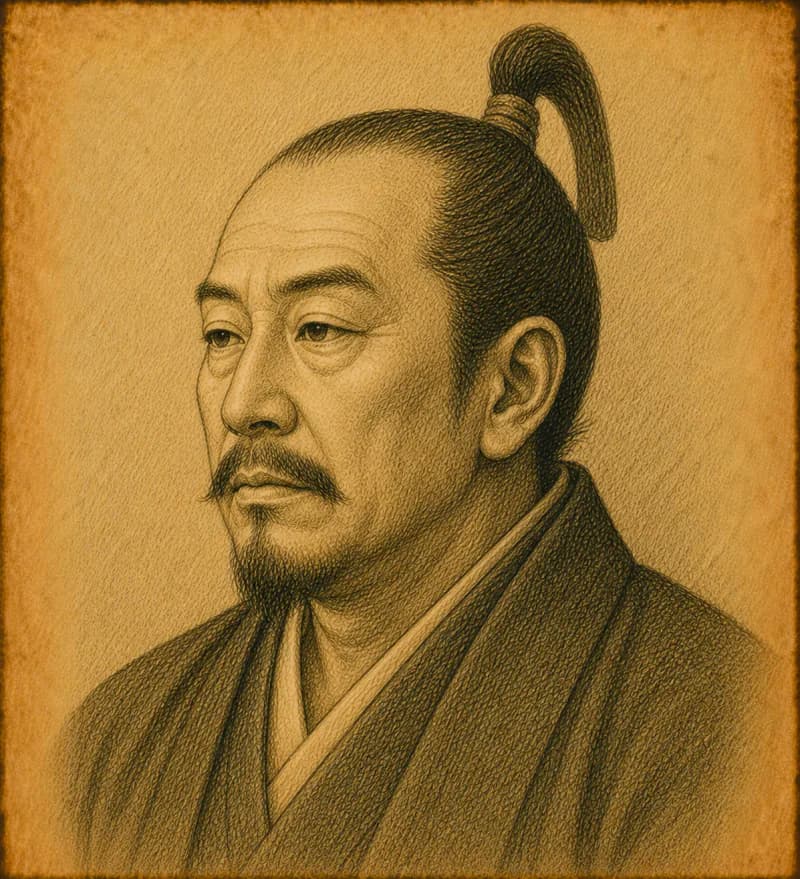
SA-0003 / JPN
Tokugawa Ieyasu
The patient warlord whose dynasty ruled Japan for 250 years
SA-0032 / JPN
Ōishi Yoshio
The chief retainer of the Forty-Seven Rōnin — Japan's archetype of loyalty