SUBJECT FILE NO. SA-0003
BUSHI ARCHIVE
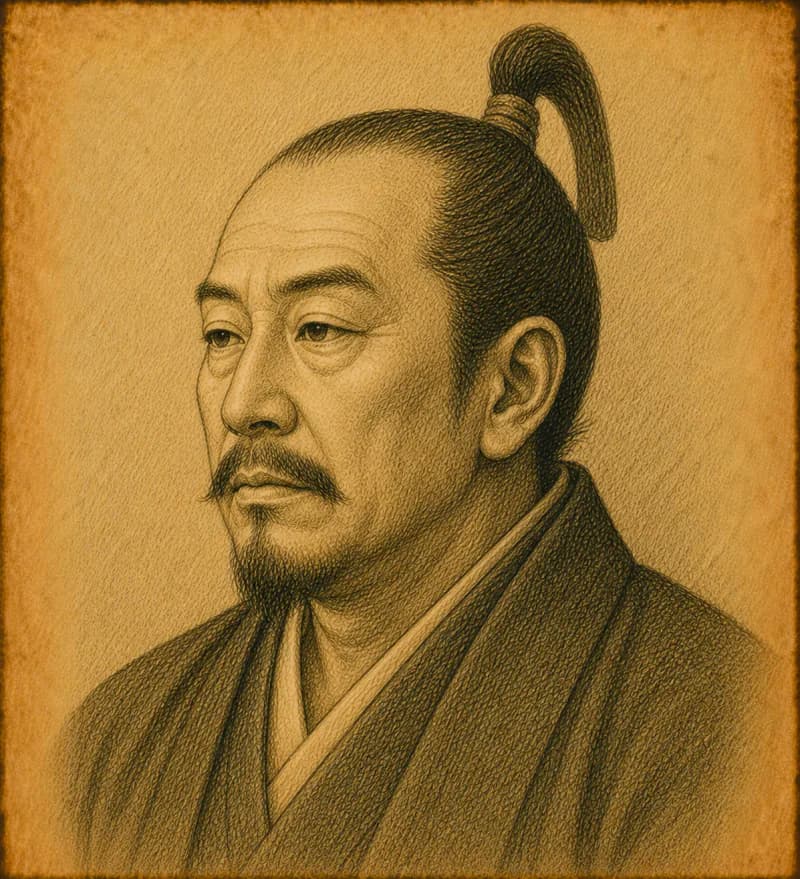
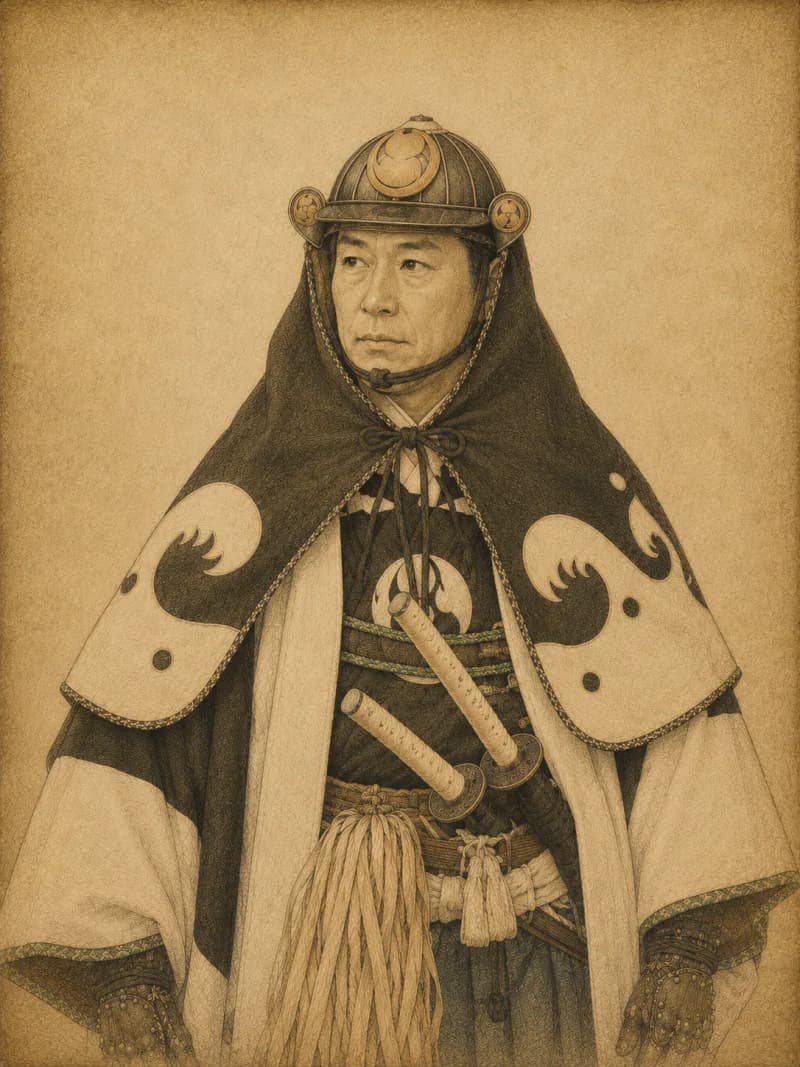
Tokugawa Ieyasu
Tokugawa Ieyasu
Founding Shogun of the Tokugawa Bakufu
SECTION I -- SUBJECT PROFILE
| Name | Tokugawa Ieyasu |
|---|---|
| English | Tokugawa Ieyasu |
| Origin | Japan |
| Lifespan | 1543–1616 |
| Gender | Male |
| Century | 17th C. |
| Clan / Role | Shogun |
| Title | Founding Shogun of the Tokugawa Bakufu |
SECTION II -- OVERVIEW
Born in 1543 in Mikawa Province, Ieyasu spent his childhood as a hostage of the Imagawa clan before allying with Nobunaga after Okehazama.
He survived every twist of the unification wars, served Hideyoshi as one of the Five Great Elders, and waited. When Hideyoshi died in 1598, Ieyasu maneuvered the country into the climactic Battle of Sekigahara (1600), where his Eastern Army crushed the Western coalition in a single afternoon.
Appointed shogun in 1603, he established the Tokugawa Bakufu in Edo and crushed the last Toyotomi loyalists at the sieges of Osaka in 1614–1615.
The Tokugawa peace he founded — sakoku isolation, sankin-kōtai alternate attendance, the rigid four-class system — endured 264 years until the Meiji Restoration.
SECTION III -- CHRONOLOGY
SECTION IV -- NOTABLE STATEMENTS
“If a bird does not sing, wait for it to sing.”
SECTION V -- FIELD NOTES
[A]The Patient Warlord
Of the three unifiers, the proverb runs: 'Nobunaga pounded the rice, Hideyoshi cooked it, and Ieyasu ate it.
' Ieyasu's patience — outliving rivals across 73 years — secured what the others had merely begun.
SECTION VI -- LEGACY & IMPACT
Ieyasu founded the longest-lasting shogunate in Japanese history. The Tokugawa institutions of sankin-kōtai, sakoku, and class hierarchy shaped Japanese society until the 1868 Meiji Restoration, and many cultural patterns of 'traditional Japan' — from kabuki to ukiyo-e — flowered under the Pax Tokugawa he established.
SECTION VII -- MAJOR DEEDS
- [01]Victory at Sekigahara (1600)
- [02]Establishment of Edo Bakufu (1603)
- [03]Sieges of Osaka (1614–1615)
- [04]Buke shohatto laws governing the daimyo
- [05]Foundation of Edo as the political capital
SECTION VIII -- REFERENCE MATERIALS
PRIMARY SOURCES & ARCHIVES
- PRIMARY
Mikawa Monogatari
Ōkubo Hikozaemon Tadataka
Contemporary chronicle by a hereditary Mikawa retainer of the Tokugawa
- SCHOLARSHIP
Tokugawa Jikki
Compiled by the Tokugawa Bakufu
Official chronological history of the Tokugawa shoguns
- ARCHIVE
National Archives of Japan — Naikaku Bunko
National Archives of Japan
Holds extensive Tokugawa family documents and pre-Meiji administrative records
Visit archive →
RECOMMENDED READING
SECTION X -- RELATED REPORTS
SA-RPT
Sekigahara: How Tokugawa Won Japan in a Single Afternoon
On October 21, 1600, two armies of roughly 80,000 men each met in fog on a Mino plain. By sunset, the battle that decided 250 years of Japanese history was over.
SA-RPT
The Last Charge at Osaka: Sanada Yukimura's Final Stand
On a single afternoon in May 1615, three thousand red-armored riders charged the largest army in Japan and nearly toppled it. The man who led them was already a legend; what he did next made him the model for every Japanese hero of doomed battle that followed.
SA-RPT
Hattori Hanzō and the Truth About the Ninja
The most famous ninja in history was almost certainly not a ninja at all. He was a regular samurai officer who happened to lead specialists from a village called Iga — and that fact changes everything about how we should read the legend.
SA-RPT
The Betrayers of Sekigahara: What Happened to the Men Who Switched Sides
Four Western Army commanders defected during the battle that decided 250 years of Japanese history. Three of them died ruined men within ten years. The fourth lived to be a punchline.
SA-RPT
Kamakura vs Edo: Why Two Samurai Governments Failed and Lasted Differently
Japan had three shogunates. Two of them are important. They look superficially similar — warriors ruling in a hereditary military government — but the way they were structured determined how each one ended, and how their differences explain everything from the daimyō system to the Meiji Restoration.
SA-RPT
The Naoe Letter: How One Letter Called Sekigahara Into Being
In April 1600, Uesugi Kagekatsu's chief retainer Naoe Kanetsugu sent Tokugawa Ieyasu a sixteen-article letter of defiance. Within months the response had brought a 720,000-koku coalition to the field at Sekigahara, the largest battle in Japanese history.
SA-RPT
Sword Instructor to the Shogun: How the Yagyū Shinkage-ryū Became State Doctrine
In 1605, Yagyū Munenori became sword instructor to the second Tokugawa shogun Hidetada. The Yagyū Shinkage-ryū inherited from his father Munetoshi became the official sword of the Tokugawa government. The reading of a rare case in which a single school became the official way of a state.
SA-RPT
Fifty-Seven Battles Unwounded: How Much of the Honda Tadakatsu Legend Is Fact?
The career of Honda Tadakatsu, said to span 'fifty-seven battles without a wound.' The specific figure rests on Edo-period compiled sources, but the absence of a record of serious wounding in contemporary materials is itself broadly recognized among scholars. Tracing the relation between legend and source, reading the historical reality of the warrior who served Tokugawa Ieyasu for half a century.
SA-RPT
The Tokugawa Four Heavenly Kings: Why Sakai, Honda, Sakakibara, and Ii Were Named Together
Sakai Tadatsugu, Honda Tadakatsu, Sakakibara Yasumasa, Ii Naomasa. The four warriors who bore the military core of Tokugawa Ieyasu are called the 'Tokugawa Four Heavenly Kings,' but when did the term form and what was the basis for the selection? Sorting out the outline of the Four Heavenly Kings from Edo-period house-tradition compilation and modern scholarship.
SA-RPT
The Ii Red Devils: How the Takeda Elite Became the Tokugawa's Strongest Unit
In 1582, after the destruction of the Takeda house, Ieyasu gave the Takeda elite 'Red Devils' to the twenty-two-year-old Ii Naomasa. Inheriting the vermilion equipment of Yamagata Masakage, the Ii Red Devils became the symbolic elite force of the Tokugawa army, combining visibility and combat power across every engagement up to Sekigahara. From the inheritance of equipment to the transmission of tactics, traced from the sources.
SA-RPT
The Wound from Pursuing Shimazu: The Sekigahara Wound That Delayed Naomasa's Death by Two Years
On September 15, 1600, in the closing phase of Sekigahara, Ii Naomasa pursued the retreat of Shimazu Yoshihiro's force, which had attempted to break through the eastern center. The thigh gunshot wound he took in the pursuit was not seen as fatal, but brought his death about a year and a half later in February 1602. A single bullet on the battlefield that closed the life of a forty-two-year-old warrior.
SA-RPT
The Landing of de Liefde: An English Navigator Washed Ashore at Usuki, Bungo, in 1600
On April 19, 1600, a strange foreign ship drifted ashore at Usuki Bay in Bungo Province. The crew had been reduced by illness and starvation from over a hundred to some twenty-odd. The navigator of this ship was the Englishman William Adams — the man who would later become Tokugawa Ieyasu's adviser.
SA-RPT
A Foreign Hatamoto: How Adams Became 'Miura Anjin'
In 1605, Tokugawa Ieyasu granted the Englishman William Adams a 250-koku fief at Hemi in the Miura District of Sagami Province and treated him as hatamoto. Tracing the birth of the first foreign samurai in Japanese history and his distinctive role in Tokugawa foreign policy.
SA-RPT
Who Is John Blackthorne of 'SHOGUN'? The Contemporary Revival of Adams
In 2024, Disney+'s 'SHOGUN' (starring Sanada Hiroyuki) took 18 Emmy Awards. The story's English navigator John Blackthorne is modeled on Miura Anjin. Tracing why a four-hundred-year-ago English navigator became a global topic of the twenty-first century.
SA-RPT
The Eastern Army Vanguard at Sekigahara: Why Masanori, a Toyotomi-Loyal Warrior, Sided with Ieyasu
On October 21, 1600, at Sekigahara. The Toyotomi-loyal warrior Fukushima Masanori, as the vanguard of the Eastern Army under Tokugawa Ieyasu, attacked the Toyotomi's senior retainer Ishida Mitsunari first of all. Within this structure, the end of the Toyotomi regime was already embedded.
SA-RPT
The Hiroshima Castle Forfeit: In 1619, Why Was the Greatest Toyotomi-Loyal Daimyō Struck Down?
In June 1619, the bakufu forfeited Fukushima Masanori from Hiroshima at 490,000 koku to Shinano Takaino at 45,000 koku. The reason was the unauthorized repair of Hiroshima Castle. But the essence was the culling of Toyotomi-loyal daimyō in the peacetime after the Ōsaka Campaigns.
SA-RPT
After Sekigahara, Why Did Only the Shimazu House Escape Reduction of Fief?
After Sekigahara in 1600, Western-side daimyō were forfeited or reduced one after another. But only the Shimazu house's 770,000 koku escaped reduction. Verifying the role Yoshihiro's break-through of the center played in the two-and-a-half-year negotiation with Tokugawa Ieyasu.
SA-RPT
Okehazama: The Day the Tōkai Overlord Fell in the Fields of Owari, 1560
On the nineteenth day of the fifth month of 1560, Imagawa Yoshimoto, who had invaded Owari at the head of a great army, was struck down by Oda Nobunaga's surprise attack at Okehazama. He was forty-two. The sudden death of the Tōkai overlord brought about Nobunaga's rise and Ieyasu's independence, and transformed the power map of the Sengoku period.
SA-RPT
The Counterweight of Million-Koku Kaga: In 1599, Toshiie's Death Broke the Balance
In 1599, on his sickbed, Maeda Toshiie was entrusted with the guardianship of Toyotomi Hideyori and departed the world. He was sixty-two. The death of Toshiie, the one great figure who could restrain Ieyasu's arrogation, broke that balance. The day after his death, the gears toward a great war began to turn.
SA-RPT
The Fall of Ōsaka: In 1615, Yodo-dono Vanished into the Flames with Her Son
In the summer of 1615, the great Tokugawa army besieged Ōsaka Castle. Yodo-dono, who had once lost her father and mother to castle-falls, was this time in the flames together with her child Hideyori. The fall of the Toyotomi house, and a third castle-fall. A life begun in loss closed in loss.
SECTION IX -- LINKED SUBJECTS
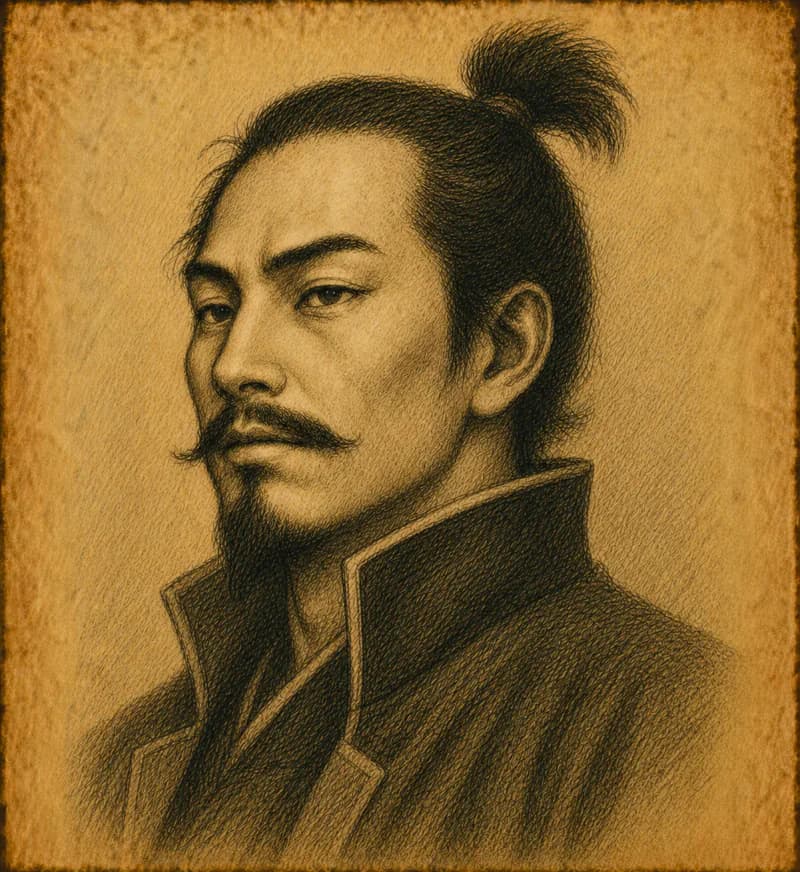
SA-0001 / JPN
Oda Nobunaga
The revolutionary who paved the path to a unified Japan
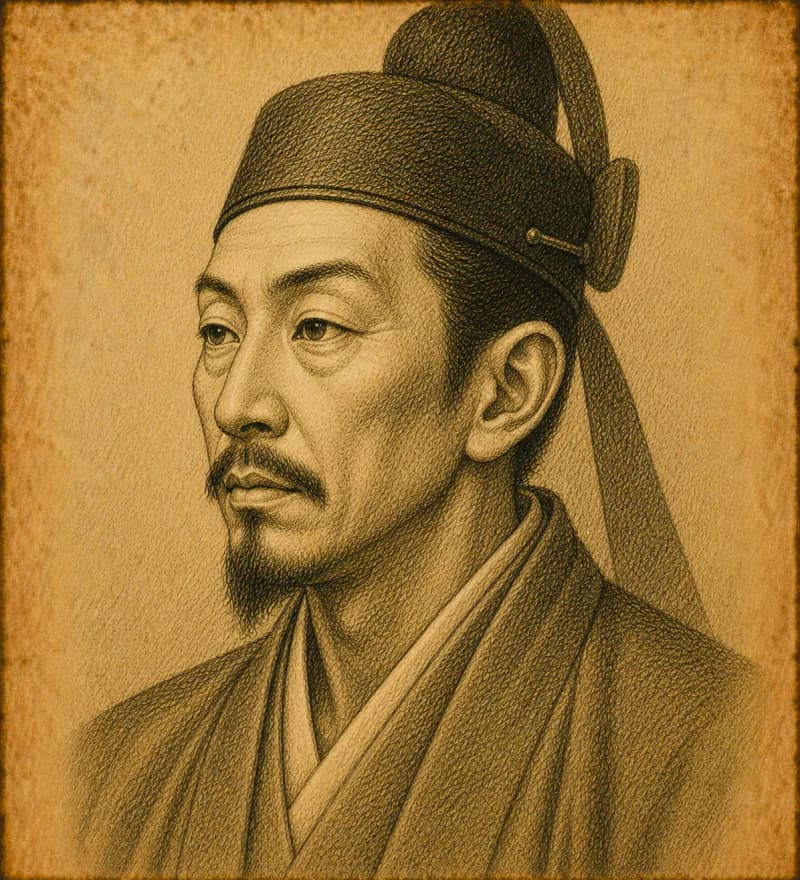
SA-0002 / JPN
Toyotomi Hideyoshi
The peasant who rose to rule all Japan
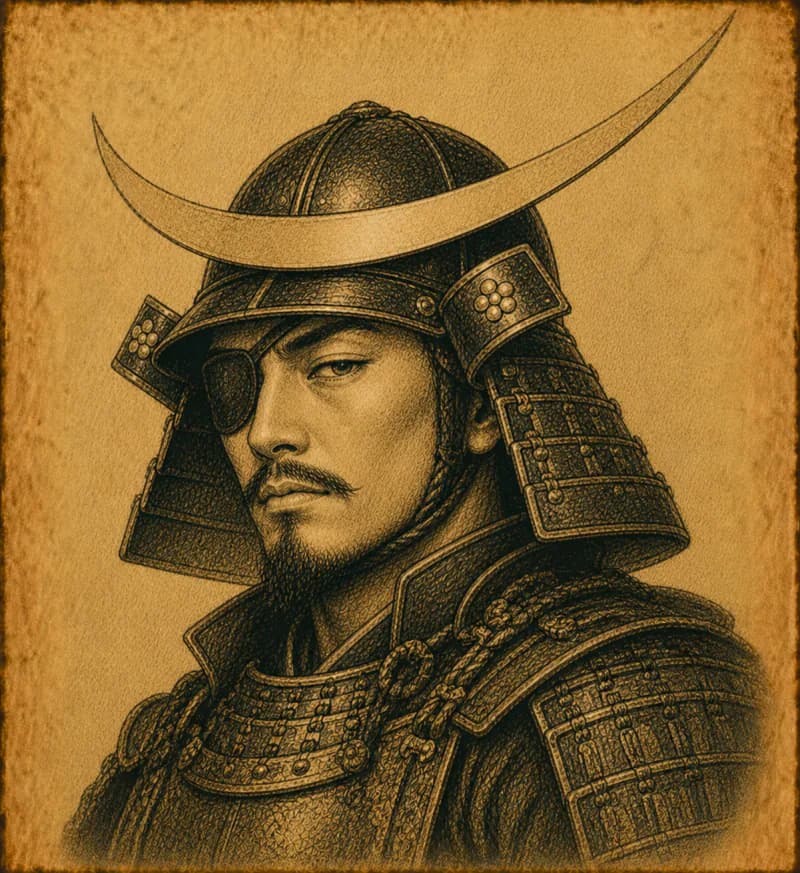
SA-0004 / JPN
Date Masamune
The One-Eyed Dragon who built Sendai
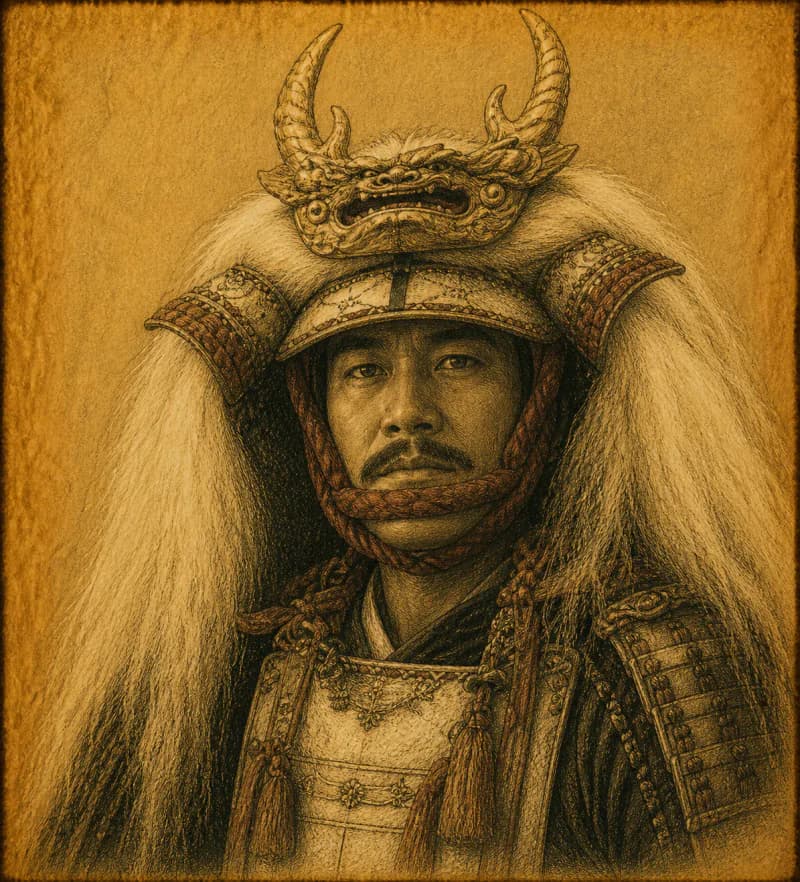
SA-0005 / JPN
Takeda Shingen
The Tiger of Kai whose cavalry shook the realm
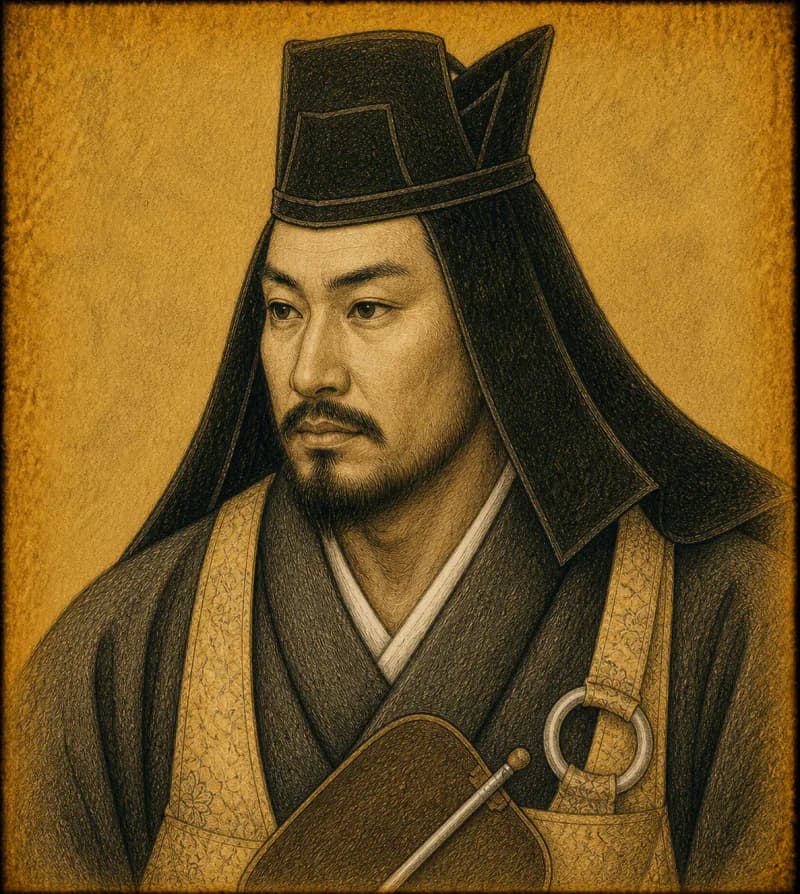
SA-0006 / JPN
Uesugi Kenshin
The Dragon of Echigo, sword-saint of the north
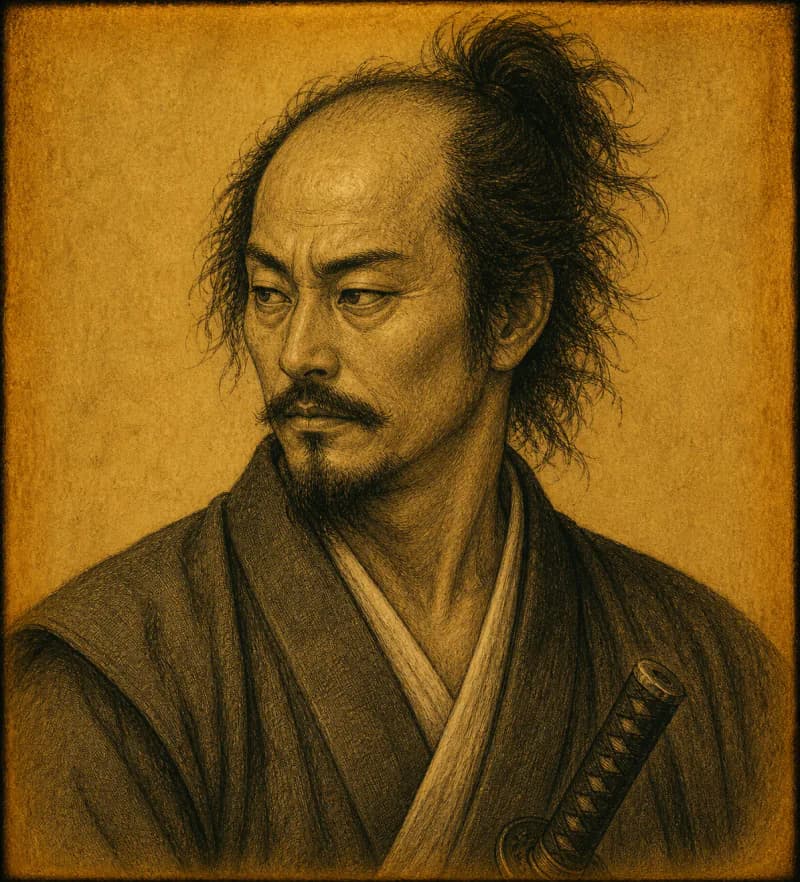
SA-0007 / JPN
Miyamoto Musashi
The undefeated swordsman who wrote The Book of Five Rings
SA-0030 / JPN
Akechi Mitsuhide
The general whose betrayal at Honnō-ji rerouted Japanese history
SA-0032 / JPN
Ōishi Yoshio
The chief retainer of the Forty-Seven Rōnin — Japan's archetype of loyalty