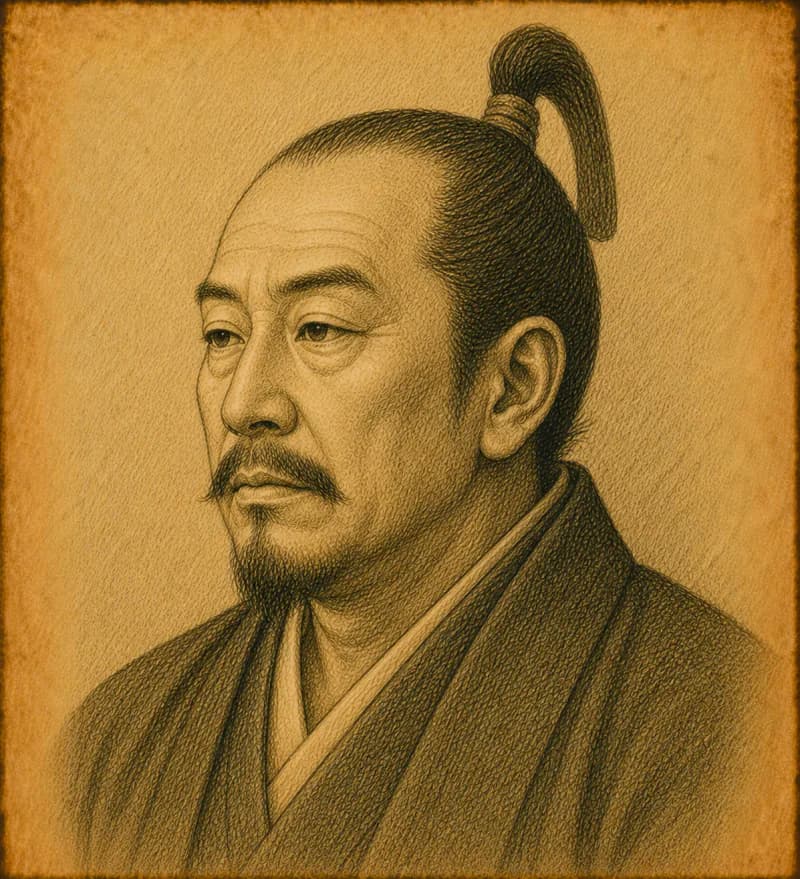
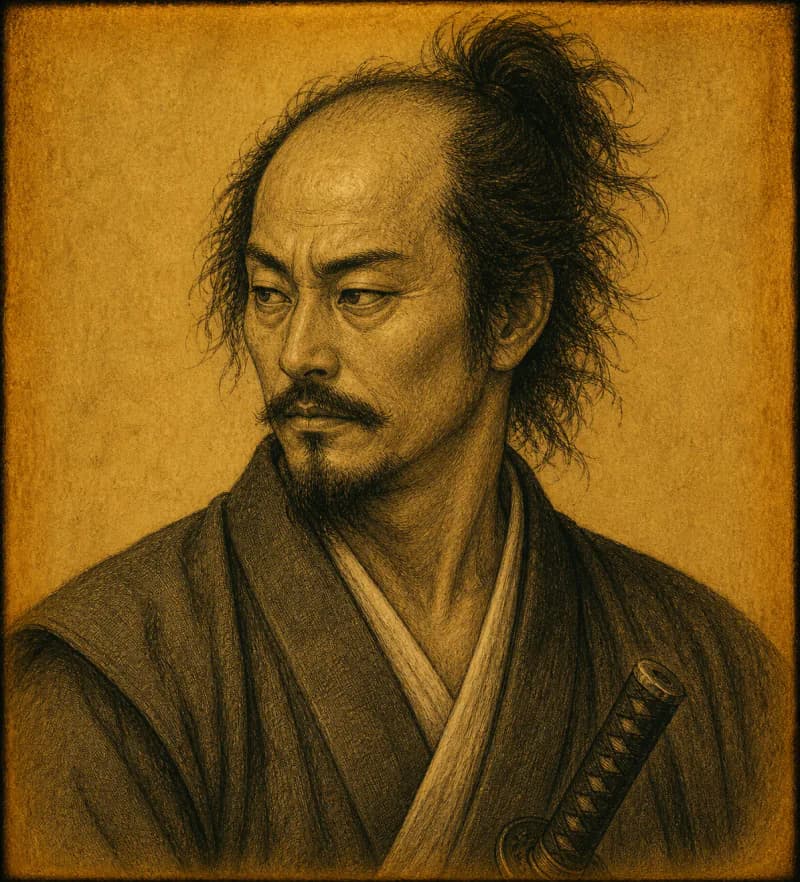
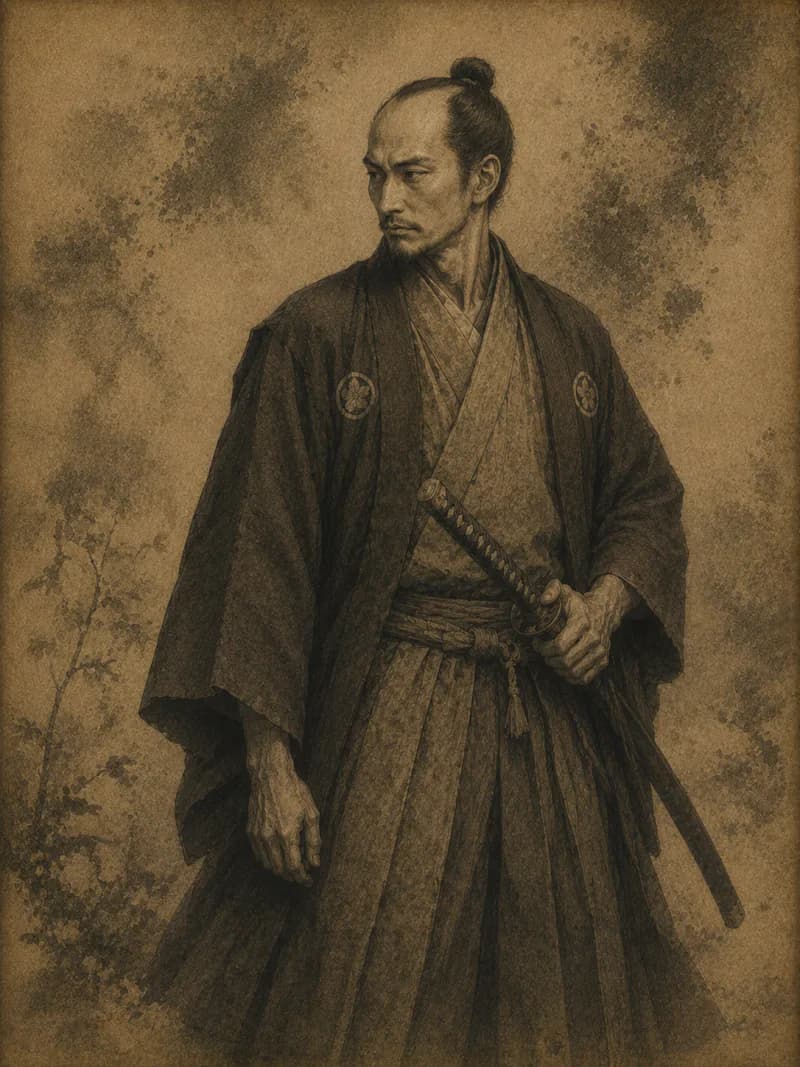
SUBJECT FILE NO. SA-0032
BUSHI ARCHIVE
Ōishi Yoshio
Ōishi Yoshio
Chief Retainer of Akō Domain
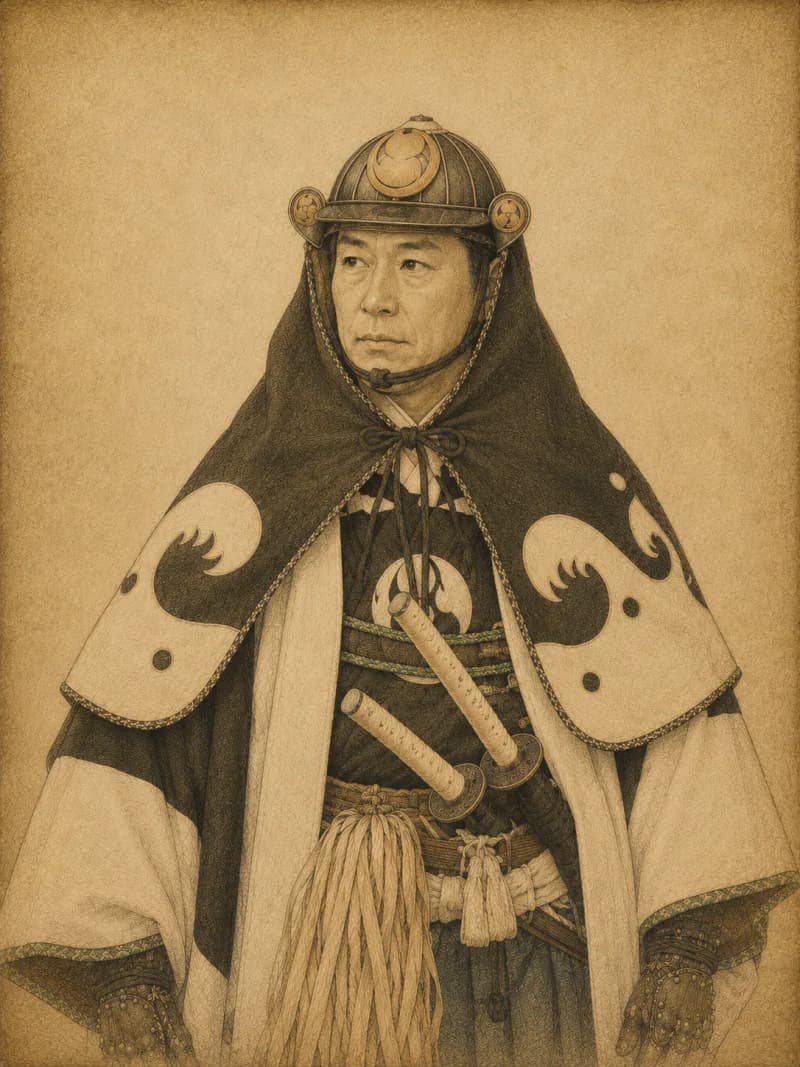
SECTION I -- SUBJECT PROFILE
| Name | Ōishi Yoshio |
|---|---|
| English | Ōishi Yoshio |
| Origin | Japan |
| Lifespan | 1659–1703 |
| Gender | Male |
| Century | 18th C. |
| Clan / Role | Samurai |
| Title | Chief Retainer of Akō Domain |
SECTION II -- OVERVIEW
Born in 1659 into the senior retainer line of Akō domain in Harima, Ōishi rose to chief retainer (karō) by his early twenties.
In 1701 his lord, Asano Naganori, drew his sword on the senior court official Kira Yoshinaka inside Edo Castle's Pine Corridor — and was ordered to commit seppuku the same day.
Akō was abolished. Ōishi handled the orderly dissolution of the domain's finances and retainer settlements while secretly planning revenge.
After a year and nine months of patient concealment, on the fourteenth day of the twelfth month of Genroku 15 (January 30, 1703 in the Western calendar), he led forty-six fellow retainers in a night raid on Kira's Edo mansion at Honjo and killed him.
The bakufu's verdict came two months later: the forty-seven were ordered to commit seppuku. Dramatized as Kanadehon Chūshingura by Chikamatsu, Takeda Izumo and others, the affair has become the single most-told story of samurai loyalty in Japanese culture.
Internationally, the 2013 Hollywood film 47 Ronin and several English translations have made him one of the most recognized Edo-period figures abroad.
SECTION III -- CHRONOLOGY
SECTION IV -- NOTABLE STATEMENTS
“How joyful! All cares are gone, this body cast away — no clouds remain to obscure the moon over the floating world.”
SECTION V -- FIELD NOTES
[A]The 'Daytime Lantern' Disguise
After Akō's abolition, Ōishi retreated to Yamashina near Kyoto and conspicuously gave himself over to drink and pleasure-quarter outings.
Contemporaries dismissed him as a 'daytime lantern' — useless, dim. The dissipation was a calculated cover for bakufu spies; in the meantime he was assembling the conspirators, the funds, the weapons, and the floor plan of Kira's mansion.
SECTION VI -- LEGACY & IMPACT
The Akō Incident has been retold endlessly as Kanadehon Chūshingura — kabuki, jōruri, novels, films, television — and shaped the collective Japanese vocabulary around loyalty and righteous revenge.
Internationally, the 2013 Hollywood feature 47 Ronin and a sustained tradition of English-language scholarship and translation have made Ōishi one of the most globally recognized figures of the Edo period.
SECTION VII -- MAJOR DEEDS
- [01]Dissolution of the Akō domain (1701)
- [02]Organization of the forty-seven loyalists
- [03]Raid on Kira's mansion (1702)
- [04]Kanadehon Chūshingura — central protagonist
- [05]Foundation of the gishi (loyal-retainer) discourse
SECTION VIII -- REFERENCE MATERIALS
PRIMARY SOURCES & ARCHIVES
- PRIMARY
Horibe Yasubē Diary
Horibe Yasubē Taketsune
Contemporary diary by one of the forty-seven, covering the months around the raid
- SCHOLARSHIP
Chūshingura no Kessansho (The Chūshingura Account Book)
Yamamoto Hirofumi / Shinchō Shinsho
Economic and organizational analysis of the Akō Incident by a University of Tokyo Historiographical Institute professor
- ARCHIVE
Akō City Historical Museum
Akō, Hyōgo Prefecture
Central archive for materials on the Akō Incident
Visit archive →
RECOMMENDED READING
SECTION X -- RELATED REPORTS
SA-RPT
Twenty-Three Months of Silence: Why Ōishi Waited So Long Before the Akō Raid
Six hundred days passed between the death of Asano Naganori and the raid on Kira's mansion. While Ōishi Yoshio drank in Yamashina and was dismissed as a 'daytime lantern,' what was he actually doing?
SA-RPT
The Pine Corridor: Why Asano Drew His Sword
On April 21, 1701, in the Pine Corridor of the inner keep of Edo Castle, the lord of Akō domain attacked the senior court official Kira Yoshinaka from behind. The motive remains a mystery to this day.
SA-RPT
From Revenge to Loyalty: How the Akō Incident Became a National Myth
The Akō Incident of 1703 was, in fact, a private revenge by forty-seven masterless samurai. Two hundred and fifty years of staging turned it into the foundational story of loyalty in Japanese culture.