SUBJECT FILE NO. SA-0035
BUSHI ARCHIVE
Okita Sōji
Okita Sōji
Captain of the First Unit, Shinsengumi
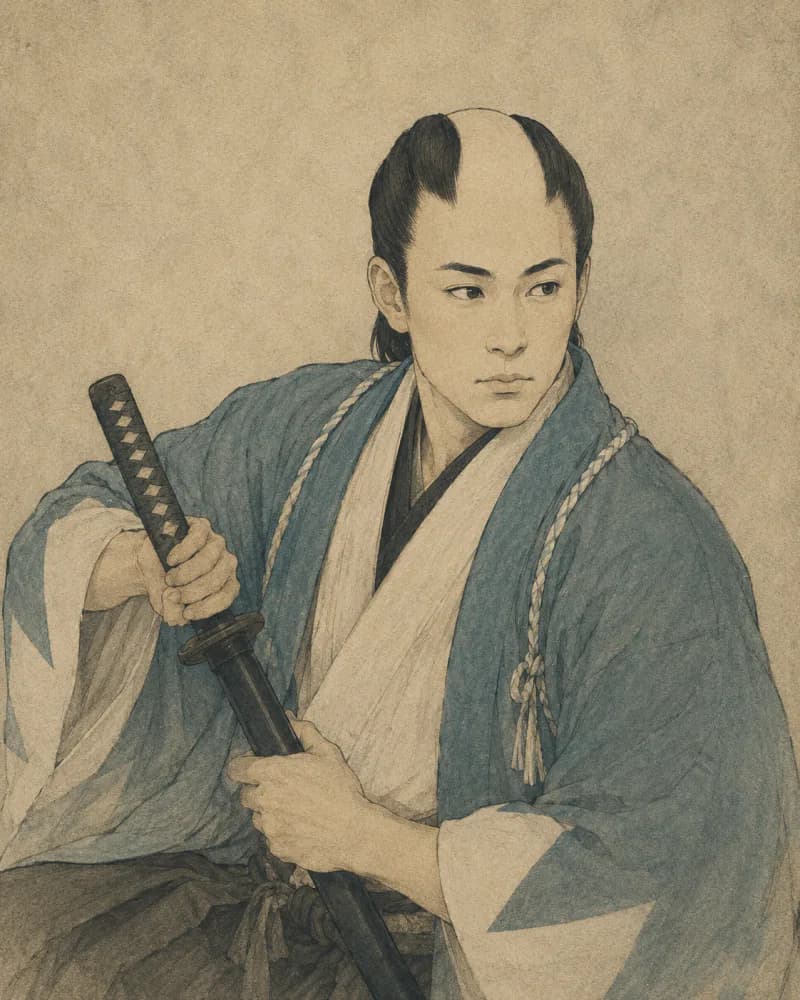
SECTION I -- SUBJECT PROFILE
| Name | Okita Sōji |
|---|---|
| English | Okita Sōji |
| Origin | Japan |
| Lifespan | 1842?–1868 |
| Gender | Male |
| Century | 19th C. |
| Clan / Role | Samurai |
| Title | Captain of the First Unit, Shinsengumi |
SECTION II -- OVERVIEW
Born around 1842 or 1844 to a Shirakawa-domain samurai family in Musashi (the exact year is disputed), Okita entered Kondō Isamu's Shieikan dōjō as a live-in pupil of the Tennen Rishin-ryū school at about age nine.
By his mid-teens he was head student. In 1863 he traveled to Kyoto with the founders of the Shinsengumi and was appointed captain of the first unit and head instructor of swordsmanship.
At the Ikedaya Incident in 1864 he led the charge into the inn but began coughing up blood mid-fight and had to withdraw — the first documented sign of his pulmonary tuberculosis.
He continued to fight through 1867 as the illness worsened, but was confined to bed by the time the Boshin War began. He died at the Sendagaya residence of a gardener named Heigorō on May 30, 1868, aged twenty-five or twenty-seven.
The fame of his swordsmanship and the tragedy of the disease together made him the most recognized Shinsengumi figure after Hijikata in later popular culture.
SECTION III -- CHRONOLOGY
SECTION IV -- NOTABLE STATEMENTS
“I cannot cut the black cat.”
SECTION V -- FIELD NOTES
[A]The Black Cat
In his last months Okita is said to have tried to strike a black cat in the garden of the house where he was convalescing — and to have been unable to cut it.
The anecdote, which first appears in Edo-era and Meiji-era retellings rather than in contemporary records, became the standard symbolic image of the prodigy of the sword reduced by disease.
SECTION VI -- LEGACY & IMPACT
Okita was central to the combat strength of the Shinsengumi — Ikedaya, the Kinmon Incident, the assassination of Itō Kashitarō — and as head instructor he taught the younger swordsmen of the unit.
Tuberculosis kept him out of the Boshin War. Meiji-era and modern writers have repeatedly returned to the contrast of his early sword prodigy and his early death; the combination has made him, after Hijikata, the single most frequently dramatized Shinsengumi figure in Japanese popular culture.
Through English translations of Shiba Ryōtarō and through modern anime and manga, his international name recognition is now considerable.
SECTION VII -- MAJOR DEEDS
- [01]Head student of Tennen Rishin-ryū at the Shieikan
- [02]Captain of the first unit, Shinsengumi (1863)
- [03]Combat at the Ikedaya (1864)
- [04]Sword instruction within the unit
- [05]Convalescence and death at Sendagaya (1868)
SECTION VIII -- REFERENCE MATERIALS
PRIMARY SOURCES & ARCHIVES
- PRIMARY
Shinsengumi Tenmatsuki
Nagakura Shinpachi
Memoir by Okita's fellow Shinsengumi captain
- SCHOLARSHIP
Shinsengumi
Ōishi Manabu / Chūkō Shinsho
Standard modern history of the Shinsengumi
- ARCHIVE
Hino City Shinsengumi Furusato Historical Museum
Hino, Tokyo
Dedicated museum on the Shinsengumi's Hino roots
Visit archive →
RECOMMENDED READING
SECTION X -- RELATED REPORTS
SA-RPT
The Coughing at Ikedaya: When Did Okita Sōji Find Out He Was Dying?
On the night of July 8, 1864, Shinsengumi first-captain Okita Sōji was sword-fighting Chōshū loyalists on the second floor of the Ikedaya inn. Suddenly blood spilled from his mouth. The end of Okita the swordsman had begun.
SA-RPT
The Black Cat at Sendagaya: What Okita Sōji Could Not Cut
In the spring of 1868, Okita Sōji was convalescing in the Edo neighborhood of Sendagaya, in the house of a gardener. The story that he tried, and failed, to strike a black cat in the garden is the standard symbolic image of the prodigy of the sword brought low by disease.
SA-RPT
First Captain's Sword: What Okita Sōji Actually Did
Okita Sōji's documented combat participation amounts to a handful of engagements — Ikedaya, the Kinmon Incident, the Itō Kashitarō assassination, Toba-Fushimi. In each of them he was the man the unit trusted most.
SECTION IX -- LINKED SUBJECTS
SA-0031 / JPN
Hijikata Toshizō
Vice-commander of the Shinsengumi who fought the shogunate's losing war to its very last day
SA-0008 / JPN
Sakamoto Ryōma
The low-rank samurai who engineered the fall of the shogunate
SA-0022 / JPN
Tokugawa Yoshinobu
The last shogun who chose to surrender power rather than fight a civil war he believed Japan could not afford
SA-0027 / JPN
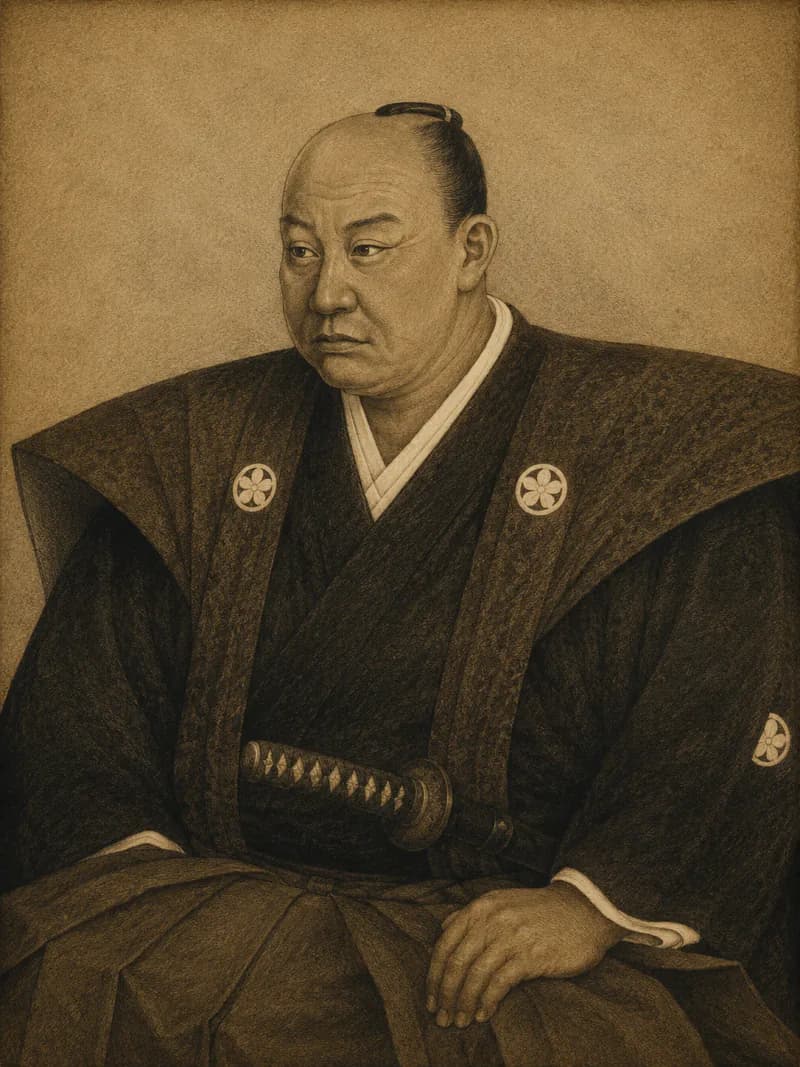
Ii Naosuke
The Tairō who signed the unequal treaties — and was assassinated for it at the gates of Edo Castle
SA-0036 / JPN
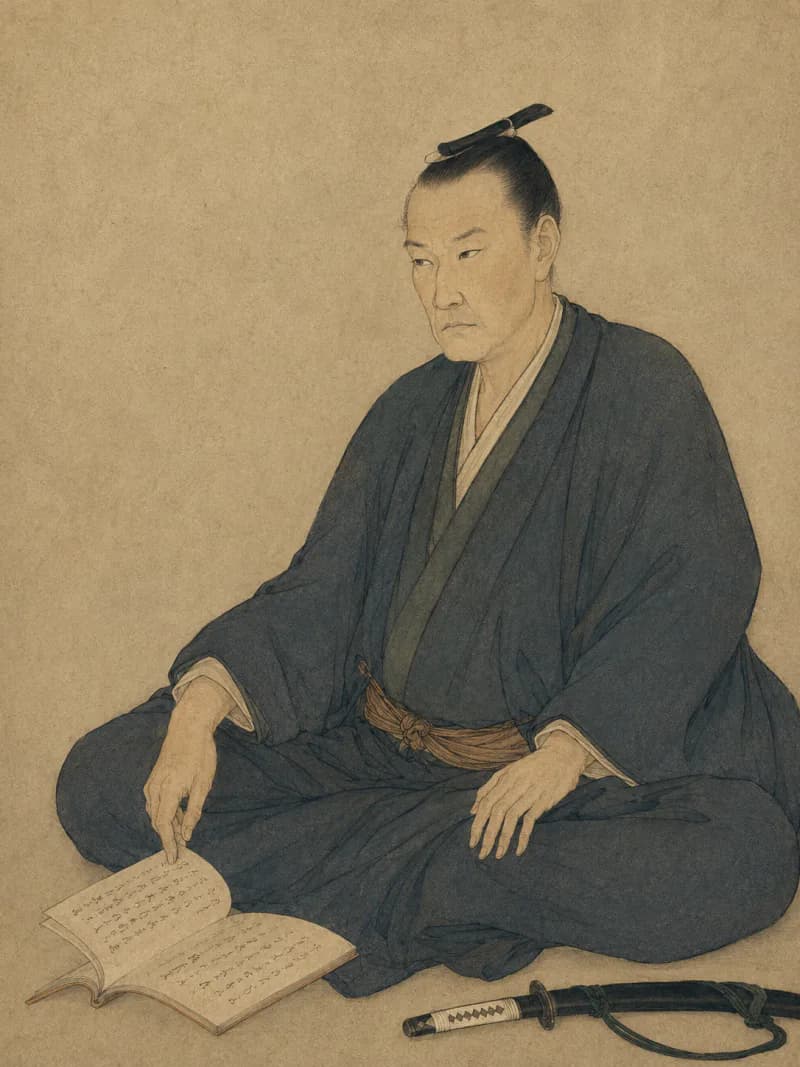
Yoshida Shōin
The Shōka Sonjuku teacher whose two-and-a-half-year school drove the Meiji Restoration
SA-0037 / JPN
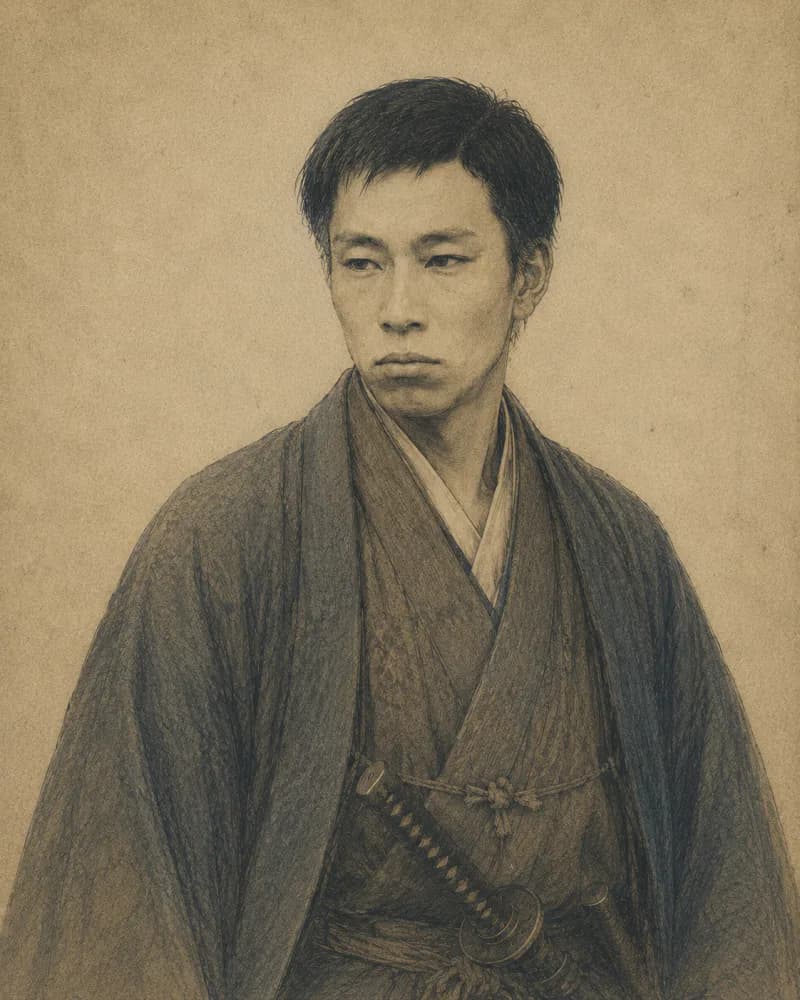
Takasugi Shinsaku
The Shōka Sonjuku graduate whose Kiheitai militia and Kōzanji coup drove Chōshū to topple the bakufu
SA-0045 / JPN
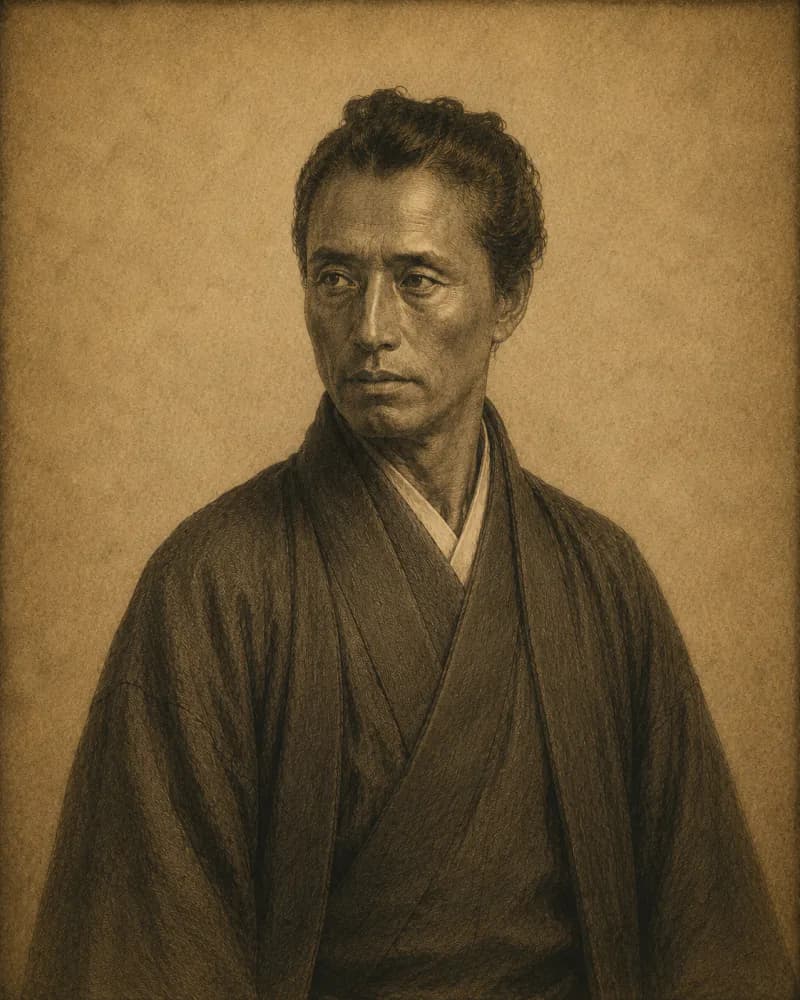
Katsu Kaishū
The last navy minister of the shogunate who delivered the bloodless surrender of Edo and was Sakamoto Ryōma's master
SA-0046 / JPN
Yamaoka Tesshū
One of the 'Three Boats' of the Bakumatsu who opened the road to the bloodless surrender of Edo and founded the Mutō-ryū