ROLES
Statesman
The political figures who built the modern Japanese state — from the architects of the Meiji Constitution to the founders of the bakumatsu navy.
-- 3 SUBJECTS ON FILE
SUBJECTS IN THIS ROLE
- O
SA-0071 / 1810
Ogata Kōan
The rangaku (Dutch learning) scholar who trained Fukuzawa Yukichi and Ōmura Masujirō at Tekijuku, and built the foundation of modern Japanese medicine and Western learning
SA-0045 / 1823
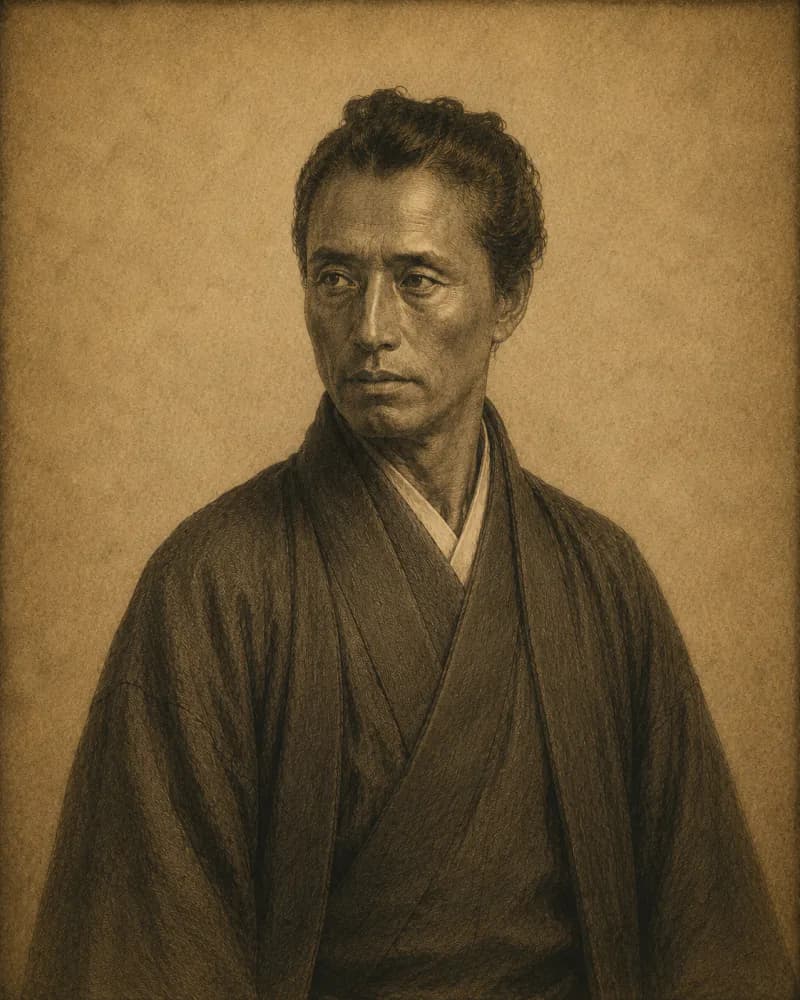
Katsu Kaishū
The last navy minister of the shogunate who delivered the bloodless surrender of Edo and was Sakamoto Ryōma's master
SA-0047 / 1841
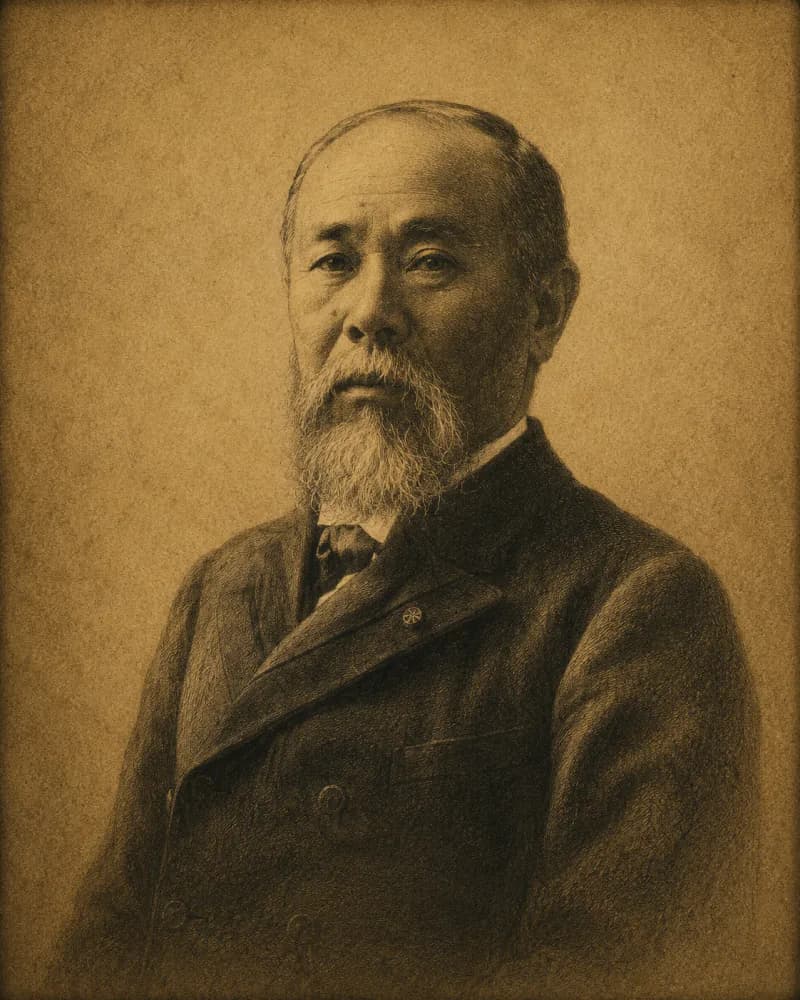
Itō Hirobumi
The first prime minister of Japan and chief drafter of the Meiji Constitution — Shōin's last and youngest student
REPORTS COVERING THIS ROLE
The Bloodless Surrender of Edo: The Day Saigō and Katsu Saved a City of a Million
On March 14, 1868, Katsu Kaishū and Saigō Takamori met at the Satsuma estate. The direct negotiation that averted the planned total assault on Edo Castle the following day. A single day's meeting that saved the lives and property of a million Edo residents from war.
The Kanrin-maru: How Katsu Kaishū Built Modern Japan's Navy
In 1860, Katsu Kaishū commanded the Kanrin-maru across the Pacific with a Japanese crew. From naval training at Nagasaki, to the Kanrin-maru voyage to America, to the Kobe Naval Training Center — Katsu Kaishū's life was itself the founding history of Japan's modern navy.
Ryōma's Master: How Katsu Kaishū Trained Sakamoto Ryōma
In 1862, the Tosa-domain rōnin Sakamoto Ryōma came to assassinate the shogunal retainer Katsu Kaishū. The two talked through the night, and Ryōma sheathed his sword and became Katsu's student. The single night's meeting became the origin of the Satsuma-Chōshū Alliance and the restoration of imperial rule four years later.
The Sunpu Meeting: The Day Yamaoka Tesshū Walked Alone Into Saigō's Camp
On March 9, 1868, Yamaoka Tesshū walked alone into the new government army's occupied Sunpu and met Saigō Takamori. The framework of the bloodless surrender of Edo was set on that single day at Sunpu, leading to the Katsu-Saigō meeting five days later. The day a no-rank shogunal retainer moved history.
First Prime Minister: The Day Itō Hirobumi Took the Top of Japan at Forty-Four
On December 22, 1885, Itō Hirobumi became Japan's first prime minister. At forty-four, he was one of the youngest heads of government in the world at the time. What lay behind the extraordinary career in which a son of a poor farming family, student of Shōin, reached the top of modern Japan in twenty-eight years?
Drafting the Meiji Constitution: How Itō Hirobumi Wrote the Blueprint of a State
On February 11, 1889, the Constitution of the Empire of Japan was promulgated. The center of the drafting was Itō Hirobumi. From the European constitutional research from 1882, through discussions with the Austro-German legal scholars Gneist, Stein, and Mosse, to the joint work with the drafting team of Inoue Kowashi, Itō Miyoji, and Kaneko Kentarō — the seven years in which one statesman wrote the blueprint of a state.
Harbin Station: The Day Itō Hirobumi Was Shot by a Korean Independence Activist
On October 26, 1909, the first Resident-General of Korea, Itō Hirobumi, was shot by the Korean independence activist An Jung-geun at Harbin station and died at sixty-eight. The assassination on the eve of the Japan-Korea annexation has continued as the deepest historical point of contention in Japan-Korea relations to the present.
In 1838, Tekijuku Opened in Ōsaka: A Learning Community That One Rangaku Scholar Started
In 1838, Ogata Kōan opened the rangaku school 'Tekijuku' at Semba in Ōsaka. The small private school started by a twenty-nine-year-old young rangaku scholar would, over the next twenty-five years, produce three thousand disciples who would carry Japan's modernization from the Bakumatsu through early Meiji.
The Seed-Pox of 1849: The Day Kōan Started Japanese Public Health
In 1849, Ogata Kōan began cowpox inoculation (seed-pox) in earnest in Ōsaka. The organized introduction into Japan of vaccination against smallpox — humanity's greatest epidemic — became a watershed enterprise in the history of Japanese public health.
Tekijuku's Three Thousand Disciples: The Place Where Fukuzawa Yukichi and Ōmura Masujirō Were Born
Tekijuku sent out more than three thousand disciples across Kōan's lifetime. Fukuzawa Yukichi, Ōmura Masujirō, Hashimoto Sanai, Sano Tsunetami, Nagayo Sensai. Nearly all the human group that carried Japan's modernization from the Bakumatsu through early Meiji had passed through this small private school in Ōsaka.