SUBJECT FILE NO. SA-0083
BUSHI ARCHIVE
Iwasaki Yatarō
Iwasaki Yatarō
Founder of the Mitsubishi zaibatsu
SECTION I -- SUBJECT PROFILE
| Name | Iwasaki Yatarō |
|---|---|
| English | Iwasaki Yatarō |
| Origin | Japan |
| Lifespan | 1835–1885 |
| Gender | Male |
| Century | 19th C. |
| Clan / Role | Entrepreneur |
| Title | Founder of the Mitsubishi zaibatsu |
SECTION II -- OVERVIEW
Born in 1835 (Tenpō 5) into a jige-rōnin house at Aki in Tosa Province (present-day Aki City, Kōchi Prefecture). A jige-rōnin was a house rank of the lowest stratum, all but peasants, that had sold the gōshi (rural samurai) title and lost warrior status.
Yatarō applied himself to learning amid poverty, and his talent was discovered by Yoshida Tōyō. Employed by Gotō Shōjirō, he took charge of the practical trade affairs of Nagasaki and Ōsaka in the Tosa domain's commercial organization.
Around this time he also had contact with the Kaientai of Sakamoto Ryōma (this site's id 8). After the Meiji Restoration, when the abolition of the domains left the domain-run enterprises with nowhere to go, Yatarō took them over and set out into the shipping business.
In 1873 (Meiji 6), he founded the Mitsubishi Shōkai. Taking sole charge of the government's military transport in the Taiwan Expedition of 1874 and the Satsuma Rebellion of 1877, he gained enormous profit and became the overlord of the shipping world.
Under government protection, Mitsubishi grew rapidly into Japan's largest shipping company. But in the 1880s, a fierce freight-rate competition with the government-affiliated Kyōdō Un'yu company tormented Yatarō.
In February 1885 (Meiji 18), in the midst of that competition, he died of stomach cancer. He was fifty. The Mitsubishi that Yatarō built was inherited by his younger brother Yanosuke and his son Hisaya, and developed into a giant zaibatsu representative of Japan.
SECTION III -- CHRONOLOGY
SECTION IV -- NOTABLE STATEMENTS
“I was born into a house that could not even buy back a warrior's title. Then with the power of money I will build a fortune second to none.”
SECTION V -- FIELD NOTES
[A]Setting Out from a Jige-Rōnin — Rising from the Lowest Stratum
The Iwasaki house into which Yatarō was born was of the rank called jige-rōnin. It was the lowest stratum of the Tosa status system — a house that, once gōshi, had in its poverty sold off its warrior status and fallen all but to peasants.
From his boyhood, Yatarō tasted to the bone the humiliation of this birth. In his youth he also experienced the misfortune of imprisonment.
But he turned poverty and low status into a burning obsession to rise. His talent recognized in learning by Yoshida Tōyō, and employed by Gotō Shōjirō, he rapidly distinguished himself in the Tosa domain's trade affairs.
His way of living — making his way in the world by commercial talent and the abacus, not by military force or pedigree — was also a scathing counterattack against a feudal society in which status decided everything.
A man born in the lowest stratum would in time build the greatest wealth in Japan. Yatarō's life most vividly embodies the new age of Meiji, in which ability overturned status.
SECTION VI -- LEGACY & IMPACT
Iwasaki Yatarō is an entrepreneur representative of Meiji Japan, who rose from the lowest warrior stratum of Tosa and built, in a single generation, the foundation of the Mitsubishi zaibatsu.
Born into a jige-rōnin house that had even lost warrior status, Yatarō seized the upheaval from the Bakumatsu into the Meiji as an opportunity and built enormous wealth through the shipping business.
Mitsubishi, which grew rapidly by taking charge of the government's military transport in such conflicts as the Satsuma Rebellion, was criticized as a political merchant, but at the same time built the foundation of the shipping and logistics of modern Japan.
The Mitsubishi that Yatarō founded expanded its business from shipping into mining, shipbuilding, banking, and trading, and, inherited by his younger brother Yanosuke, his son Hisaya, and his nephew Koyata, developed into one of Japan's largest zaibatsu, ranking with Mitsui.
Its lineage connects to the core of the Japanese economy as today's Mitsubishi Group. If Sakamoto Ryōma (this site's id 8), also of Tosa gōshi origin, was a transformer of politics, then Yatarō was a transformer of the economy.
It may be said that the spirit of meritocracy rooted in Tosa since Chōsokabe Motochika (this site's id 79) produced figures like Yatarō who overturned status.
In Aki City, Kōchi Prefecture, Yatarō's birthplace is preserved, conveying to the present the origin of the man who moved the Japanese economy from this land.
SECTION VII -- MAJOR DEEDS
- [01]Founding of the Mitsubishi Shōkai (1873)
- [02]Shipping hegemony through contracting government military transport
- [03]Construction of a shipping network leading to Nippon Yūsen
- [04]Expansion into mining, shipbuilding, and finance
- [05]Establishment of the foundation of the Mitsubishi zaibatsu
SECTION VIII -- REFERENCE MATERIALS
PRIMARY SOURCES & ARCHIVES
- PRIMARY
Iwasaki Yatarō Nikki
Yatarō's own record (diary)
- SCHOLARSHIP
The Challenge of the Entrepreneurs
Miyamoto Matao / Chūō Kōron Shinsha
Examines Iwasaki Yatarō and other Meiji entrepreneurs
- ARCHIVE
Iwasaki Yatarō's Birthplace
Aki City, Kōchi Prefecture
The jige-rōnin house where Yatarō was born and raised
Visit archive →
RECOMMENDED READING
SECTION X -- RELATED REPORTS
SA-RPT
Son of a Jige-Rōnin: The Man Who Rose from the Lowest Stratum
Iwasaki Yatarō was born into a jige-rōnin house that had even lost warrior status. The youth, who tasted poverty, humiliation, and even imprisonment, turned that frustration into an obsession to rise. It was the beginning of a scathing counterattack against a world where status decided everything.
SA-RPT
The Founding of Mitsubishi: In 1873, He Turned the Chaos of Abolished Domains into Opportunity
When the abolition of the domains left the domain-run enterprises with nowhere to go, Iwasaki Yatarō took over their ships and set out into shipping. The Mitsubishi Shōkai he founded in 1873 began from the gamble of one man who saw an age of upheaval as opportunity.
SA-RPT
The Shipping War: In 1885, the Overlord Fell in the Midst of Competition
Having gained enormous profit from the military transport of the Satsuma Rebellion, Iwasaki Yatarō became the overlord of the shipping world. But a fierce freight-rate competition with the government-affiliated Kyōdō Un'yu tormented him. The man who built Japan's greatest wealth departed the world with his aim unfinished, in the midst of that death-struggle.
SECTION IX -- LINKED SUBJECTS
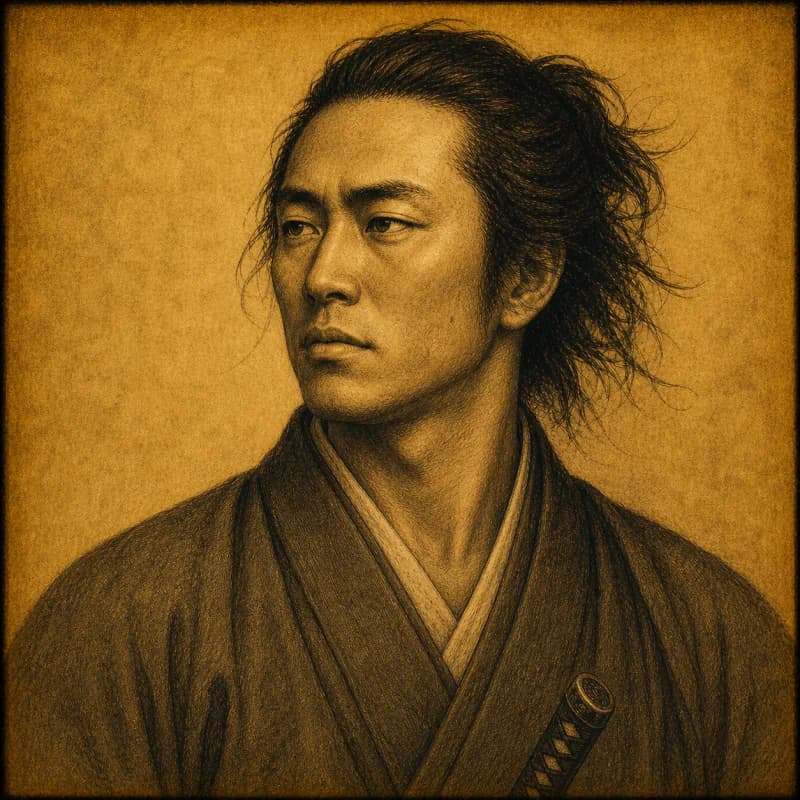
SA-0008 / JPN
Sakamoto Ryōma
The low-rank samurai who engineered the fall of the shogunate
SA-0079 / JPN
Chōsokabe Motochika
The hero of Tosa who rose from a youth mocked as 'the little princess-boy' to unify Shikoku, and was cast into darkness by the death of his beloved son
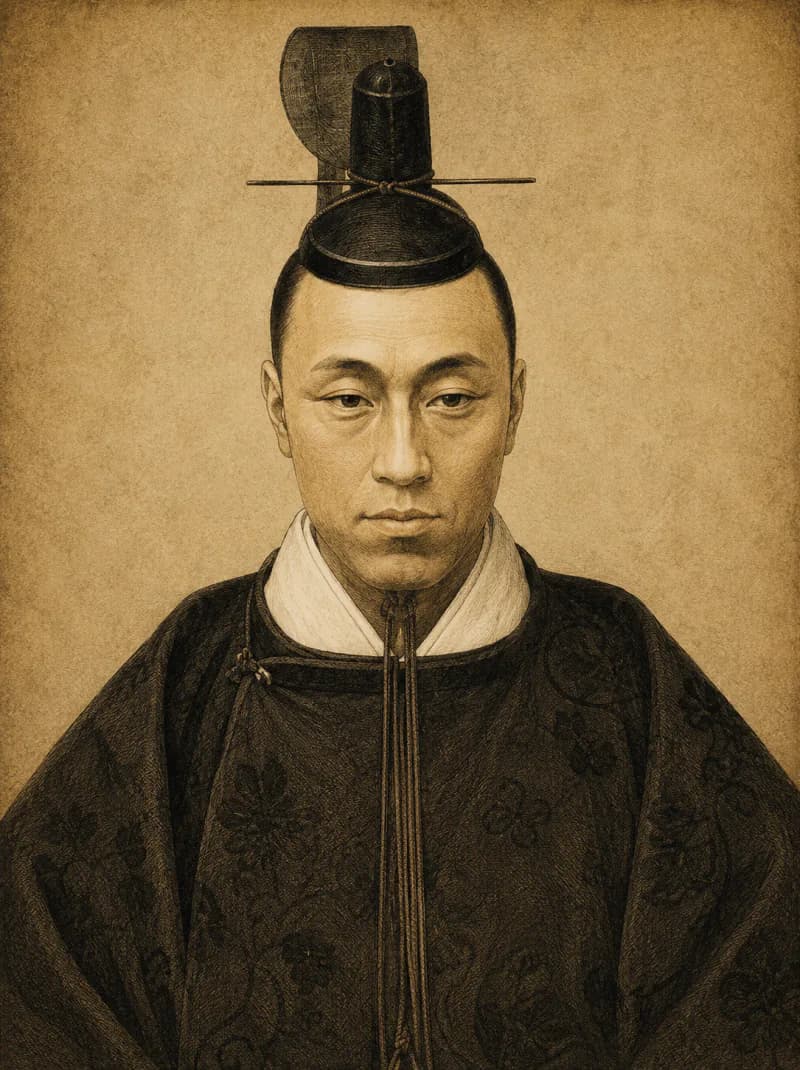
SA-0022 / JPN
Tokugawa Yoshinobu
The last shogun who chose to surrender power rather than fight a civil war he believed Japan could not afford
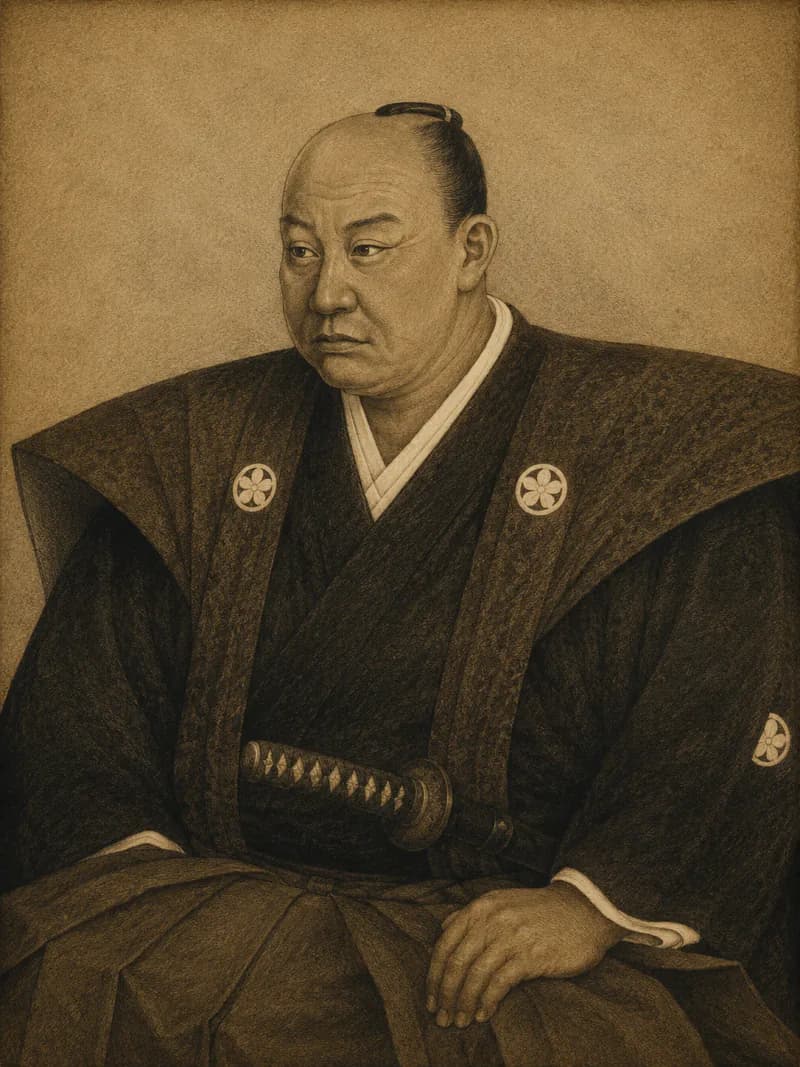
SA-0027 / JPN
Ii Naosuke
The Tairō who signed the unequal treaties — and was assassinated for it at the gates of Edo Castle
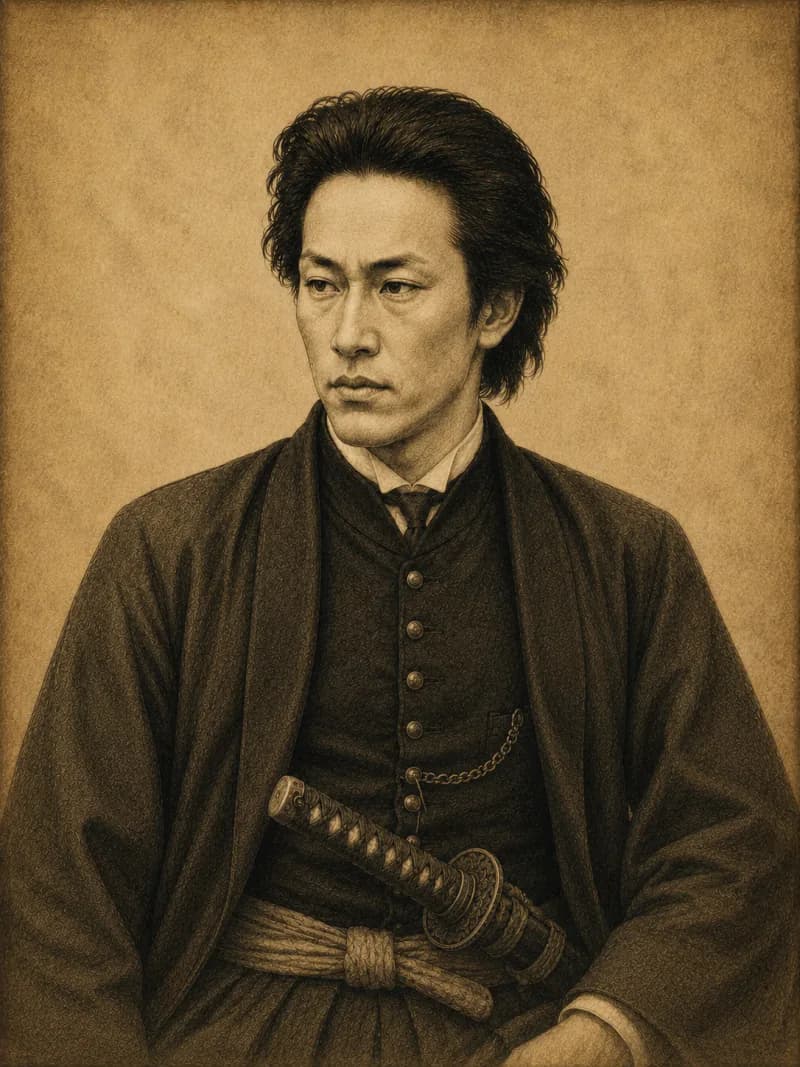
SA-0031 / JPN
Hijikata Toshizō
Vice-commander of the Shinsengumi who fought the shogunate's losing war to its very last day
SA-0035 / JPN
Okita Sōji
First-captain of the Shinsengumi — and the tubercular swordsman who never fought the Boshin War
SA-0036 / JPN
Yoshida Shōin
The Shōka Sonjuku teacher whose two-and-a-half-year school drove the Meiji Restoration
SA-0037 / JPN
Takasugi Shinsaku
The Shōka Sonjuku graduate whose Kiheitai militia and Kōzanji coup drove Chōshū to topple the bakufu