SUBJECT FILE NO. SA-0071
BUSHI ARCHIVE
Ogata Kōan
Ogata Kōan
Head of Tekijuku; bakufu Okuishi (physician-in-attendance); rangaku scholar and physician
SECTION I -- SUBJECT PROFILE
| Name | Ogata Kōan |
|---|---|
| English | Ogata Kōan |
| Origin | Japan |
| Lifespan | 1810–1863 |
| Gender | Male |
| Century | 19th C. |
| Clan / Role | Statesman |
| Title | Head of Tekijuku; bakufu Okuishi (physician-in-attendance); rangaku scholar and physician |
SECTION II -- OVERVIEW
Born on July 14, 1810 (Bunka 7) at Ashimori in Bitchū Province (the modern Ashimori in Kita Ward, Okayama City, Okayama Prefecture) as the third son of the lower-ranking warrior Saeki Sezaemon.
His real name was Saeki Akira; he later took the Ogata surname and the medical name Kōan. In 1825, he went to Ōsaka and studied rangaku under Naka Ten'yū, and in 1831 moved to Edo to become a student of Tsuboi Shindō.
Further, in 1836, he traveled to Nagasaki for study, receiving direct instruction from the Dutch factory physicians. In 1838 (Tenpō 9), he opened the rangaku school 'Tekijuku' (officially Tekitekisai-juku) in Ōsaka.
For the next twenty-five years, Kōan bore rangaku and Western medical education there. The disciples of Tekijuku exceeded three thousand across his life, and produced the core figures of Japan's modernization from the Bakumatsu through early Meiji — Fukuzawa Yukichi (founder of Keiō Gijuku), Ōmura Masujirō (founder of the modern army), Hashimoto Sanai, Sano Tsunetami (founder of the Japanese Red Cross), Nagayo Sensai (founder of modern medical administration), and others.
In 1849, Kōan began seed-pox (smallpox vaccination) in earnest in Ōsaka, realizing a watershed enterprise in the history of Japanese public health.
In 1862 (Bunkyū 2), he was called to Edo as bakufu Okuishi and head of the Institute of Western Medicine. The following year, on June 10, 1863, he died suddenly in Edo.
He was fifty-three. Tekijuku became the origin of the Faculty of Medicine of Ōsaka University, and the lineage of Kōan's descendants and disciples is the foundation of contemporary Japanese medicine and education.
SECTION III -- CHRONOLOGY
SECTION IV -- NOTABLE STATEMENTS
“Medicine is the art of benevolence; benevolence is the way of humanity. Learning is a tool to save people.”
SECTION V -- FIELD NOTES
[A]The Tekijuku Education — A Place of Learning Beyond Class
The characteristic of Kōan's Tekijuku lay in an open educational policy that accepted talented persons regardless of class or origin.
The over three thousand disciples came from diverse classes — warrior, farmer, merchant, monk — and formed a rare community of learning in the class-based Edo society.
In his autobiography 'Fukuō Jiden,' Fukuzawa Yukichi vividly depicts days at Tekijuku spent forgetting cold and heat and meals to throw himself into all-night reading meetings and translation competitions.
Kōan is said to have taught his students, 'The rangaku scholar learns not only for medicine. Learn as a tool to save people and save the country.
' This educational ideal produced the human group that carried Japan's modernization from the Bakumatsu through the Meiji.
The physical building of Tekijuku is still preserved in Chūō Ward, Ōsaka City, as 'Important Cultural Property — Former Ogata Kōan Residence (Tekijuku).
SECTION VI -- LEGACY & IMPACT
Kōan holds an extremely important position as one of the ideological and educational sources of modernization in Bakumatsu Japan.
As one who was not a warrior, he does not appear in a general 'samurai archive,' but in the transmission of the thought and technology that moved the Bakumatsu, he had influence equal to or greater than Sakamoto Ryōma or Saigō Takamori.
Keiō Gijuku, founded by his Tekijuku disciple Fukuzawa Yukichi, connects to today's Keiō University; the modern army founded by Ōmura Masujirō became the basis for the army that fought the Russo-Japanese War; the modern medical administration founded by Nagayo Sensai became the origin of Japan's public health system today.
Tekijuku itself connects directly to the present as the origin of the Faculty of Medicine of Ōsaka University. The seed-pox enterprise from 1849 was the starting point of the history of Japanese public health, and the foundation of the leap-forward extension of Japanese average life expectancy thereafter.
'Tekijuku' in Chūō Ward, Ōsaka City, is preserved as an Important Cultural Property, and has become a pilgrimage site for contemporary medical students and researchers.
SECTION VII -- MAJOR DEEDS
- [01]Founding and operation of Tekijuku (1838-1862)
- [02]Full introduction of seed-pox (1849)
- [03]Translations including 'Byōgaku Tsūron'
- [04]'Fushi Ikai no Ryaku' (physician's ethics manual)
- [05]Training of Meiji Restoration-era figures including Fukuzawa Yukichi and Ōmura Masujirō
SECTION VIII -- REFERENCE MATERIALS
PRIMARY SOURCES & ARCHIVES
- PRIMARY
Tekijuku Records
Transmitted at Tekijuku
Primary source including records of Kōan and his disciples
- SCHOLARSHIP
Ogata Kōan
Umetani Noboru / Yoshikawa Kōbunkan (Jinbutsu Sōsho)
Standard modern biography of Kōan
- ARCHIVE
Tekijuku
Chūō Ward, Ōsaka City, Ōsaka Prefecture
Important Cultural Property; the Tekijuku building of Kōan and related materials survive
Visit archive →
RECOMMENDED READING
SECTION X -- RELATED REPORTS
SA-RPT
In 1838, Tekijuku Opened in Ōsaka: A Learning Community That One Rangaku Scholar Started
In 1838, Ogata Kōan opened the rangaku school 'Tekijuku' at Semba in Ōsaka. The small private school started by a twenty-nine-year-old young rangaku scholar would, over the next twenty-five years, produce three thousand disciples who would carry Japan's modernization from the Bakumatsu through early Meiji.
SA-RPT
The Seed-Pox of 1849: The Day Kōan Started Japanese Public Health
In 1849, Ogata Kōan began cowpox inoculation (seed-pox) in earnest in Ōsaka. The organized introduction into Japan of vaccination against smallpox — humanity's greatest epidemic — became a watershed enterprise in the history of Japanese public health.
SA-RPT
Tekijuku's Three Thousand Disciples: The Place Where Fukuzawa Yukichi and Ōmura Masujirō Were Born
Tekijuku sent out more than three thousand disciples across Kōan's lifetime. Fukuzawa Yukichi, Ōmura Masujirō, Hashimoto Sanai, Sano Tsunetami, Nagayo Sensai. Nearly all the human group that carried Japan's modernization from the Bakumatsu through early Meiji had passed through this small private school in Ōsaka.
SECTION IX -- LINKED SUBJECTS
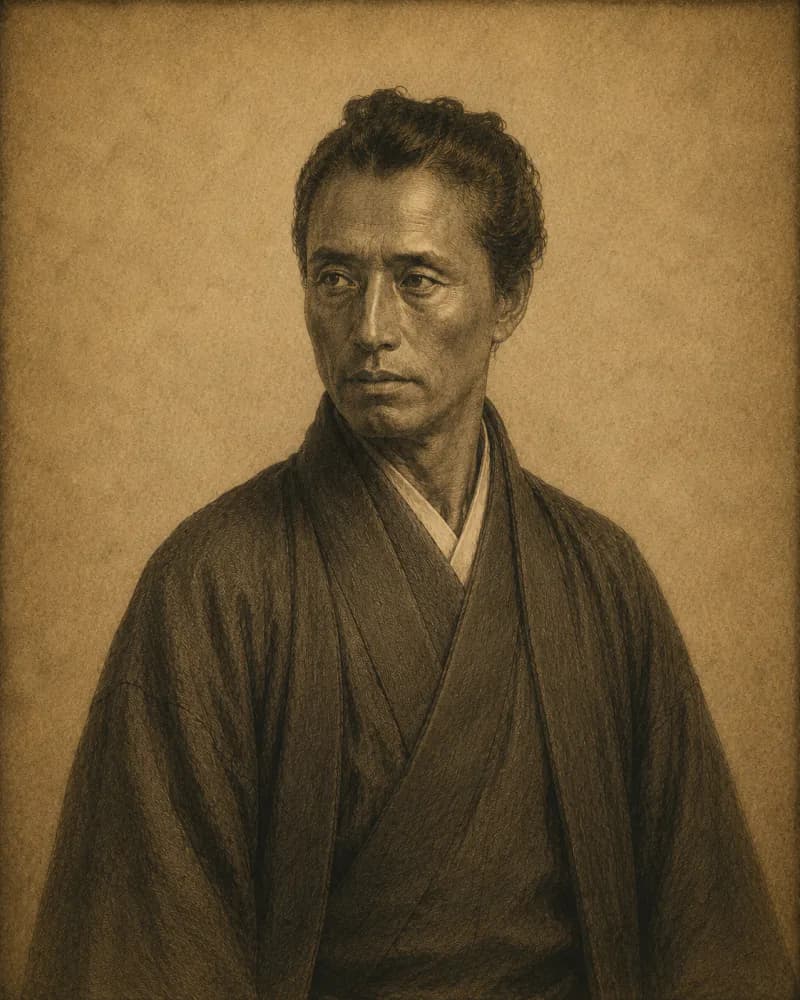
SA-0045 / JPN
Katsu Kaishū
The last navy minister of the shogunate who delivered the bloodless surrender of Edo and was Sakamoto Ryōma's master
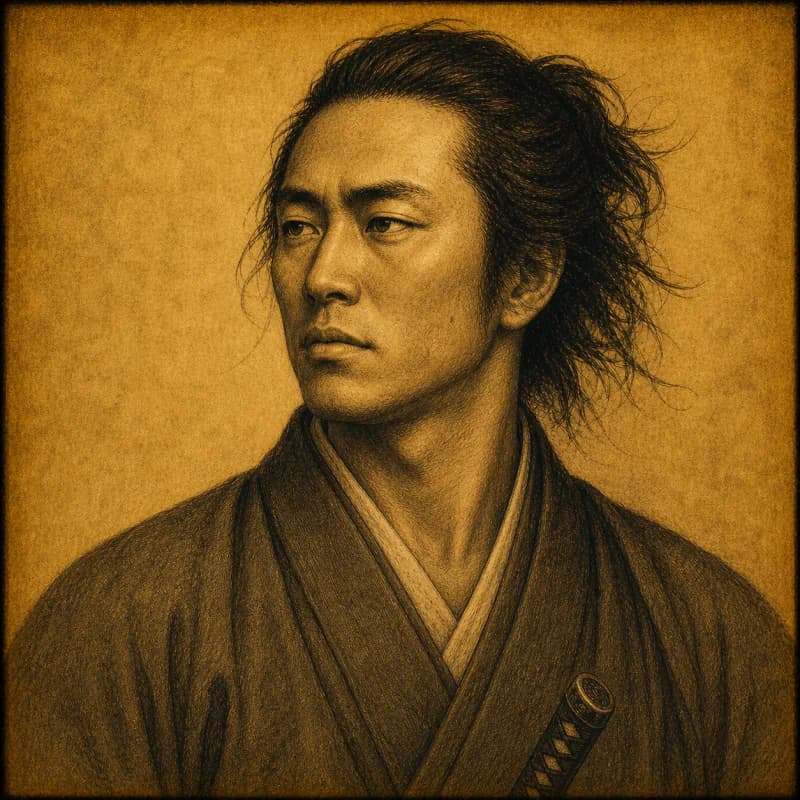
SA-0008 / JPN
Sakamoto Ryōma
The low-rank samurai who engineered the fall of the shogunate
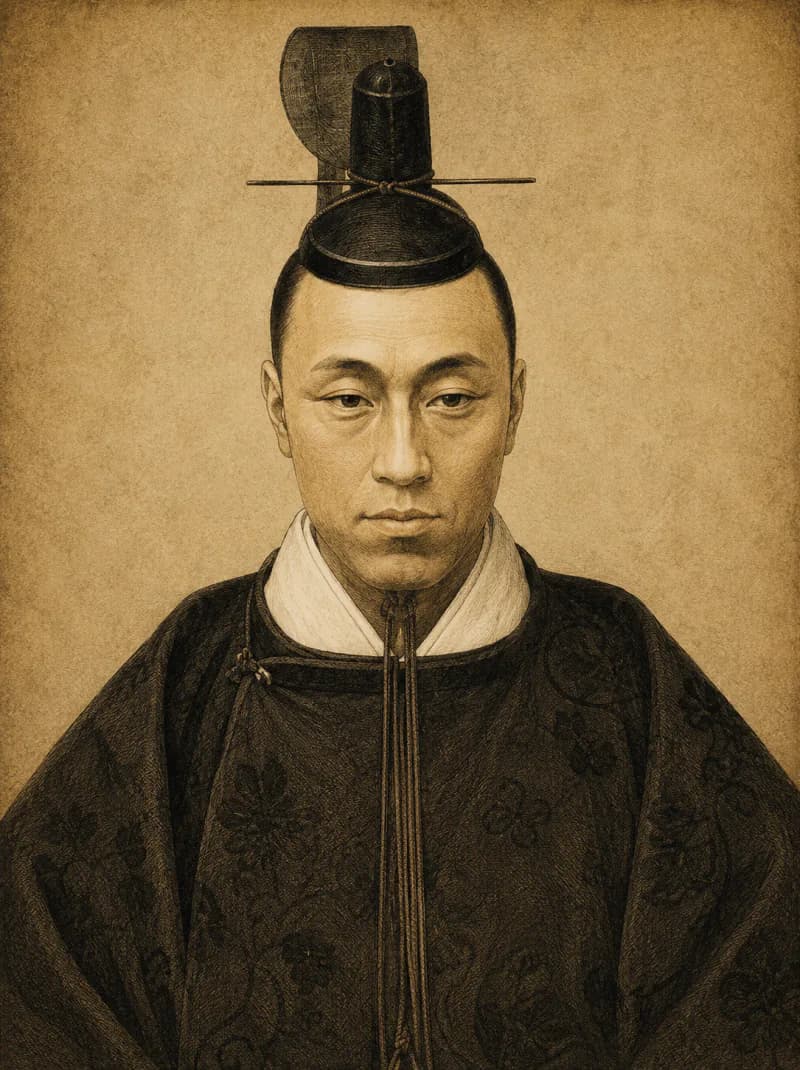
SA-0022 / JPN
Tokugawa Yoshinobu
The last shogun who chose to surrender power rather than fight a civil war he believed Japan could not afford
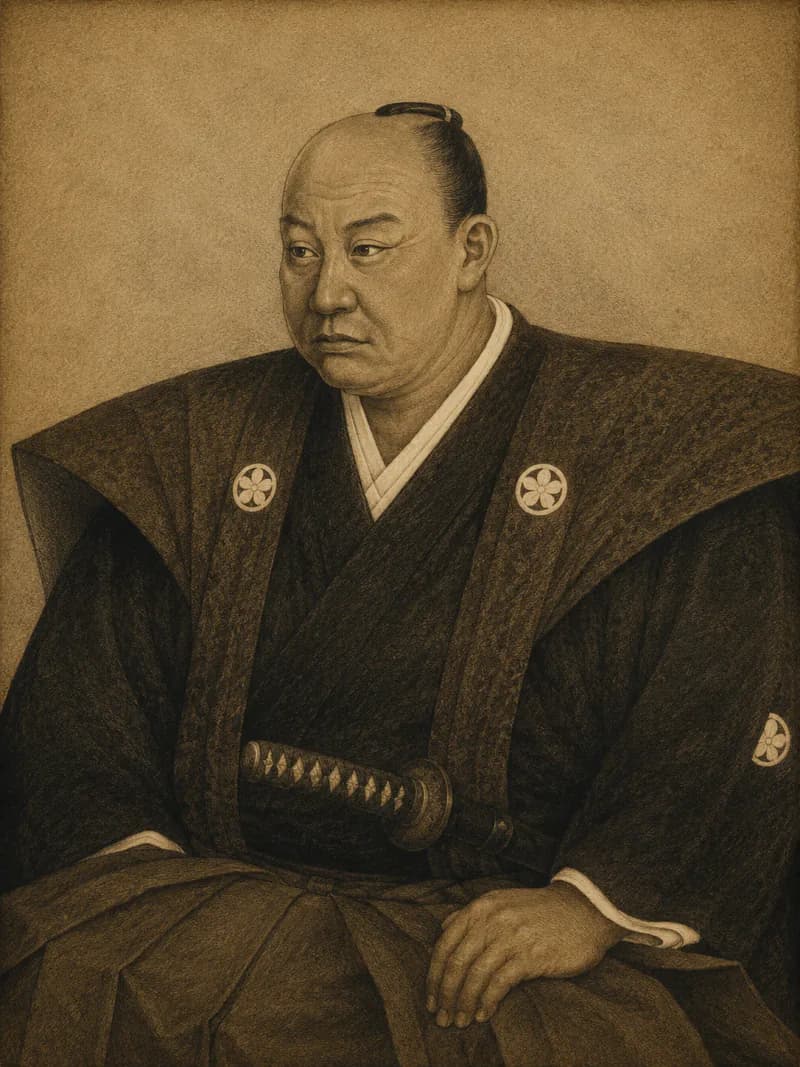
SA-0027 / JPN
Ii Naosuke
The Tairō who signed the unequal treaties — and was assassinated for it at the gates of Edo Castle
SA-0031 / JPN
Hijikata Toshizō
Vice-commander of the Shinsengumi who fought the shogunate's losing war to its very last day
SA-0035 / JPN
Okita Sōji
First-captain of the Shinsengumi — and the tubercular swordsman who never fought the Boshin War
SA-0036 / JPN
Yoshida Shōin
The Shōka Sonjuku teacher whose two-and-a-half-year school drove the Meiji Restoration
SA-0037 / JPN
Takasugi Shinsaku
The Shōka Sonjuku graduate whose Kiheitai militia and Kōzanji coup drove Chōshū to topple the bakufu