SUBJECT FILE NO. SA-0075
BUSHI ARCHIVE
Nitta Yoshisada
Nitta Yoshisada
Warrior of Kōzuke Province; supreme commander of the Southern Court
SECTION I -- SUBJECT PROFILE
| Name | Nitta Yoshisada |
|---|---|
| English | Nitta Yoshisada |
| Origin | Japan |
| Lifespan | 1301–1338 |
| Gender | Male |
| Century | 14th C. |
| Clan / Role | Samurai |
| Title | Warrior of Kōzuke Province; supreme commander of the Southern Court |
SECTION II -- OVERVIEW
Born around 1301 (Shōan 3) into the Nitta, gokenin of the Nitta estate in Kōzuke Province (present-day Ōta City, Gunma Prefecture).
Though a distinguished Minamoto house descended from the same Minamoto no Yoshikuni as the Ashikaga, the Nitta line had long been kept in a disadvantaged position.
In 1333 (Genkō 3), receiving Emperor Go-Daigo's edict to overthrow the shogunate, he raised troops. He lifted his banner at the Ikushina shrine, and as he marched on Kamakura with only a small force, anti-Hōjō soldiers joined one after another until his army swelled into a great host.
He broke the Hōjō army at Bubaigawara, and at Inamuragasaki, the Taiheiki relates, he cast a golden sword into the sea and made the tide withdraw.
In the fifth month he took Kamakura and drove Hōjō Takatoki and his clan to suicide at Tōshō-ji. The Kamakura shogunate, which had lasted 140 years, perished here.
He received rewards under the Kenmu Restoration, but came into conflict with Ashikaga Takauji (this site's id 25). After his defeat at Hakone-Takenoshita in 1335 he turned to the losing side, and at Minatogawa in 1336 he retreated without being able to save his sworn friend Kusunoki Masashige (this site's id 16).
Driven from Kyoto, Yoshisada went down to Echizen bearing the imperial princes, but Kanegasaki Castle fell and he lost both a prince and his own son.
On the second day of the intercalary seventh month of 1338 (Engen 3), he was struck by a stray arrow in the muddy fields of Fujishima and died in battle.
He was thirty-eight. The Southern Court lost its greatest military pillar.
SECTION III -- CHRONOLOGY
SECTION IV -- NOTABLE STATEMENTS
“Let the name of Nitta, long kept in the shade, be shown to the realm in the name of the Minamoto.”
SECTION V -- FIELD NOTES
[A]The Sword at Inamuragasaki — Legend and Reality
The Taiheiki tells that Yoshisada, attacking Kamakura, was blocked at Inamuragasaki by the high tide, cast the golden sword at his waist into the sea, and prayed to the dragon deity, whereupon the tide withdrew offshore, a tidal flat appeared, and his host raced across it.
This dramatic anecdote was widely cherished in later ages and became a scene symbolizing the martial valor of the loyal Yoshisada.
As history, it is thought likely to have been skillful generalship timed to the ebb tide. But whether legend or reality, it stands that the head of the long-neglected Nitta line destroyed the Kamakura shogunate at a stroke in this one battle.
For Yoshisada, Inamuragasaki was the grand stage that cleared away the frustration of half his life.
At the same time, this victory pushed him into his fated struggle with Ashikaga Takauji and became the starting point of his later fall.
The beach where he cast the sword was the watershed of glory and tragedy.
SECTION VI -- LEGACY & IMPACT
Nitta Yoshisada, though the leading figure who destroyed the Kamakura shogunate by force, was long evaluated poorly in later ages as 'a mediocre general who kept losing to Ashikaga Takauji.
' Contrasted with the wise and valiant Kusunoki Masashige (this site's id 16), he also bore the disgrace of being 'the man who let Masashige die at Minatogawa.
' But recent scholarship has justly re-evaluated the desperate struggle of Yoshisada, who supported almost single-handedly the military of the Southern Court against Takauji's great armies.
Edo-period Mito learning and the Meiji state honored Yoshisada as a loyal subject who died for Emperor Go-Daigo, enshrining him at Fujishima Shrine in Echizen (Fukui City) and at the Nitta estate in Kōzuke.
But apart from the image of the honored hero, what the historical Yoshisada saw at his end was not the radiance of a great cause, but the mud of Echizen that trapped his legs and a single arrow bearing down on his brow.
It was the all-too-human end of the hero who had taken Kamakura. His sons Yoshioki and Yoshimune and the rest of the Nitta clan continued to resist as the Southern Court thereafter.
SECTION VII -- MAJOR DEEDS
- [01]The attack on Kamakura and the fall of the Kamakura shogunate (1333)
- [02]Military command under the Kenmu government
- [03]Command of the army to hunt down Takauji
- [04]Management of Southern Court bases in the Hokuriku region
- [05]Resistance as supreme commander of the Southern Court
SECTION VIII -- REFERENCE MATERIALS
PRIMARY SOURCES & ARCHIVES
- PRIMARY
Taiheiki
War chronicle detailing Yoshisada from his uprising to his death at Fujishima
- SCHOLARSHIP
Nitta Yoshisada
Minegishi Sumio / Yoshikawa Kōbunkan (Jinbutsu Sōsho)
Representative modern biography of Yoshisada
- ARCHIVE
Nitta-no-shō Historic Site
Ōta City, Gunma Prefecture
The place of Yoshisada's uprising; includes the Ikushina shrine
Visit archive →
RECOMMENDED READING
SECTION X -- RELATED REPORTS
SA-RPT
Inamuragasaki: The Day Yoshisada Cast His Sword into the Sea and Took Kamakura, 1333
In the fifth month of 1333, Nitta Yoshisada cast a golden sword into the sea at Inamuragasaki on the edge of Kamakura, raced across the ebbed tidal flat, and attacked into Kamakura. The Kamakura shogunate, which had lasted 140 years, perished in little more than half a month from the uprising of one neglected gokenin.
SA-RPT
The Retreat at Minatogawa: In 1336, Yoshisada Could Not Save His Sworn Friend Masashige
In the fifth month of 1336, at Minatogawa in Settsu. Before the great army of Ashikaga Takauji, who had rallied from Kyushu, Nitta Yoshisada and Kusunoki Masashige were defeated. Masashige died in battle; Yoshisada retreated and survived. It was a day that divided the fortunes of the two men who had together supported the Kenmu government.
SA-RPT
Fujishima: In 1338, a Stray Arrow in a Muddy Field Broke the Pillar of the Southern Court
In the intercalary seventh month of 1338, at Fujishima in Echizen. Nitta Yoshisada, going to the aid of his allies with only a small force, met a great Ashikaga army, and as his horse was trapped in a muddy field he was pierced by a stray arrow and died in battle. He was thirty-eight. On this day the Southern Court lost its greatest military pillar.
SECTION IX -- LINKED SUBJECTS
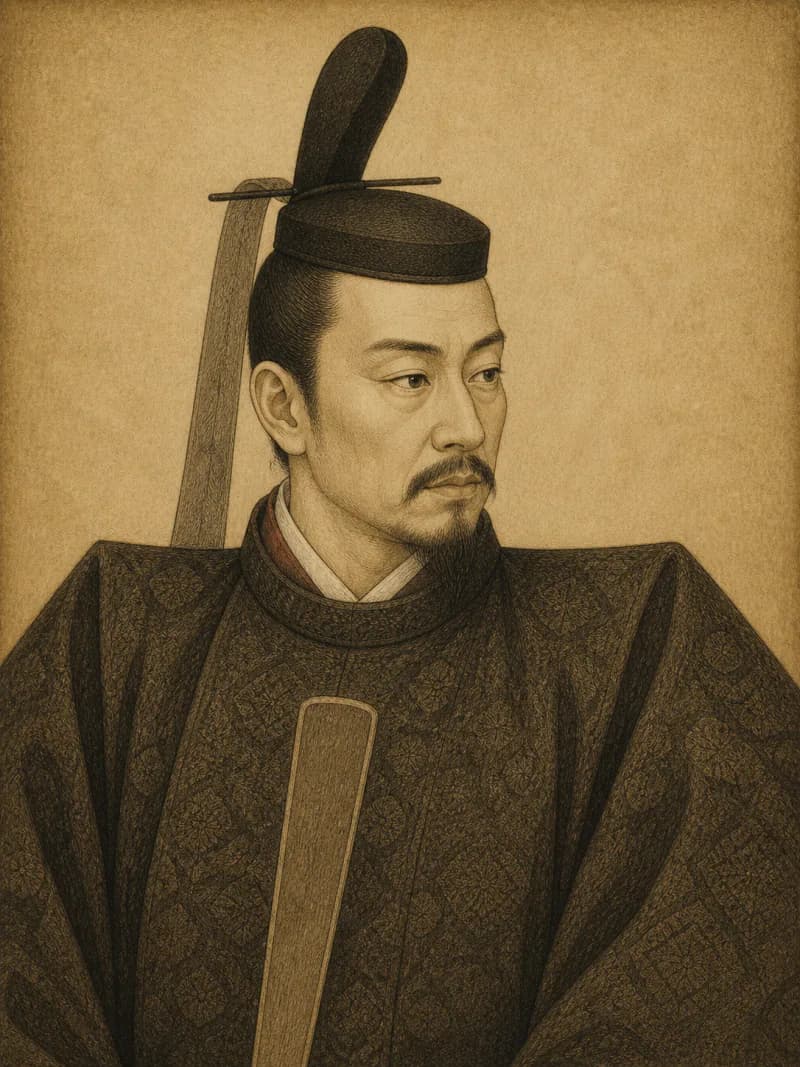
SA-0025 / JPN
Ashikaga Takauji
The founding shogun who left Japan with two emperors and a sixty-year civil war
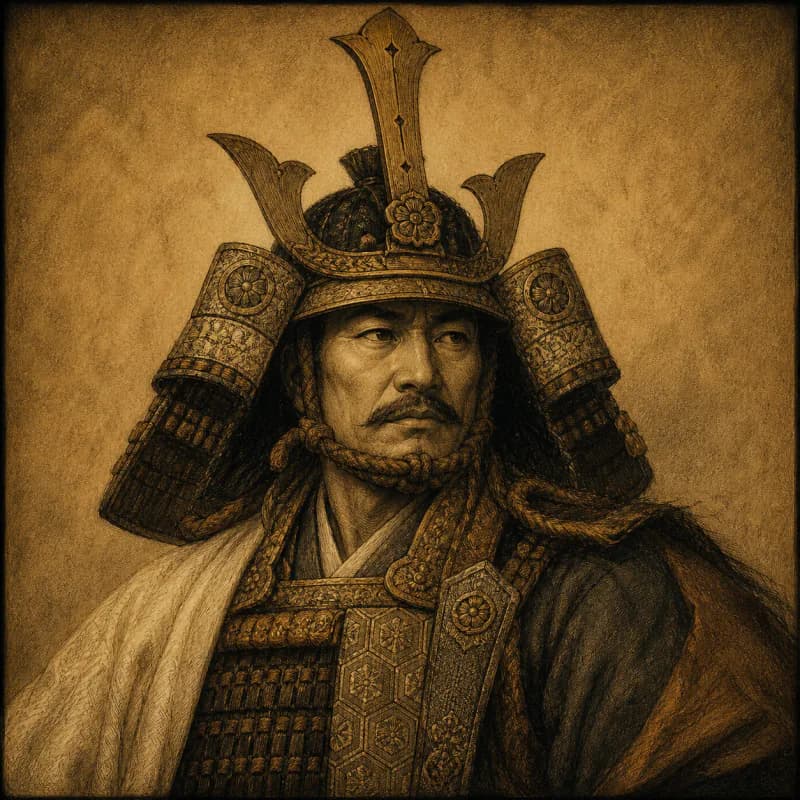
SA-0016 / JPN
Kusunoki Masashige
The strategist who held off the Kamakura shogunate with rocks and trickery
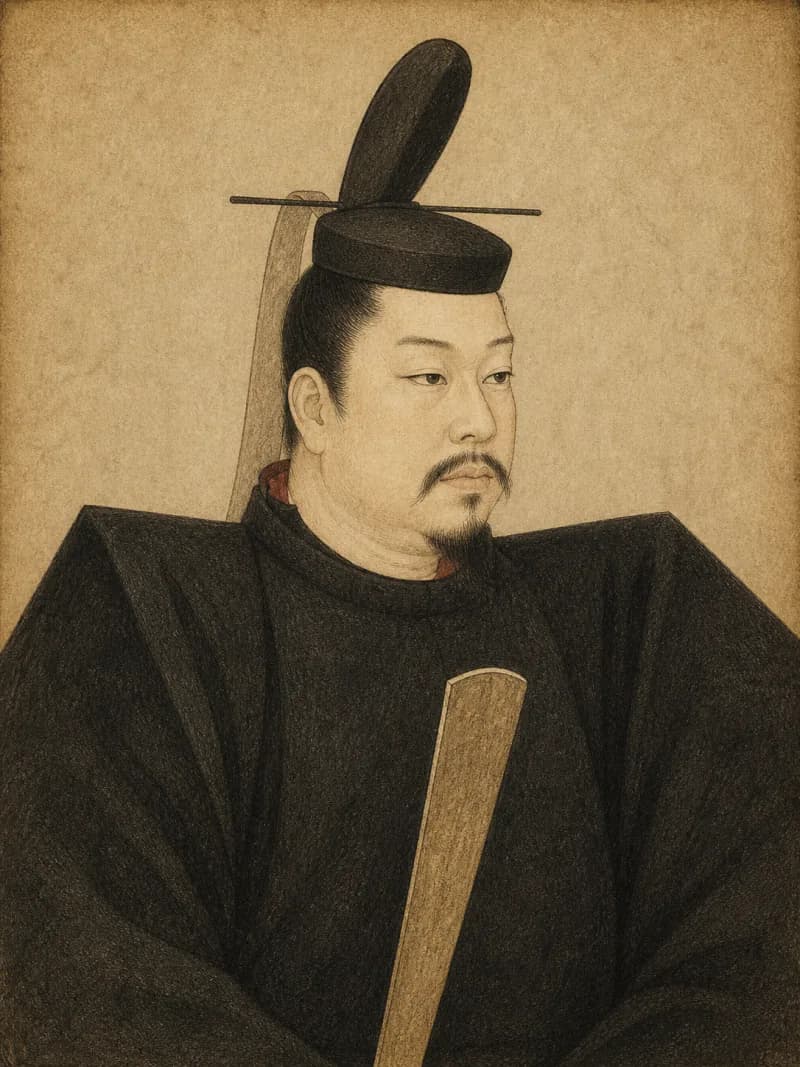
SA-0023 / JPN
Minamoto no Yoritomo
The founding shogun who built warrior government as a system that lasted six and a half centuries
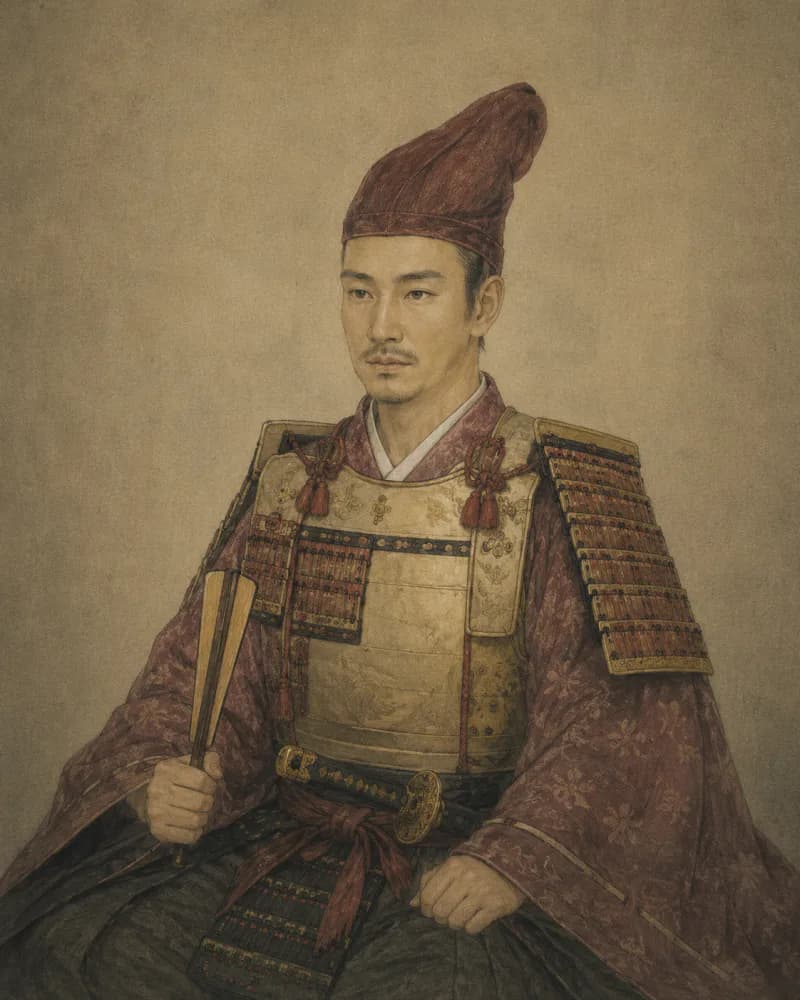
SA-0069 / JPN
Kusunoki Masanori
The third son who inherited his father Kusunoki Masashige's ideal and staked his life on the Nanboku-chō reconciliation