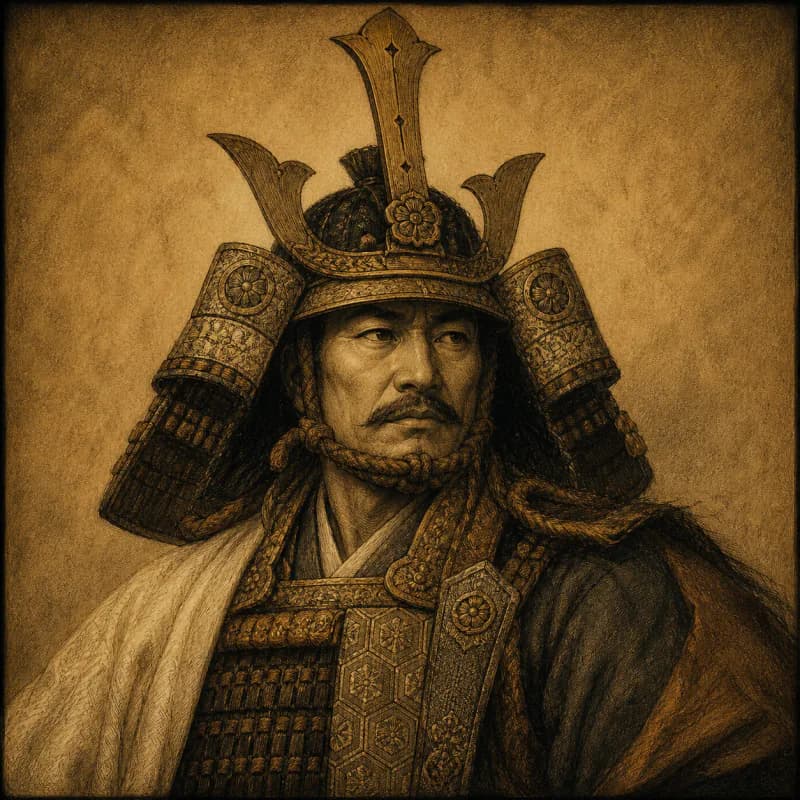
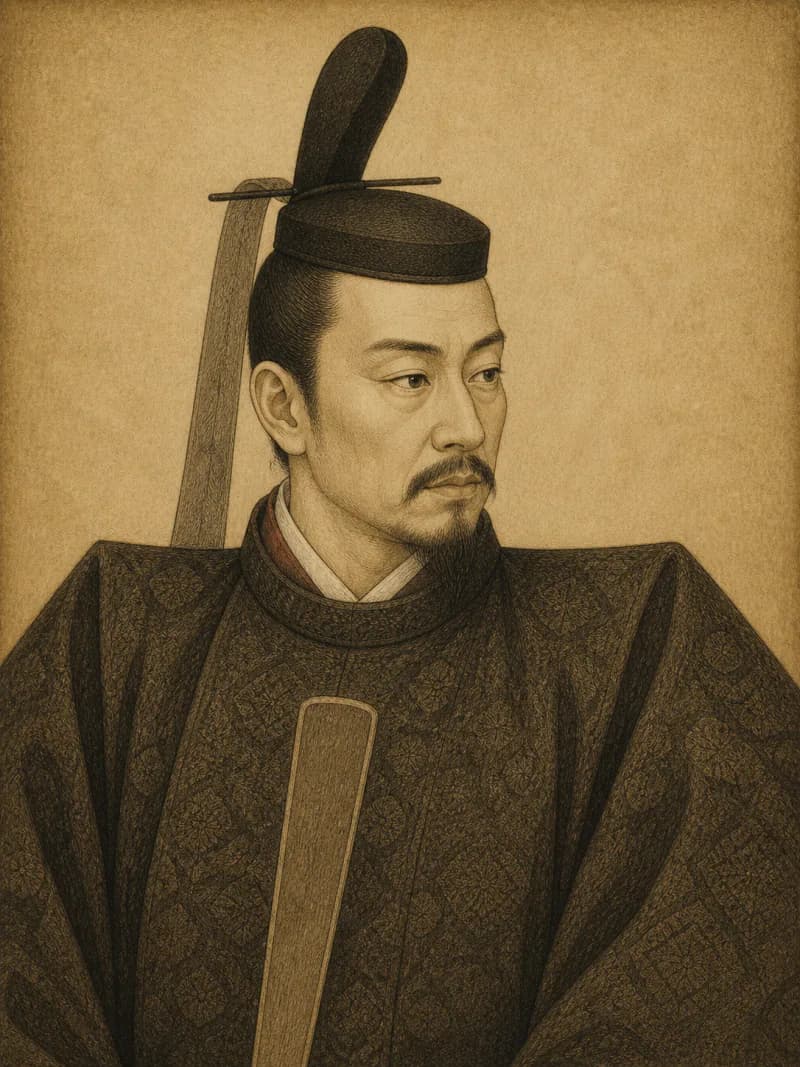
SUBJECT FILE NO. SA-0069
BUSHI ARCHIVE
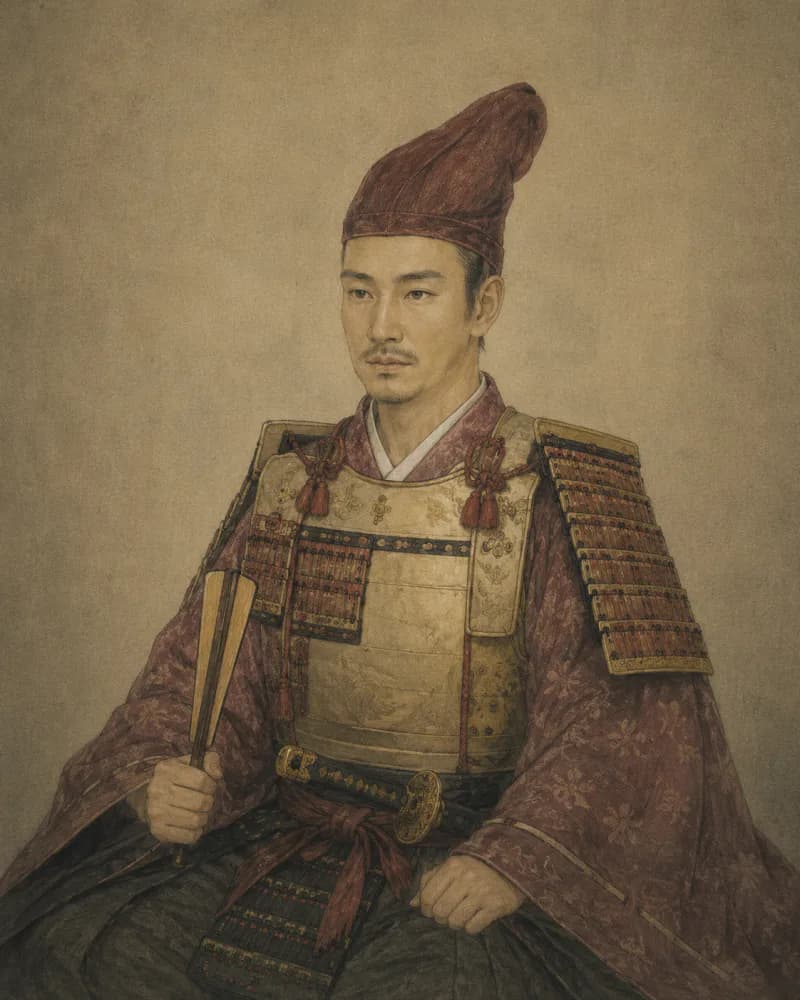
Kusunoki Masanori
Kusunoki Masanori
Southern Court general; central figure in the Nanboku-chō reconciliation negotiations
SECTION I -- SUBJECT PROFILE
| Name | Kusunoki Masanori |
|---|---|
| English | Kusunoki Masanori |
| Origin | Japan |
| Lifespan | 1330?–1389? |
| Gender | Male |
| Century | 14th C. |
| Clan / Role | Samurai |
| Title | Southern Court general; central figure in the Nanboku-chō reconciliation negotiations |
SECTION II -- OVERVIEW
Born around 1330 in Kawachi Province as the third son of Kusunoki Masashige. His father Masashige was defeated and killed at the Battle of Minatogawa in 1336, and his elder brother Masatsura fell at the Battle of Shijōnawate in 1348, and the headship of the Kusunoki was inherited by Masanori.
For the next forty years, Masanori continued to fight as a principal warrior of the Southern Court in Izumi, Kawachi, and Kii against the Northern Court and Muromachi shogunate armies.
But not merely as military resistance — Masanori inherited the ideal that his father Masashige had shown at the end, of 'stabilizing the state through reconciliation,' and became the central figure in the Nanboku-chō reconciliation (peace) negotiations.
Over multiple occasions — 1362, 1367, 1369, 1381 — he was involved in Nanboku-chō peace negotiations, and took the rare position of prioritizing the realization of peace over consistency of allegiance, including temporarily surrendering to the Northern Court in 1369.
This stance was denounced by the Southern Court hardliners as 'traitor,' while it would later come to be evaluated as inheriting most deeply the will of his father Masashige.
He died around 1389 in Kawachi Province. The date of death varies among sources and is not fixed. He was around sixty. Masanori's lifelong orientation toward peace formed the groundwork for the Nanboku-chō reconciliation of 1392 (Meitoku 3).
SECTION III -- CHRONOLOGY
SECTION IV -- NOTABLE STATEMENTS
“My father's will was not in war, but in peace.”
SECTION V -- FIELD NOTES
[A]The 1369 Surrender to the Northern Court — Betrayal or Peace?
In 1369 (Ōan 2), Masanori left the Southern Court and surrendered to the Northern Court and the Muromachi shogunate.
It was a choice fiercely denounced by the Southern Court interior as 'traitor.' But Masanori's intent is held to have been not a simple defection but the ending of the war through the integration of the two courts.
On the Northern Court side, he negotiated with the shogunate and sought a road to peace with the Southern Court.
After about twelve years of staying with the Northern Court, he returned again to the Southern Court in 1381.
Through this twice-over change of allegiance, Masanori continued to take the exceptional position of 'belonging to neither court, but making peace itself the aim.
' From the Edo period on, the Kusunoki veneration tended to treat Masanori's defection critically in contrast to his brother Masatsura, but in modern research he has been reevaluated as a peace-oriented politician.
SECTION VI -- LEGACY & IMPACT
Masanori is positioned alongside his father Masashige and his brother Masatsura as one of the Kusunoki three generations, but his evaluation has swung greatly across the ages.
Under the Edo-period Zhu Xi-school view of loyalty, he was made a 'defector'; under the Meiji-Shōwa period imperial-nation historical view, he was treated as 'disloyal.
' But postwar historiography reevaluated Masanori's lifelong orientation toward peace and positioned him as the ideological precursor of the 1392 Nanboku-chō reconciliation.
That his father Masashige, at the end, insisted on reconciliation with Ashikaga Takauji (this site's id 25) and was defeated (Battle of Minatogawa), and that Masanori pursued peace for forty years, shows the consistency of the Kusunoki political thought.
Kanshin-ji in Kawachinagano City, Osaka Prefecture, holds Masashige's head mound and transmits the memory of Masanori as the mortuary temple of the Kusunoki house.
SECTION VII -- MAJOR DEEDS
- [01]Combat in Izumi, Kawachi, and Kii as a Southern Court warrior
- [02]Nanboku-chō peace negotiations of 1362, 1367, 1369, 1381
- [03]Surrender to the Northern Court in 1369 and return to the Southern Court in 1381
- [04]Ideological precursor of the Nanboku-chō reconciliation (1392)
SECTION VIII -- REFERENCE MATERIALS
PRIMARY SOURCES & ARCHIVES
- PRIMARY
Taiheiki
War narrative transmitting the Nanboku-chō period; includes Masanori's achievements
- SCHOLARSHIP
Kusunoki Masanori
Ikoma Takaomi / Ebisu Kōshō Shuppan
Standard modern study of Masanori; empirically examines the peace negotiations
- ARCHIVE
Kanshin-ji
Kawachinagano City, Osaka Prefecture
Kusunoki mortuary temple; transmits Masashige's head mound and Masanori-related materials
Visit archive →
RECOMMENDED READING
SECTION X -- RELATED REPORTS
SA-RPT
After Shijōnawate: In 1348, His Brother's Death Turned the Headship to Masanori
In the first month of 1348, at Shijōnawate in Kawachi. Kusunoki Masatsura clashed head-on with the great army of the Northern Court's Kō Moronao and fell in battle. Following his father Masashige, his elder brother also fell, and the headship of the Kusunoki turned to the third son, Masanori. The start of a forty-year life ahead.
SA-RPT
The Defection of 1369: Why the Head of the Kusunoki Surrendered to the Northern Court
In 1369, Kusunoki Masanori, the core Southern Court warrior, surrendered to the Northern Court and the Muromachi shogunate. Behind the choice fiercely denounced by the Southern Court interior as 'traitor' was the ideal of ending the war through peace.
SA-RPT
The 1381 Return to the Southern Court: Masanori Staked His Last Ten Years on His Father's Will
Kusunoki Masanori, who had surrendered to the Northern Court in 1369, returned again to the Southern Court in 1381. The second change of allegiance came when the road of direct negotiation between the Northern and Southern Courts opened. Eleven years' foreshadowing of the Nanboku-chō reconciliation of 1392.