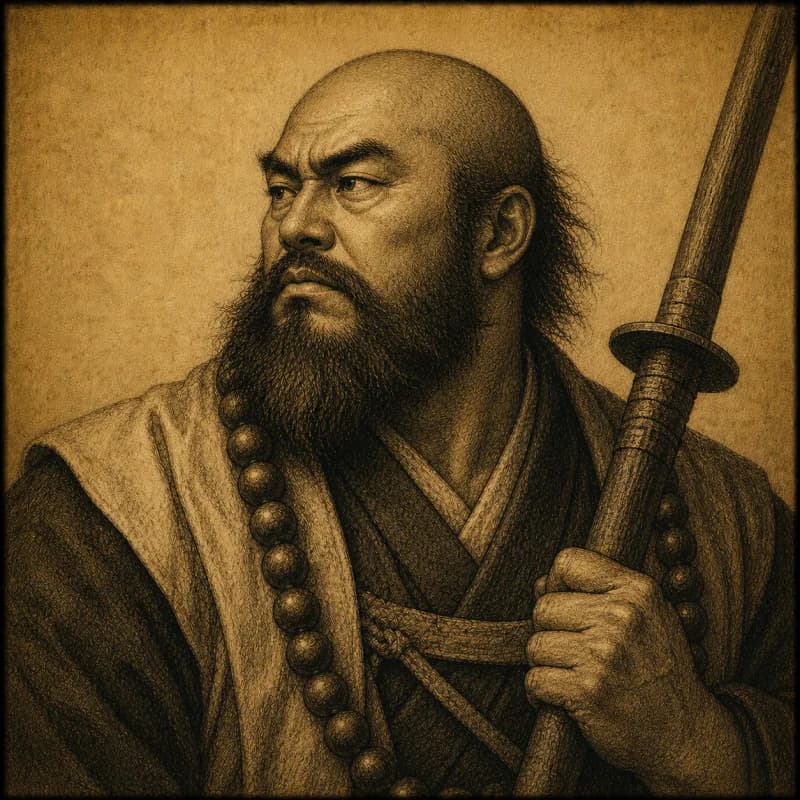
SUBJECT FILE NO. SA-0016
BUSHI ARCHIVE
Kusunoki Masashige
Kusunoki Masashige
Hero of the Genkō War
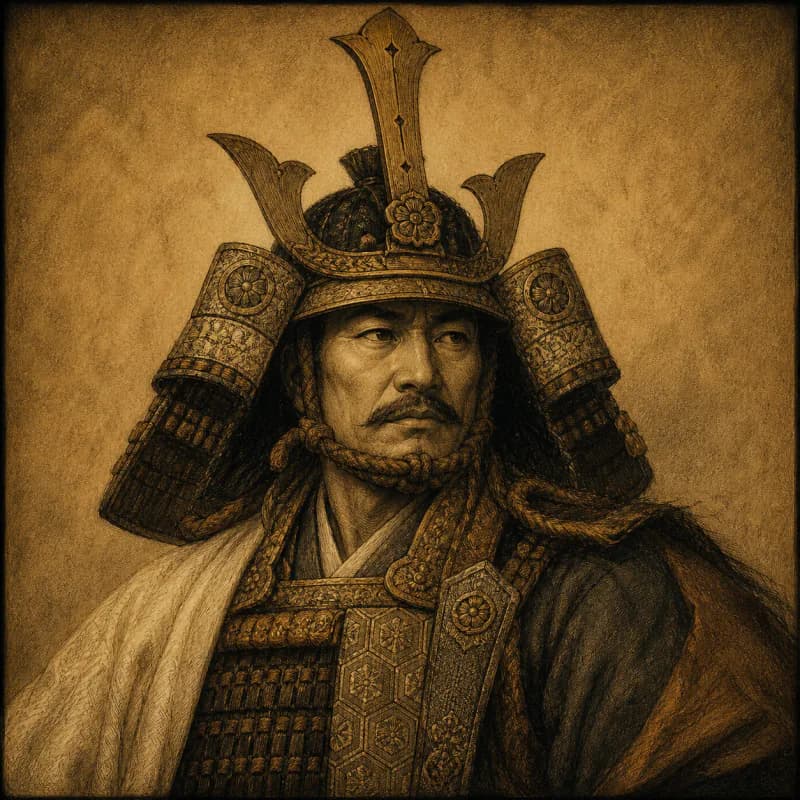
SECTION I -- SUBJECT PROFILE
| Name | Kusunoki Masashige |
|---|---|
| English | Kusunoki Masashige |
| Origin | Japan |
| Lifespan | 1294–1336 |
| Gender | Male |
| Century | 12th C. |
| Clan / Role | Strategist |
| Title | Hero of the Genkō War |
SECTION II -- OVERVIEW
Born around 1294 in Kawachi Province as a low-ranking warrior of obscure origin, Kusunoki Masashige rose to historical prominence through his alliance with the deposed Emperor Go-Daigo, who in 1331 had launched the Genkō War against the Kamakura shogunate.
With three hundred men, Masashige defended the small mountain stronghold of Akasaka through ingenious use of terrain. The next year at Chihaya Castle, perched on a granite ridge in the Kongō Mountains, he held against a Kamakura army of nearly one hundred thousand for over three months.
He used boulder traps, false palisades, fire-pots, and dummy soldiers in armor, tying down so many shogunate troops that other rebellions could break out across the country.
By June 1333 the Hōjō had collapsed and the Kemmu Restoration began. When Ashikaga Takauji turned against Go-Daigo three years later, Masashige urged a strategic withdrawal, but the emperor ordered him to give battle in the open at Minatogawa.
He fought through the day at impossible odds and died with his brother by his own hand on the field.
SECTION III -- CHRONOLOGY
SECTION IV -- NOTABLE STATEMENTS
“Even if I die seven times, I will be born again to defeat the enemies of the throne.”
SECTION V -- FIELD NOTES
[A]Boulders on the Mountain
At Chihaya, Masashige built tiered wooden walls he could collapse onto attackers, dummy figures dressed in armor, and stockpiles of boulders for rolling down the slopes.
The Kamakura troops, trying to climb the granite face, were crushed in waves. After three months without taking the castle, the shogunate was bankrupt and other lords joined the revolt.
SECTION VI -- LEGACY & IMPACT
Masashige became the supreme exemplar of imperial loyalty in Japanese culture. His final pledge — usually rendered shichishō hōkoku, 'seven lives for the emperor' — was carved on the swords of kamikaze pilots six centuries later.
The bronze equestrian statue of him stands today before the eastern gate of the Imperial Palace in Tokyo, the most prominent samurai statue in the country.
SECTION VII -- MAJOR DEEDS
- [01]Defense of Akasaka (1332)
- [02]Defense of Chihaya Castle (1333)
- [03]Subject of the Taiheiki epic
- [04]Equestrian statue at the Imperial Palace, Tokyo
SECTION VIII -- REFERENCE MATERIALS
PRIMARY SOURCES & ARCHIVES
- PRIMARY
Taiheiki
Nanboku-chō-period war chronicle; foremost source for Masashige's career
- SCHOLARSHIP
Kusunoki Masashige
Mori Shigeaki / KADOKAWA
Biography by a leading scholar of the Nanboku-chō period (in Japanese)
- ARCHIVE
Minatogawa Shrine
Kobe City
Built at the site of Masashige's last stand at the Battle of Minatogawa
Visit archive →
RECOMMENDED READING
SECTION X -- RELATED REPORTS
SA-RPT
Chihaya Castle: How Three Hundred Held a Hundred Thousand
In the spring of 1333, Kusunoki Masashige defended a small mountain fortress against a Kamakura army that outnumbered him three hundred to one. He held them for over three months, broke the bakufu's economy, and started the chain of revolts that ended a hundred and forty-eight years of Hōjō rule.
SA-RPT
Two Emperors at Once: How Ashikaga Takauji Split Japan for Sixty Years
In 1336, in his attempt to legitimize his own shogunate, Ashikaga Takauji installed a rival emperor in Kyoto while the original emperor fled to Yoshino. Japan had two parallel imperial lines for the next fifty-six years. The political architecture of that split shaped the country into the Sengoku.
SA-RPT
After Shijōnawate: In 1348, His Brother's Death Turned the Headship to Masanori
In the first month of 1348, at Shijōnawate in Kawachi. Kusunoki Masatsura clashed head-on with the great army of the Northern Court's Kō Moronao and fell in battle. Following his father Masashige, his elder brother also fell, and the headship of the Kusunoki turned to the third son, Masanori. The start of a forty-year life ahead.
SA-RPT
Inamuragasaki: The Day Yoshisada Cast His Sword into the Sea and Took Kamakura, 1333
In the fifth month of 1333, Nitta Yoshisada cast a golden sword into the sea at Inamuragasaki on the edge of Kamakura, raced across the ebbed tidal flat, and attacked into Kamakura. The Kamakura shogunate, which had lasted 140 years, perished in little more than half a month from the uprising of one neglected gokenin.
SA-RPT
The Retreat at Minatogawa: In 1336, Yoshisada Could Not Save His Sworn Friend Masashige
In the fifth month of 1336, at Minatogawa in Settsu. Before the great army of Ashikaga Takauji, who had rallied from Kyushu, Nitta Yoshisada and Kusunoki Masashige were defeated. Masashige died in battle; Yoshisada retreated and survived. It was a day that divided the fortunes of the two men who had together supported the Kenmu government.