SUBJECT FILE NO. SA-0025
BUSHI ARCHIVE
Ashikaga Takauji
Ashikaga Takauji
Founding Shogun of the Muromachi Bakufu
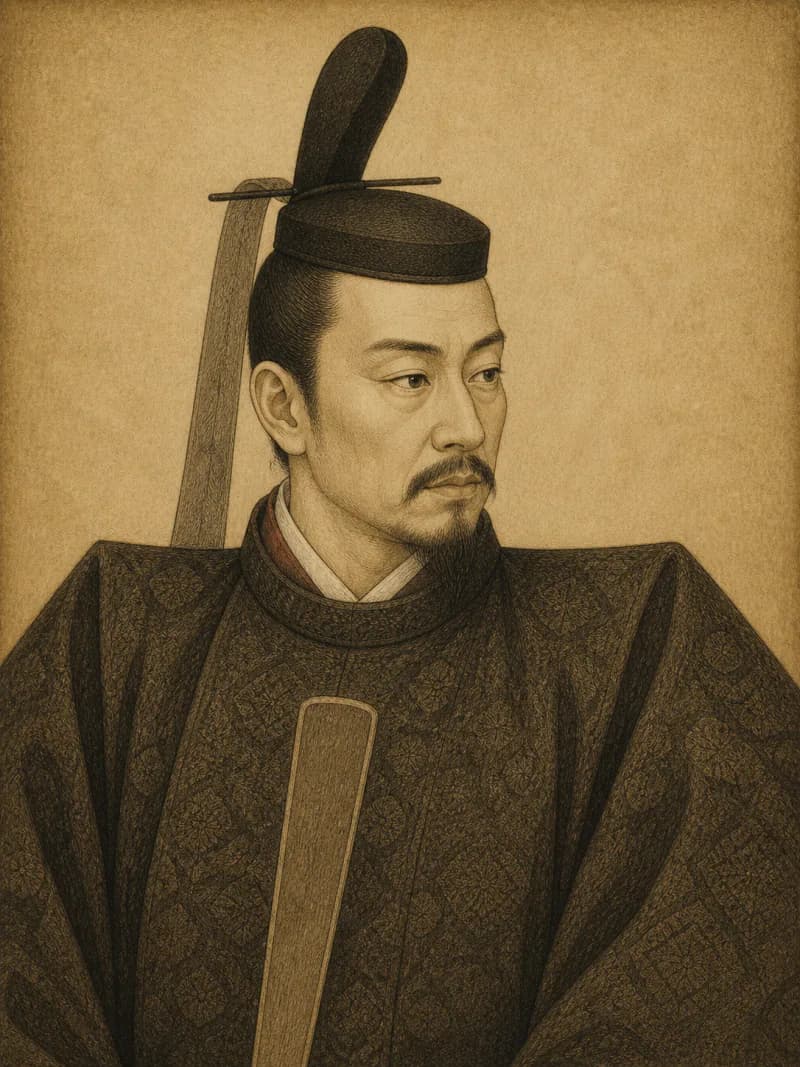
SECTION I -- SUBJECT PROFILE
| Name | Ashikaga Takauji |
|---|---|
| English | Ashikaga Takauji |
| Origin | Japan |
| Lifespan | 1305–1358 |
| Gender | Male |
| Century | 14th C. |
| Clan / Role | Shogun |
| Title | Founding Shogun of the Muromachi Bakufu |
SECTION II -- OVERVIEW
Born in 1305 to the Ashikaga branch of the Minamoto, Takauji was a senior Hōjō retainer until 1333, when Emperor Go-Daigo's revolt against the Kamakura Bakufu drew his support.
He turned against his own clients and led the army that captured Kyoto for Go-Daigo in May of that year, ending 148 years of Hōjō rule.
Within three years his alliance with Go-Daigo had collapsed: the new Imperial government had refused to grant Takauji the institutional samurai role he expected, and in 1336 he marched against the court.
He defeated the loyalist Kusunoki Masashige at Minatogawa, drove Go-Daigo from Kyoto, and installed a rival emperor — beginning the period known as Nanboku-chō, the Northern and Southern Courts, when Japan had two competing emperors and two imperial lines for sixty years.
Takauji established himself as the founding shogun of the new Muromachi Bakufu in 1338 and ruled until his death in 1358.
The instability his decisions created — both between courts and within the bakufu's own provincial structure — set up the chronic conflicts that would erupt into the Ōnin War a century later and produce the Sengoku.
SECTION III -- CHRONOLOGY
SECTION IV -- NOTABLE STATEMENTS
“I have made one war and another after it; I have ended none of them in time.”
SECTION V -- FIELD NOTES
[A]The Two Courts
Takauji's installation of a rival emperor in 1336 split Japan into two parallel imperial systems. The Northern Court at Kyoto, his client; the Southern Court initially at Yoshino under Go-Daigo's heirs.
Both produced legitimate edicts. Both granted titles and lands. Both maintained separate Imperial chronologies.
The split was not formally ended until 1392, thirty-four years after Takauji's death.
SECTION VI -- LEGACY & IMPACT
Takauji is one of the most morally compromised major figures in Japanese history. He betrayed his Hōjō patrons; he then betrayed Go-Daigo; he split the imperial line; he founded a shogunate weak enough that its provincial deputies eventually became the warring states of the late Muromachi.
Modern Japanese opinion is divided. Pre-war historiography treated him as a traitor for opposing Go-Daigo. Post-war scholars have rehabilitated him as a pragmatic statesman who recognized that warrior government had outgrown the imperial framework.
SECTION VII -- MAJOR DEEDS
- [01]Capture of Kamakura (1333)
- [02]Battle of Minatogawa (1336)
- [03]Founding of Muromachi Bakufu (1338)
- [04]Initiation of Nanboku-chō period
SECTION VIII -- REFERENCE MATERIALS
PRIMARY SOURCES & ARCHIVES
- PRIMARY
Baishōron
Nanboku-chō-period war chronicle written from the Ashikaga side
- SCHOLARSHIP
Ashikaga Takauji
Kameda Toshitaka / KADOKAWA
Biography reflecting recent scholarship on the Nanboku-chō period (in Japanese)
- ARCHIVE
Tōji-in
Kyoto City
Mortuary temple of the Ashikaga shogunate, holds portrait sculptures of successive shoguns
Visit archive →
RECOMMENDED READING
SECTION X -- RELATED REPORTS
SA-RPT
Two Emperors at Once: How Ashikaga Takauji Split Japan for Sixty Years
In 1336, in his attempt to legitimize his own shogunate, Ashikaga Takauji installed a rival emperor in Kyoto while the original emperor fled to Yoshino. Japan had two parallel imperial lines for the next fifty-six years. The political architecture of that split shaped the country into the Sengoku.
SA-RPT
The Meitoku Reconciliation: How Yoshimitsu Ended a Fifty-Year Division
On the fifth of the leap tenth month of 1392, in Kyoto. Emperor Go-Kameyama of the Southern Court handed the Three Sacred Treasures to Emperor Go-Komatsu, and the division of the Northern and Southern Courts that had lasted more than fifty years ended. Tracing the diplomatic settlement by the thirty-five-year-old Yoshimitsu at the peak of his power.
SA-RPT
Inamuragasaki: The Day Yoshisada Cast His Sword into the Sea and Took Kamakura, 1333
In the fifth month of 1333, Nitta Yoshisada cast a golden sword into the sea at Inamuragasaki on the edge of Kamakura, raced across the ebbed tidal flat, and attacked into Kamakura. The Kamakura shogunate, which had lasted 140 years, perished in little more than half a month from the uprising of one neglected gokenin.
SA-RPT
The Retreat at Minatogawa: In 1336, Yoshisada Could Not Save His Sworn Friend Masashige
In the fifth month of 1336, at Minatogawa in Settsu. Before the great army of Ashikaga Takauji, who had rallied from Kyushu, Nitta Yoshisada and Kusunoki Masashige were defeated. Masashige died in battle; Yoshisada retreated and survived. It was a day that divided the fortunes of the two men who had together supported the Kenmu government.
SECTION IX -- LINKED SUBJECTS
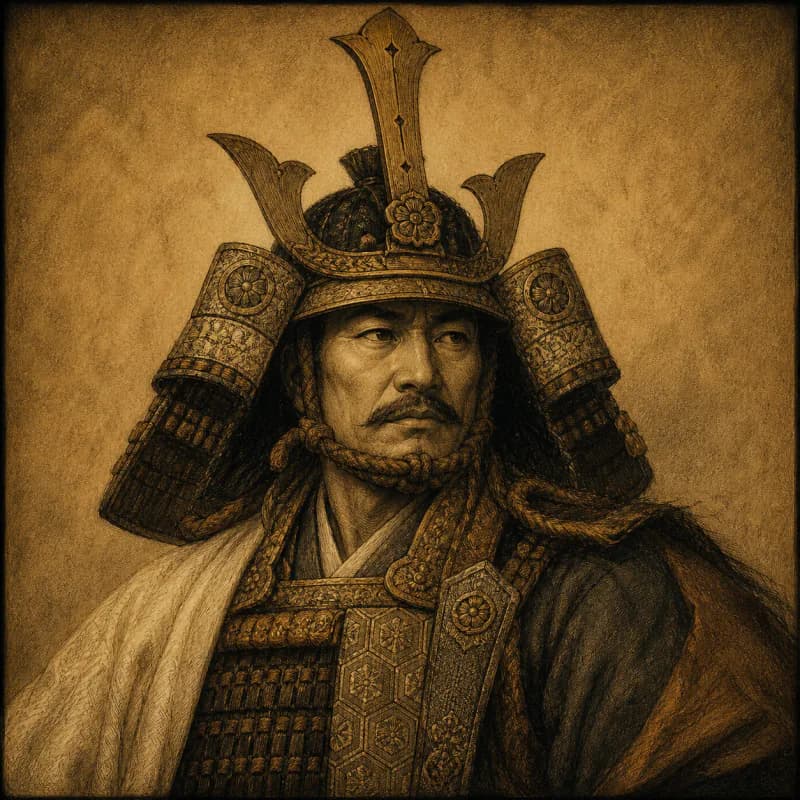
SA-0016 / JPN
Kusunoki Masashige
The strategist who held off the Kamakura shogunate with rocks and trickery
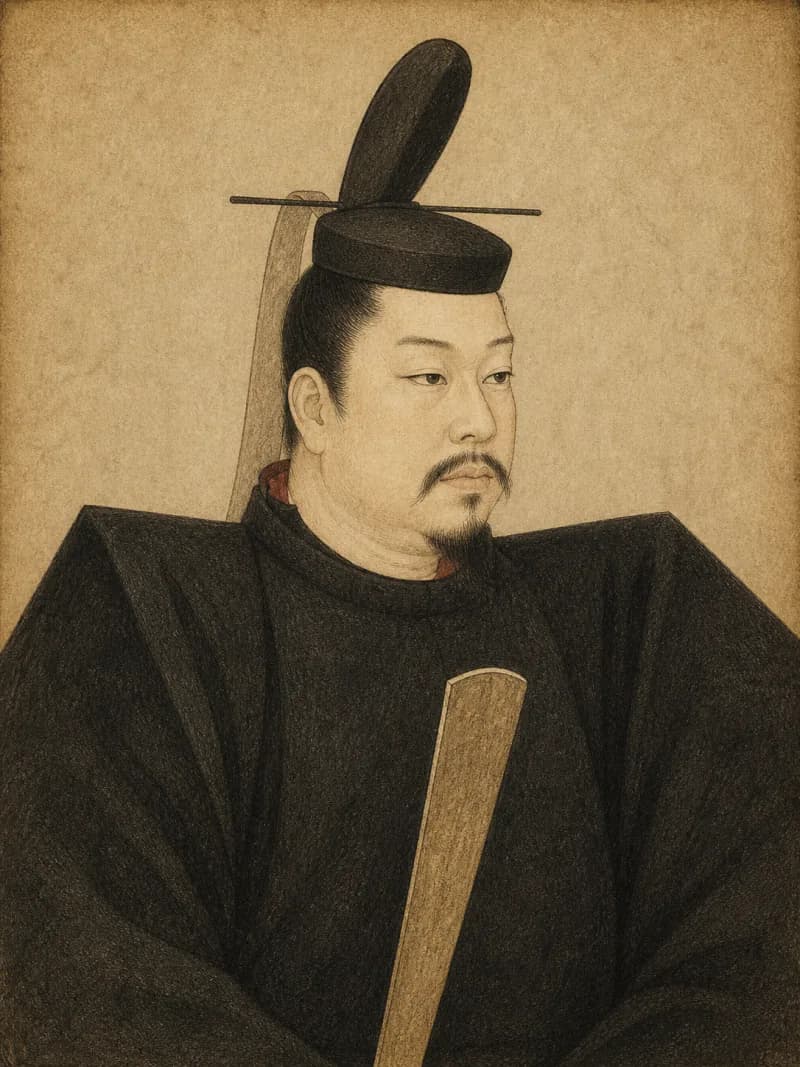
SA-0023 / JPN
Minamoto no Yoritomo
The founding shogun who built warrior government as a system that lasted six and a half centuries
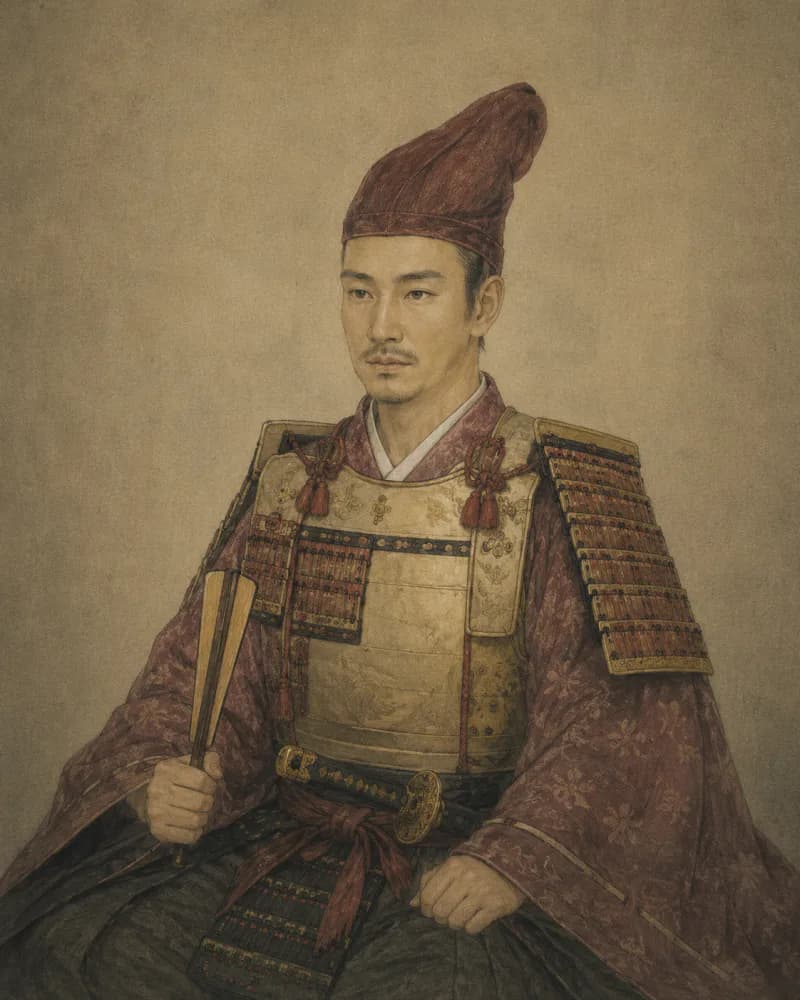
SA-0069 / JPN
Kusunoki Masanori
The third son who inherited his father Kusunoki Masashige's ideal and staked his life on the Nanboku-chō reconciliation

SA-0075 / JPN
Nitta Yoshisada
The Southern Court general who toppled the Kamakura shogunate from Inamuragasaki and fell in the muddy fields of Fujishima in Echizen