SUBJECT FILE NO. SA-0061
BUSHI ARCHIVE
William Adams (Miura Anjin)
William Adams (Miura Anjin)
Foreign policy adviser to Tokugawa Ieyasu; hatamoto; lord of Hemi in Miura District, Sagami Province at 250 koku
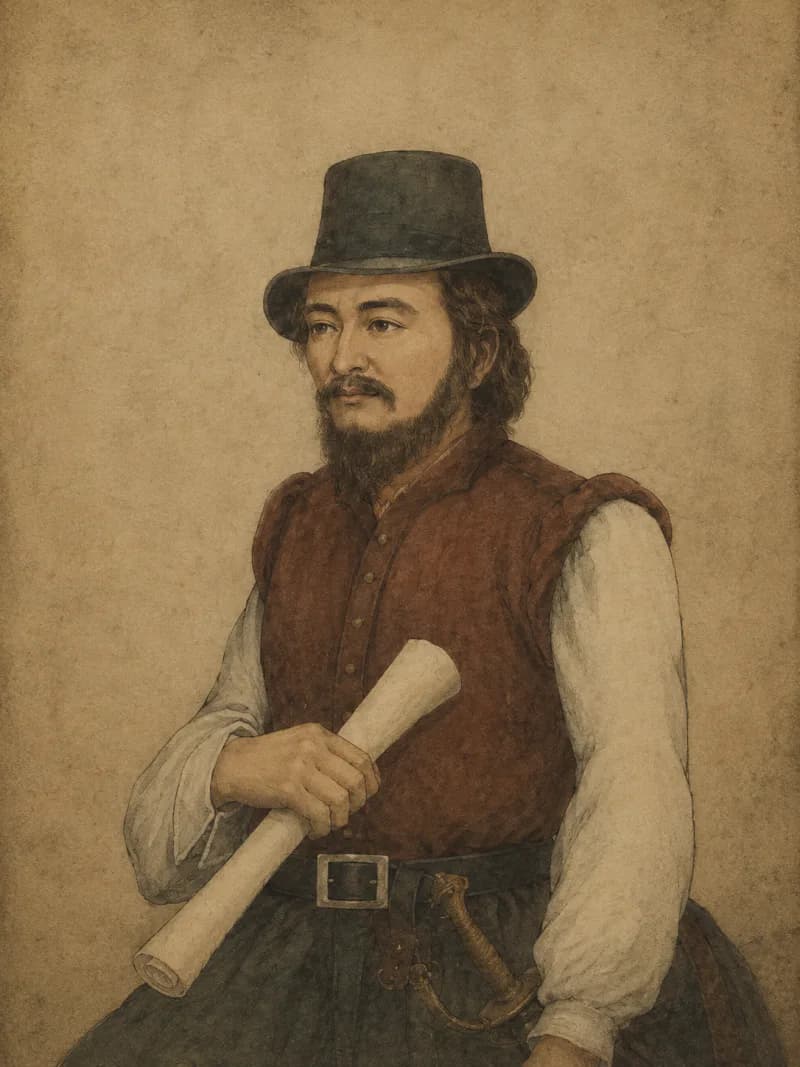
SECTION I -- SUBJECT PROFILE
| Name | William Adams (Miura Anjin) |
|---|---|
| English | William Adams (Miura Anjin) |
| Origin | United Kingdom |
| Lifespan | 1564–1620 |
| Gender | Male |
| Century | 17th C. |
| Clan / Role | Samurai |
| Title | Foreign policy adviser to Tokugawa Ieyasu; hatamoto; lord of Hemi in Miura District, Sagami Province at 250 koku |
SECTION II -- OVERVIEW
Born in 1564 in Gillingham in Kent, England (the modern County of Kent). He studied shipbuilding and navigation from boyhood, and served as a naval navigator in the Anglo-Spanish War (including the Spanish Armada campaign of 1588).
In 1598, as navigator of one of the five ships of the Dutch squadron that departed Rotterdam — 'de Liefde' — he took part in a circumnavigation voyage.
After the difficult voyage of crossing the Pacific via the Strait of Magellan, on April 19, 1600 (the sixteenth of the third month of Keichō 5), he drifted ashore at Usuki Bay in Bungo Province (around the modern Usuki City, Ōita Prefecture).
Of over one hundred crewmembers, some twenty-odd survived, many in ill health. Tokugawa Ieyasu summoned Adams to Ōsaka and Edo and interviewed him personally.
He evaluated Adams's knowledge of navigation, shipbuilding, and Western affairs highly, and elevated him as a foreign policy adviser.
In 1605, Ieyasu granted Adams a fief of 250 koku at Hemi in the Miura District of Sagami Province (the modern Nishi-Hemi-chō in Yokosuka City, Kanagawa Prefecture), and received him as hatamoto.
Adams took the Japanese name 'Miura Anjin,' married the Japanese woman Oyuki, and held a residence at Nihonbashi in Edo.
He played a central role in the foreign policy of the early Edo period — mediation of Japan-Dutch and Japan-English trade, foreign-policy counsel to Ieyasu and Hidetada, construction of Western-style sailing ships at Itō in Izu Province, and more.
He died at Hirado on May 16, 1620, aged fifty-five. As the first foreign samurai in Japanese history, he became a symbolic figure in the history of Japan's foreign relations that followed.
SECTION III -- CHRONOLOGY
SECTION IV -- NOTABLE STATEMENTS
“I was treated as an adviser of Lord Ieyasu of Japan, and permitted to wear the two swords.”
SECTION V -- FIELD NOTES
[A]The Voyage of de Liefde
Of the five ships of the Dutch squadron that departed Rotterdam in June 1598, only one — de Liefde — reached Japan.
The other four were lost to storm, wreck, and capture by Spanish forces. The Pacific crossing from the Strait of Magellan was a challenge near the limit of the navigational art of the time.
When de Liefde reached Japan after nearly two years of voyage, her crew had been reduced by illness and starvation from over one hundred to some twenty-odd.
Adams survived the entire course as navigator, and made possible the interview with Ieyasu after landing in Japan.
The cannon, muskets, cast iron, and woolens loaded on the ship were later requisitioned at Ieyasu's request, and served as part of the shogunate's strengthening of arms.
SECTION VI -- LEGACY & IMPACT
Adams, as the first foreign samurai in Japanese history, became a symbolic figure in the history of Japan's foreign relations.
As Tokugawa Ieyasu's foreign policy adviser, he opened the road of Japan-English and Japan-Dutch trade, and contributed to the opening of the English and Dutch factories at Hirado.
After Ieyasu's death in 1616, foreign policy grew conservative under the second shōgun Hidetada, and Adams's scope of activity narrowed; but he continued to be involved in East India trade from Hirado until his death in 1620.
The Anjin Grave in Yokosuka City, Kanagawa Prefecture, survives as the graves of Adams and his wife. In 2024, the Disney+ series 'SHOGUN' (starring Sanada Hiroyuki, John Blackthorne modeled on Adams), based on the 1975 novel by James Clavell, took the record eighteen Emmy Awards, and overseas interest in Adams exploded.
He continues to leave influence on the modern era as one of the most important figures in the history of Japanese cultural contact with the outside world.
SECTION VII -- MAJOR DEEDS
- [01]Landing in Japan on de Liefde (1600)
- [02]Appointment as foreign policy adviser to Ieyasu
- [03]Hatamoto of Miura District Hemi at 250 koku
- [04]Construction of Western-style ships at Itō (1604, 1607)
- [05]Support for the opening of the English East India Company factory at Hirado (1613)
SECTION VIII -- REFERENCE MATERIALS
PRIMARY SOURCES & ARCHIVES
- PRIMARY
Adams's Letters
English East India Company records
Letters Adams himself sent to his wife and children in England and to the East India Company; first-rank source on Japan and the voyage of the time
- SCHOLARSHIP
Miura Anjin
Mori Yoshikazu / Yamakawa Shuppansha (Sekaishi Riburetto-jin)
Standard modern study of Adams
- ARCHIVE
Anjinzuka (Anjin Grave)
Nishi-Hemi-chō, Yokosuka City, Kanagawa Prefecture
Historic site preserved as the graves of Adams and his wife Oyuki
Visit archive →
RECOMMENDED READING
SECTION X -- RELATED REPORTS
SA-RPT
The Landing of de Liefde: An English Navigator Washed Ashore at Usuki, Bungo, in 1600
On April 19, 1600, a strange foreign ship drifted ashore at Usuki Bay in Bungo Province. The crew had been reduced by illness and starvation from over a hundred to some twenty-odd. The navigator of this ship was the Englishman William Adams — the man who would later become Tokugawa Ieyasu's adviser.
SA-RPT
A Foreign Hatamoto: How Adams Became 'Miura Anjin'
In 1605, Tokugawa Ieyasu granted the Englishman William Adams a 250-koku fief at Hemi in the Miura District of Sagami Province and treated him as hatamoto. Tracing the birth of the first foreign samurai in Japanese history and his distinctive role in Tokugawa foreign policy.
SA-RPT
Who Is John Blackthorne of 'SHOGUN'? The Contemporary Revival of Adams
In 2024, Disney+'s 'SHOGUN' (starring Sanada Hiroyuki) took 18 Emmy Awards. The story's English navigator John Blackthorne is modeled on Miura Anjin. Tracing why a four-hundred-year-ago English navigator became a global topic of the twenty-first century.
SECTION IX -- LINKED SUBJECTS
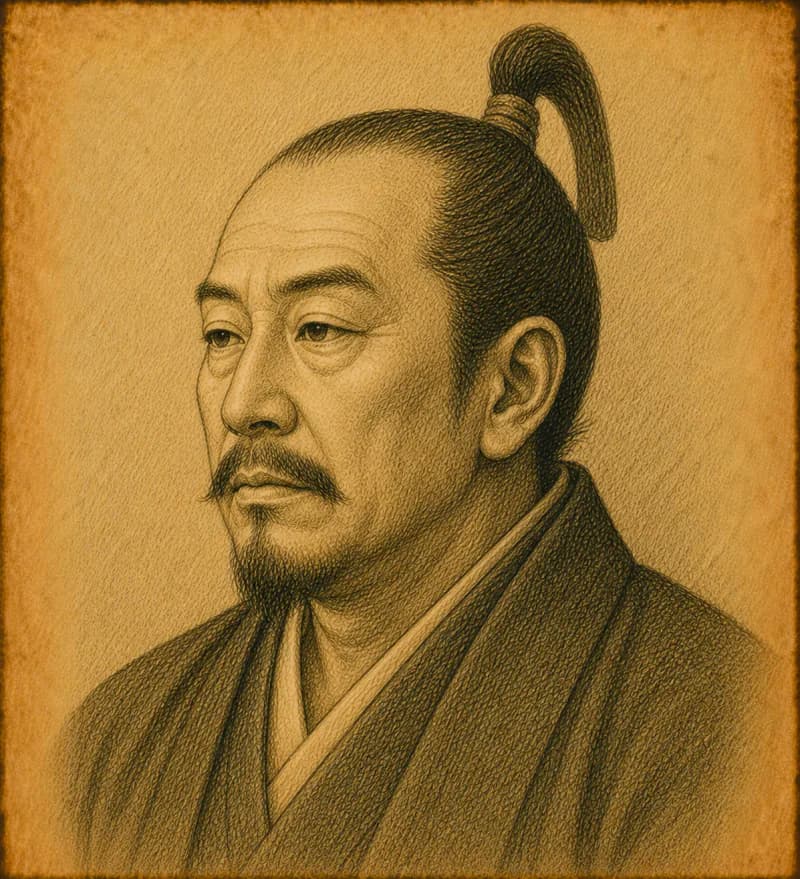
SA-0003 / JPN
Tokugawa Ieyasu
The patient warlord whose dynasty ruled Japan for 250 years
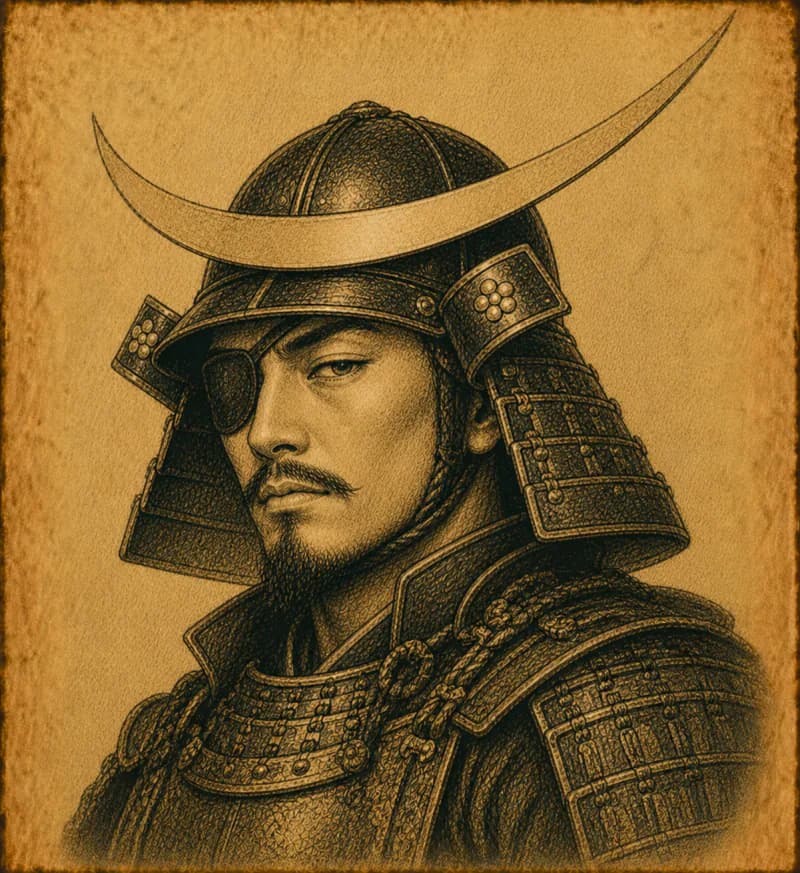
SA-0004 / JPN
Date Masamune
The One-Eyed Dragon who built Sendai
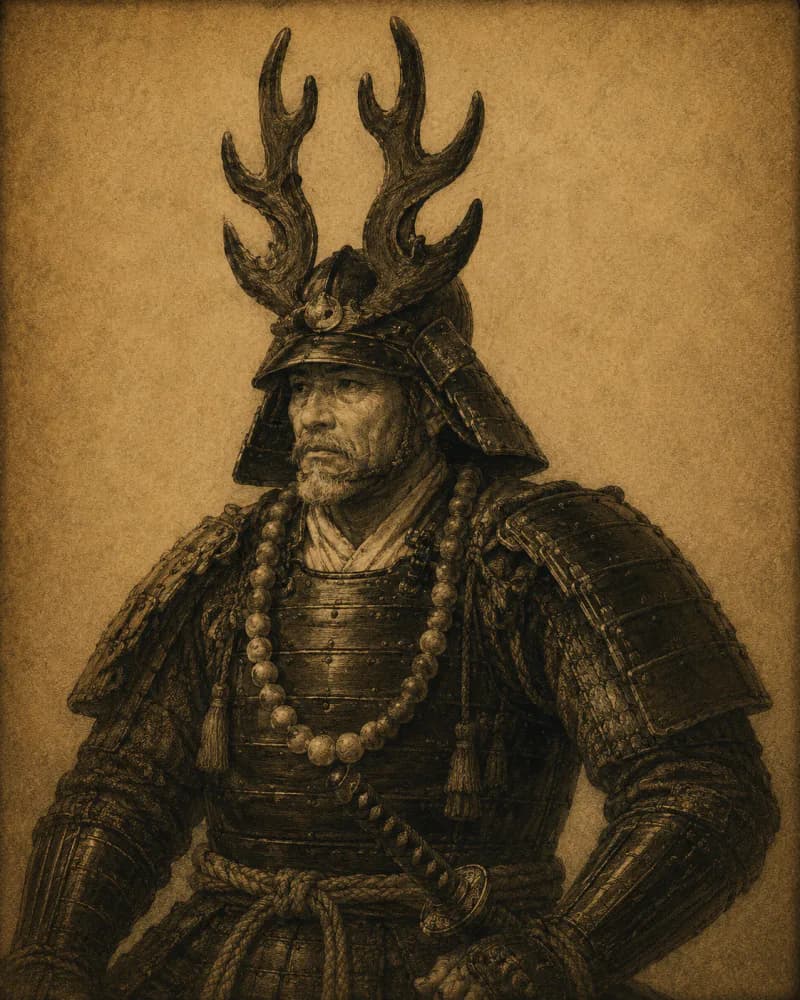
SA-0049 / JPN
Honda Tadakatsu
The spear master of the Tokugawa Four Heavenly Kings, said to have come through fifty-seven battles without a wound
SA-0048 / JPN
Ii Naomasa
The youngest of the Tokugawa Four Heavenly Kings, commander of the 'Ii Red Devils' and founder of the Hikone domain
SA-0064 / JPN
Fukushima Masanori
The foremost of the 'Seven Spears of Shizugatake,' vanguard of the Eastern Army at Sekigahara, and the Hideyoshi-raised general who was stripped of his fief for repairing a castle without permission
SA-0065 / JPN
Amakusa Shirō
The young Christian who at sixteen became the commander-in-chief of the Shimabara Rebellion and the direct trigger for the completion of national seclusion