SUBJECT FILE NO. SA-0049
BUSHI ARCHIVE
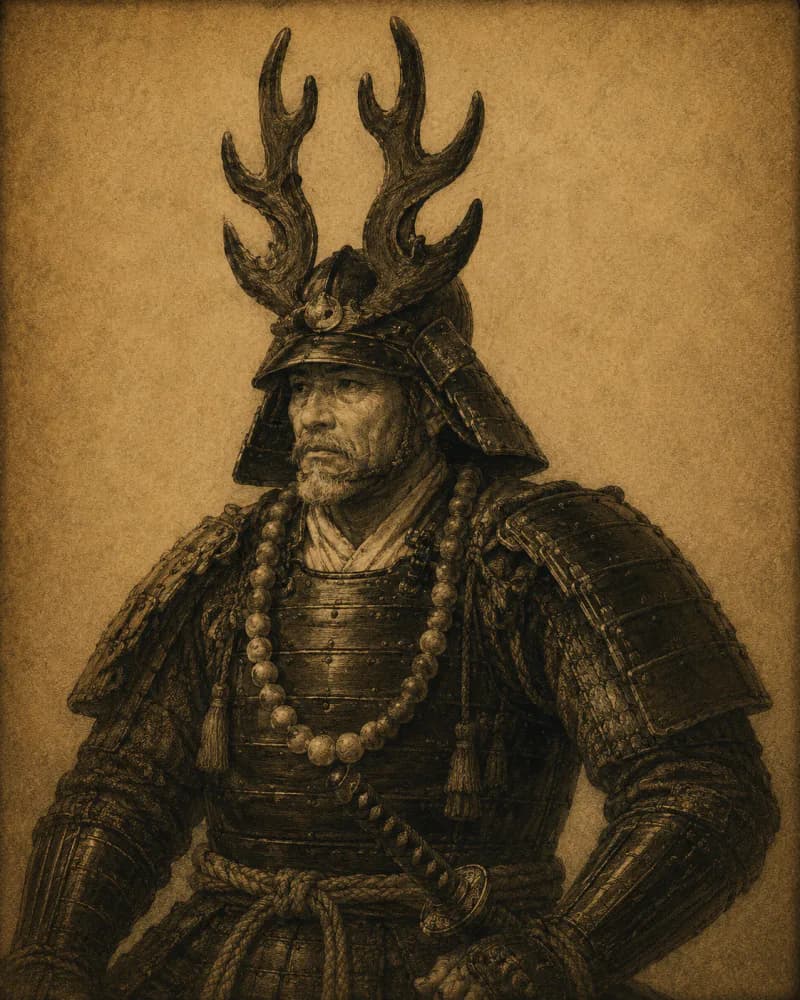
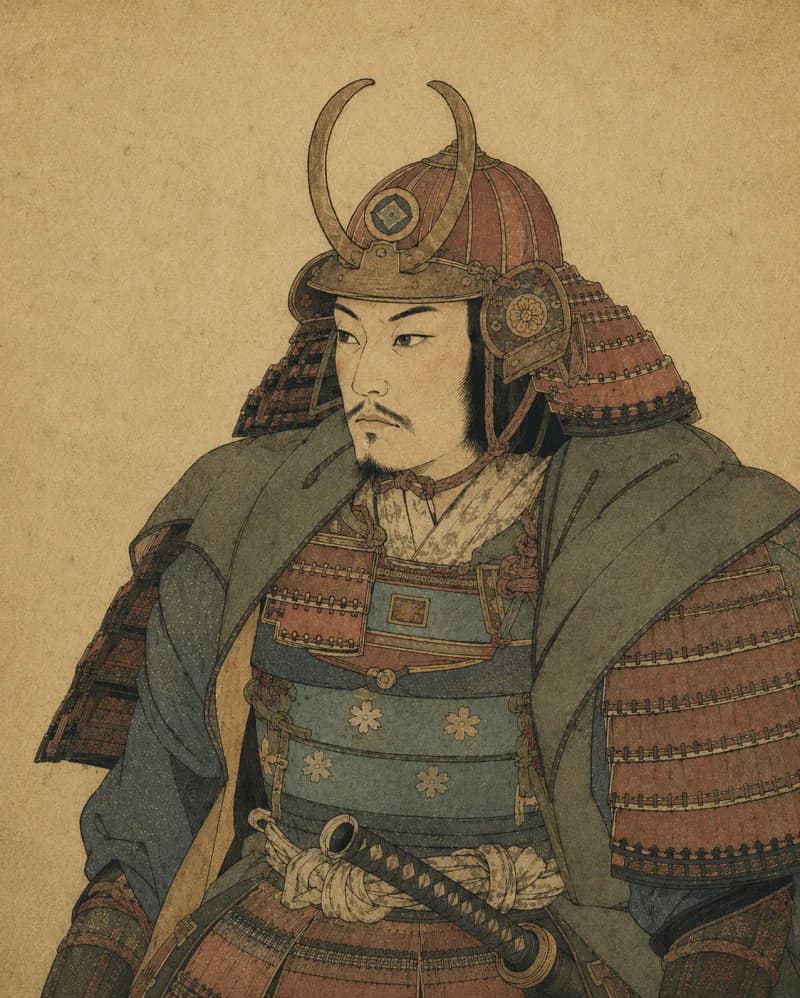
Honda Tadakatsu
Honda Tadakatsu
Lord of Kazusa Ōtaki (100,000 koku) and Ise Kuwana (100,000 koku); one of the Tokugawa Four Heavenly Kings
SECTION I -- SUBJECT PROFILE
| Name | Honda Tadakatsu |
|---|---|
| English | Honda Tadakatsu |
| Origin | Japan |
| Lifespan | 1548–1610 |
| Gender | Male |
| Century | 16th C. |
| Clan / Role | Samurai |
| Title | Lord of Kazusa Ōtaki (100,000 koku) and Ise Kuwana (100,000 koku); one of the Tokugawa Four Heavenly Kings |
SECTION II -- OVERVIEW
Born in 1548 (Tenbun 17) at Kurame in Nukata District, Mikawa Province (modern Okazaki City, Aichi Prefecture), the eldest son of Honda Tadataka.
His father fell in battle in 1549, and Tadakatsu was raised by his grandfather Tadatoyo. He entered the service of Matsudaira Motoyasu (the later Tokugawa Ieyasu) at thirteen, and thereafter served as the military core of Ieyasu's life.
He made his name at the Battle of Anegawa (1570), and took part in nearly all of the major Tokugawa engagements — Mikatagahara (1572), Nagashino (1575), Komaki-Nagakute (1584).
At the Kantō transfer of 1590 he was given Kazusa Ōtaki at 100,000 koku; after Sekigahara in 1600 he was moved to Ise Kuwana at 100,000 koku.
The Honda house continued through the Edo period as a fudai daimyō house, and Tadakatsu's line produced the lords of Okazaki, Kariya, Fukui, and others.
He died at Kuwana in 1610 (Keichō 15), aged sixty-three. No record of a serious wound suffered by Tadakatsu has been found in either contemporary or later compiled sources — the empirical basis of the later evaluation of 'fifty-seven battles unwounded.
SECTION III -- CHRONOLOGY
SECTION IV -- NOTABLE STATEMENTS
“Two things Ieyasu has more than he deserves: his Chinese helm and Honda Heihachi.”
SECTION V -- FIELD NOTES
[A]Standing Against a Great Army with a Small Force at Komaki-Nagakute
At Komaki-Nagakute in 1584, Tadakatsu is recorded in the Mikawa Monogatari and other sources as having ridden out with about five hundred horsemen to confront Hashiba Hideyoshi's main army of more than 80,000.
No actual engagement followed, but the anecdote of Hideyoshi having admired the orderly bearing of Tadakatsu's troop and held off from attack has been repeatedly retold as the emblem of Tadakatsu's martial prestige.
The numbers may carry exaggeration, but the fact of confronting a great army with a small force is corroborated in multiple contemporary records.
[B]Tonbogiri and a Life Unwounded
Tadakatsu's prized spear 'Tonbogiri' (Dragonfly-Cutter) was counted as one of the Three Great Spears of Japan.
It is a long-shafted spear, and the name comes from the tradition that a dragonfly that alighted on the blade was cut in two by the edge itself.
The Tonbogiri survives in records as a Honda-family heirloom and is held in several museums. The figure of 'fifty-seven battles unwounded' rests on Edo-period compiled materials such as the Bukō Zakki, and the specific number is a late-Edo accounting — but the fact that no record of Tadakatsu suffering a serious wound has been found in contemporary sources is broadly recognized among scholars.
SECTION VI -- LEGACY & IMPACT
Honda Tadakatsu, as one of the Tokugawa Four Heavenly Kings (Sakai Tadatsugu, Honda Tadakatsu, Sakakibara Yasumasa, Ii Naomasa), bore the military core of the founding process of the Tokugawa bakufu.
The term 'Four Heavenly Kings' itself is an honorific that formed in the Edo period, but the fact of the four men supporting Ieyasu's military body is corroborated in the sources.
Tadakatsu's line continued through the Edo period as a fudai daimyō house, and the various Honda branches were established across the country in Okazaki, Kariya, Fukui, Yamasaki, Nishibata, and other domains.
The Tonbogiri came to be recognized from the Edo period as one of the Three Great Spears of Japan, and is transmitted today as the emblem of the Honda house.
The Mikawa Monogatari (by Ōkubo Hikozaemon Tadataka) is the contemporary in-house record that transmits Tadakatsu's military career in the most detail, and stands as a foundational text of early-Tokugawa military history.
SECTION VII -- MAJOR DEEDS
- [01]Lifetime service to Tokugawa Ieyasu (ages 13 to 63)
- [02]Participation in Anegawa, Mikatagahara, Nagashino, Komaki-Nagakute, and other major Tokugawa engagements
- [03]Foundation of Kazusa Ōtaki domain (1590)
- [04]Foundation of Ise Kuwana domain (1601)
- [05]Possession of Tonbogiri, one of the Three Great Spears of Japan
SECTION VIII -- REFERENCE MATERIALS
PRIMARY SOURCES & ARCHIVES
- PRIMARY
Mikawa Monogatari
Ōkubo Hikozaemon Tadataka
Contemporary in-house record by an early-Tokugawa retainer; the foundational source detailing Tadakatsu's career
- SCHOLARSHIP
The Tokugawa Four Heavenly Kings
Irimoto Masuo / Shin-Jinbutsuōraisha
Source-critical scholarly account of the four figures together
- ARCHIVE
Ōtaki Castle / Chiba Prefectural Central Museum Ōtaki Annex
Ōtaki Town, Chiba Prefecture
Ōtaki Castle where Tadakatsu served as first lord; holds Honda-family materials
Visit archive →
RECOMMENDED READING
SECTION X -- RELATED REPORTS
SA-RPT
Sekigahara: How Tokugawa Won Japan in a Single Afternoon
On October 21, 1600, two armies of roughly 80,000 men each met in fog on a Mino plain. By sunset, the battle that decided 250 years of Japanese history was over.
SA-RPT
Fifty-Seven Battles Unwounded: How Much of the Honda Tadakatsu Legend Is Fact?
The career of Honda Tadakatsu, said to span 'fifty-seven battles without a wound.' The specific figure rests on Edo-period compiled sources, but the absence of a record of serious wounding in contemporary materials is itself broadly recognized among scholars. Tracing the relation between legend and source, reading the historical reality of the warrior who served Tokugawa Ieyasu for half a century.
SA-RPT
The Tokugawa Four Heavenly Kings: Why Sakai, Honda, Sakakibara, and Ii Were Named Together
Sakai Tadatsugu, Honda Tadakatsu, Sakakibara Yasumasa, Ii Naomasa. The four warriors who bore the military core of Tokugawa Ieyasu are called the 'Tokugawa Four Heavenly Kings,' but when did the term form and what was the basis for the selection? Sorting out the outline of the Four Heavenly Kings from Edo-period house-tradition compilation and modern scholarship.
SA-RPT
Tonbogiri: Honda Tadakatsu's Prized Spear and the Lineage of the Three Great Spears
Honda Tadakatsu's prized spear 'Tonbogiri' (Dragonfly-Cutter) was praised, alongside Otegine and Nihongō, as one of the 'Three Great Spears of the Realm' — famous-name long-shafted spears. Reading the transmission of this spear, named from a tradition that a dragonfly alighting on the blade was cut in two, and Tadakatsu's wielding of it on the field, from the sources.
SECTION IX -- LINKED SUBJECTS
SA-0003 / JPN
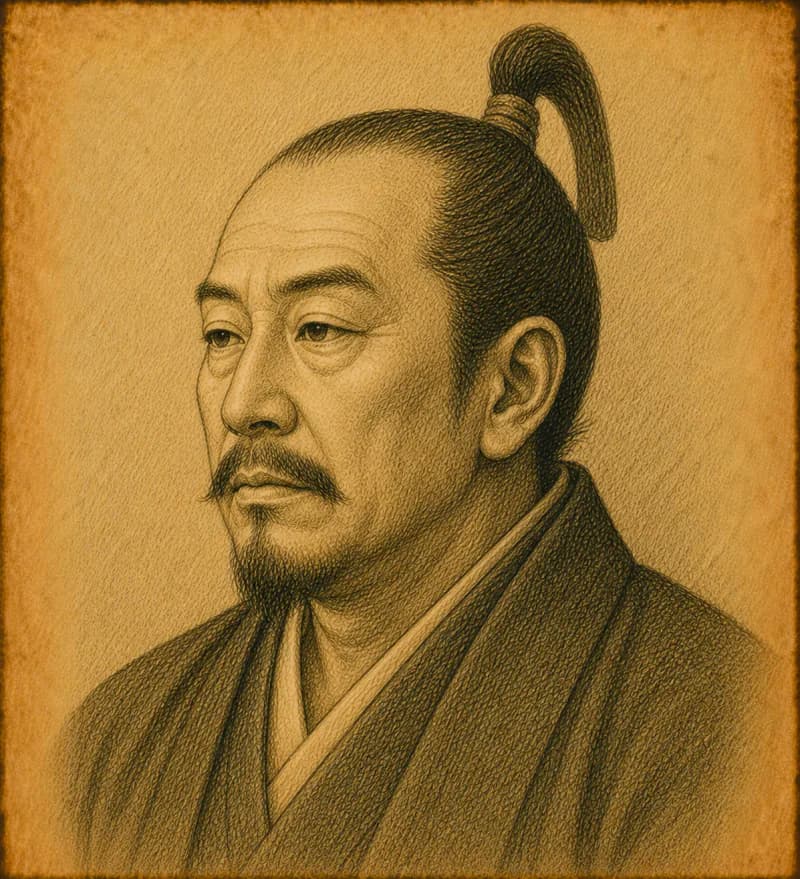
Tokugawa Ieyasu
The patient warlord whose dynasty ruled Japan for 250 years
SA-0002 / JPN
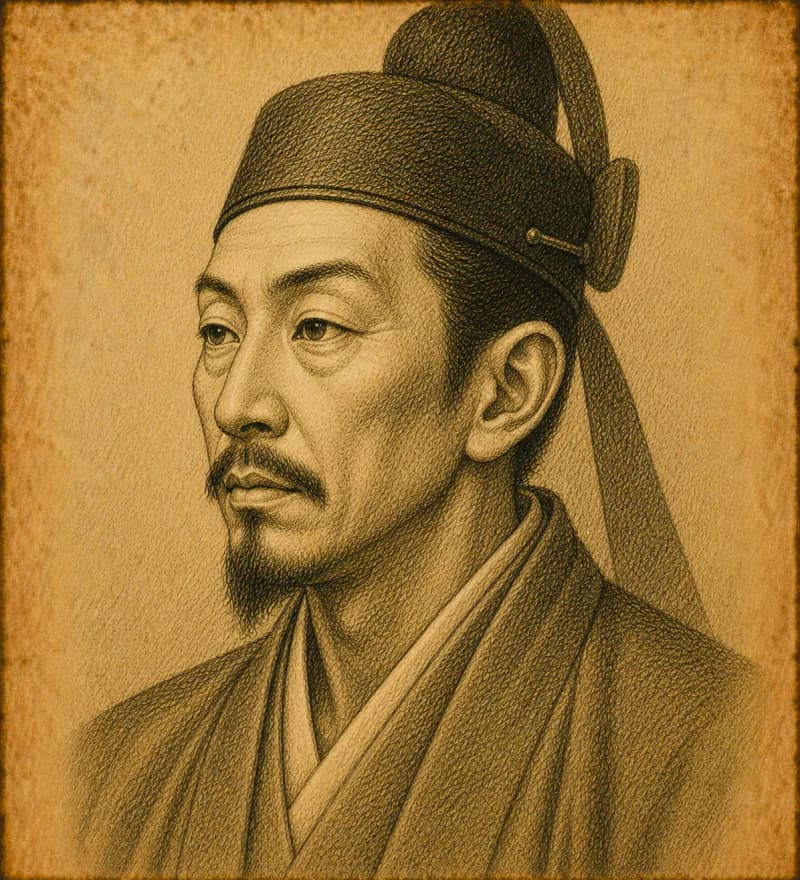
Toyotomi Hideyoshi
The peasant who rose to rule all Japan
SA-0001 / JPN
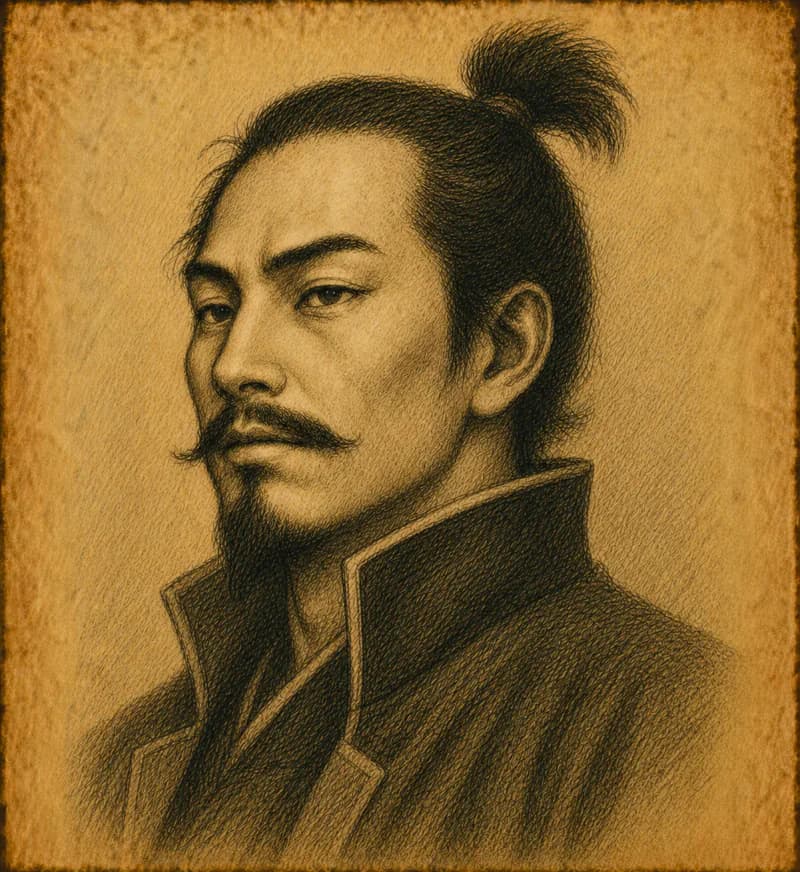
Oda Nobunaga
The revolutionary who paved the path to a unified Japan
SA-0004 / JPN
Date Masamune
The One-Eyed Dragon who built Sendai
SA-0005 / JPN
Takeda Shingen
The Tiger of Kai whose cavalry shook the realm
SA-0006 / JPN
Uesugi Kenshin
The Dragon of Echigo, sword-saint of the north
SA-0030 / JPN
Akechi Mitsuhide
The general whose betrayal at Honnō-ji rerouted Japanese history
SA-0033 / JPN
Takeda Katsuyori
The last lord of Takeda — and the man who lost the cavalry at Nagashino