SUBJECT FILE NO. SA-0048
BUSHI ARCHIVE
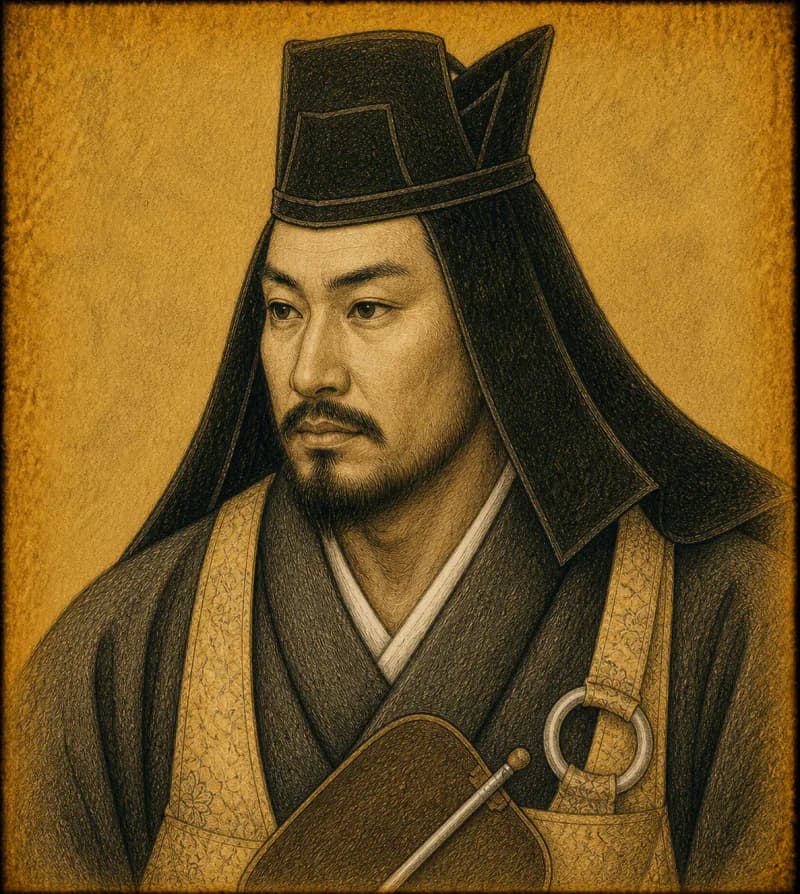
Ii Naomasa
Ii Naomasa
First lord of Ōmi Sawayama (180,000 koku); founder of the Hikone domain; one of the Tokugawa Four Heavenly Kings
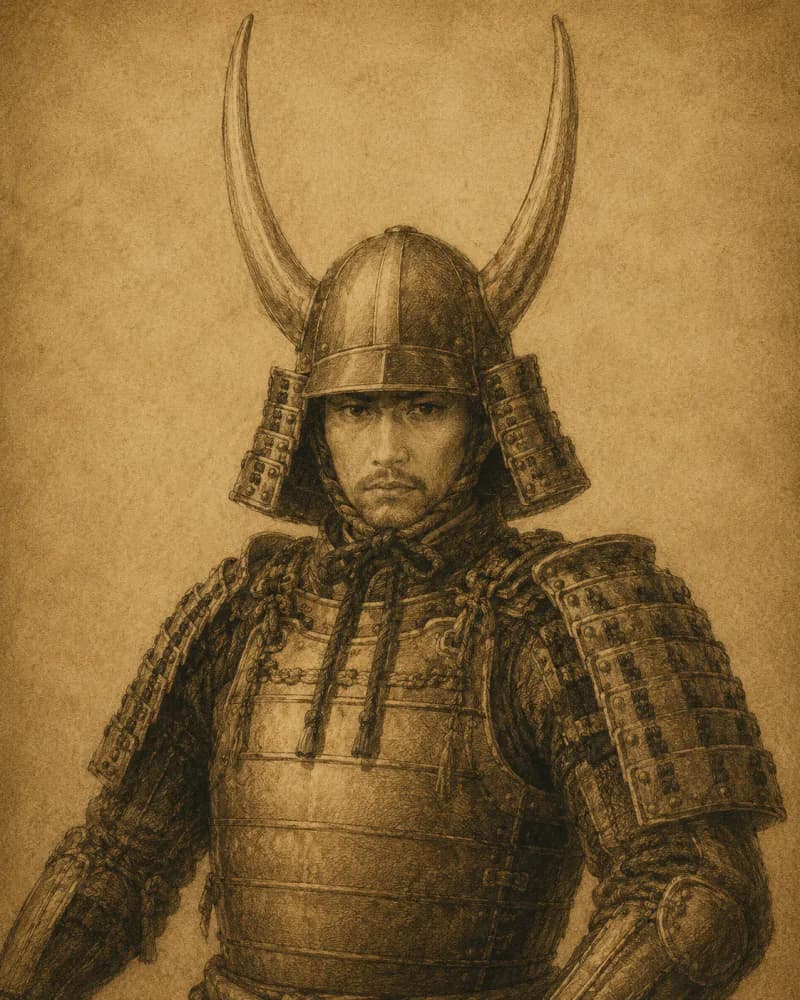
SECTION I -- SUBJECT PROFILE
| Name | Ii Naomasa |
|---|---|
| English | Ii Naomasa |
| Origin | Japan |
| Lifespan | 1561–1602 |
| Gender | Male |
| Century | 16th C. |
| Clan / Role | Samurai |
| Title | First lord of Ōmi Sawayama (180,000 koku); founder of the Hikone domain; one of the Tokugawa Four Heavenly Kings |
SECTION II -- OVERVIEW
Born on February 19, 1561 (Eiroku 4), at Ii-no-ya in Tōtōmi Province (the modern Kita Ward of Hamamatsu City, Shizuoka Prefecture) as the eldest son of Ii Naochika.
His childhood name was Toramatsu. His father Naochika was put to death by Imagawa Ujizane in 1562, and Naomasa, escaping pursuit by the Imagawa house, was raised in concealment at a temple.
In 1575 (Tenshō 3), at fifteen, he entered the service of Tokugawa Ieyasu, gained Ieyasu's trust, and rose rapidly. After the destruction of the Takeda house in 1582 (Tenshō 10), Ieyasu gave Naomasa the elite force of the Takeda house, and on this base the 'Ii Red Devils' (Ii no Akazonae) — equipment unified in vermilion throughout — was formed.
Inheriting the form of the red-armor force commanded by Yamagata Masakage of the Takeda, it became the strongest elite unit of the Tokugawa army.
He took part in the major engagements: Komaki-Nagakute in 1584, Odawara in 1590, Sekigahara in 1600. At Sekigahara, as the eastern vanguard, he pursued the retreat of Shimazu Yoshihiro's force when it broke through the enemy center; in this pursuit he took a gunshot wound, and from that wound he died at Sawayama Castle on February 1, 1602 (Keichō 7), aged forty-two.
After his death the headship was inherited by his son Naokatsu (later Naotaka), who moved the base from Sawayama to Hikone and established the Hikone domain; the Ii house continued through the Edo period as the foremost of the fudai daimyō.
SECTION III -- CHRONOLOGY
SECTION IV -- NOTABLE STATEMENTS
“I take up the former retainers of the Takeda; the form of their armor is not to be changed.”
SECTION V -- FIELD NOTES
[A]Inheriting the Red Devils — from Takeda to Tokugawa
After the destruction of the Takeda in 1582, Ieyasu, in the course of reorganizing the former Takeda retainers and territory, gave Ii Naomasa the elite vermilion-equipped force ('the Red Devils') that had been commanded by Yamagata Masakage of the Takeda.
The vermilion equipment, expensive in dye and costly to maintain, was a specially symbolic force for the time.
Naomasa was twenty-two. By systematically taking in the Takeda retainers, maintaining the equipment, and inheriting the tactics, he created an independent elite unit within the Tokugawa army.
At later engagements including Sekigahara, the 'Ii Red Devils' functioned as a symbolic unit combining visibility and combat power.
[B]The Sekigahara Wound and the Death Two Years Later
At the Battle of Sekigahara on September 15, 1600, after Naomasa as the eastern vanguard had made the eastern victory certain, he pursued the retreat of Shimazu Yoshihiro's force, which had attempted to break through the enemy center.
In this pursuit he took a gunshot wound in the thigh from a Shimazu gunner. The wound was not light, but at the time was not seen as fatal, and after the battle he was granted Ōmi Sawayama at 180,000 koku in recognition of his service.
The wound did not fully heal, however; it suppurated repeatedly, and about a year and a half later, in February 1602, he died at Sawayama Castle.
It is recorded as a rare case of a Sekigahara wound bringing death two years after.
SECTION VI -- LEGACY & IMPACT
Ii Naomasa was the youngest of the Tokugawa Four Heavenly Kings (Sakai Tadatsugu, Honda Tadakatsu, Sakakibara Yasumasa, Ii Naomasa) and the warrior who left the most vivid impression.
The 'Ii Red Devils' he inherited is known as the symbolic elite force of the Tokugawa army, and remains today a representative icon for talk of the Tokugawa army.
After his death, the Hikone domain was established under his son Naotaka, and through the Edo period the Ii house stood at the foremost of the fudai daimyō and produced tairō (great elders), supporting the Tokugawa bakufu.
The thirteenth-generation Ii Naosuke (this site's id 27) was the major Bakumatsu-period figure known for the Ansei Purge and the Sakuradamon Incident; the lineage of the Ii house from Naomasa to Naosuke, continuing 250 years, embodies the history of the Tokugawa bakufu itself.
Hikone Castle survives as one of the five national-treasure castles, and the Hikone Castle Museum holds Ii-family armor and documents.
SECTION VII -- MAJOR DEEDS
- [01]Entry into Tokugawa Ieyasu's service (1575)
- [02]Formation of the 'Ii Red Devils' (1582)
- [03]Eastern vanguard at Sekigahara (1600)
- [04]Foundation of Ōmi Sawayama domain (1601)
- [05]Establishment of the foundation of the Ii house and the Hikone domain
SECTION VIII -- REFERENCE MATERIALS
PRIMARY SOURCES & ARCHIVES
- PRIMARY
Mikawa Monogatari
Ōkubo Hikozaemon Tadataka
Contemporary in-house record by an early-Tokugawa retainer, referencing Naomasa's career
- SCHOLARSHIP
The Tokugawa Four Heavenly Kings
Irimoto Masuo / Shin-Jinbutsuōraisha
Source-critical scholarly account of the four men, including the chapter on Ii Naomasa
- ARCHIVE
Hikone Castle Museum
Hikone City, Shiga Prefecture
Holds Ii-family armor, Red Devil equipment, and documents
Visit archive →
RECOMMENDED READING
SECTION X -- RELATED REPORTS
SA-RPT
Sekigahara: How Tokugawa Won Japan in a Single Afternoon
On October 21, 1600, two armies of roughly 80,000 men each met in fog on a Mino plain. By sunset, the battle that decided 250 years of Japanese history was over.
SA-RPT
The Ii Red Devils: How the Takeda Elite Became the Tokugawa's Strongest Unit
In 1582, after the destruction of the Takeda house, Ieyasu gave the Takeda elite 'Red Devils' to the twenty-two-year-old Ii Naomasa. Inheriting the vermilion equipment of Yamagata Masakage, the Ii Red Devils became the symbolic elite force of the Tokugawa army, combining visibility and combat power across every engagement up to Sekigahara. From the inheritance of equipment to the transmission of tactics, traced from the sources.
SA-RPT
The Wound from Pursuing Shimazu: The Sekigahara Wound That Delayed Naomasa's Death by Two Years
On September 15, 1600, in the closing phase of Sekigahara, Ii Naomasa pursued the retreat of Shimazu Yoshihiro's force, which had attempted to break through the eastern center. The thigh gunshot wound he took in the pursuit was not seen as fatal, but brought his death about a year and a half later in February 1602. A single bullet on the battlefield that closed the life of a forty-two-year-old warrior.
SA-RPT
From Sawayama to Hikone: How the Foundation for the Ii Family's 250 Years Was Built
After Ii Naomasa died in 1602, in the generations of his sons Naokatsu and Naotaka the base was moved from Sawayama to a new castle at Hikone, and the Hikone domain of 300,000 koku was established. The course by which the foundation Naomasa built became the starting point of the Ii family — continuing through the Edo period as the foremost of the fudai daimyō and producing great elders.
SA-RPT
Did Naotora Exist? The Name Jirō-hōshi and Recent Source Research
The 'female castellan Naotora' transmitted by the Ii Family Records has come under reexamination since around 2016. A document discovered in Kyoto suggested that the 'Jirō-hōshi' who ruled Ii-no-ya may have been a man. Tracing the tension between the traditional image and the primary sources.
SA-RPT
From Toramatsu to Naomasa: The Ii-House Future That Naotora Protected
Ii Toramatsu, born in 1561, was orphaned by his father Naochika's death. Tracing the growth of Toramatsu under Naotora's protection, and up to his 1575 service with Tokugawa Ieyasu, as transmitted by the Ii Family Records.
SA-RPT
'Sutegamari': At Sekigahara 1600, How Did Yoshihiro Break Through the Enemy Center?
On the afternoon of October 21, 1600, at Sekigahara. When the defeat of the Western Army became decisive, Shimazu Yoshihiro chose a break-through of the enemy center with a small force. Tracing the rare retreat combat that achieved return to Satsuma by the 'Sutegamari' tactic — the rear-guard sacrifices itself to buy time.
SECTION IX -- LINKED SUBJECTS
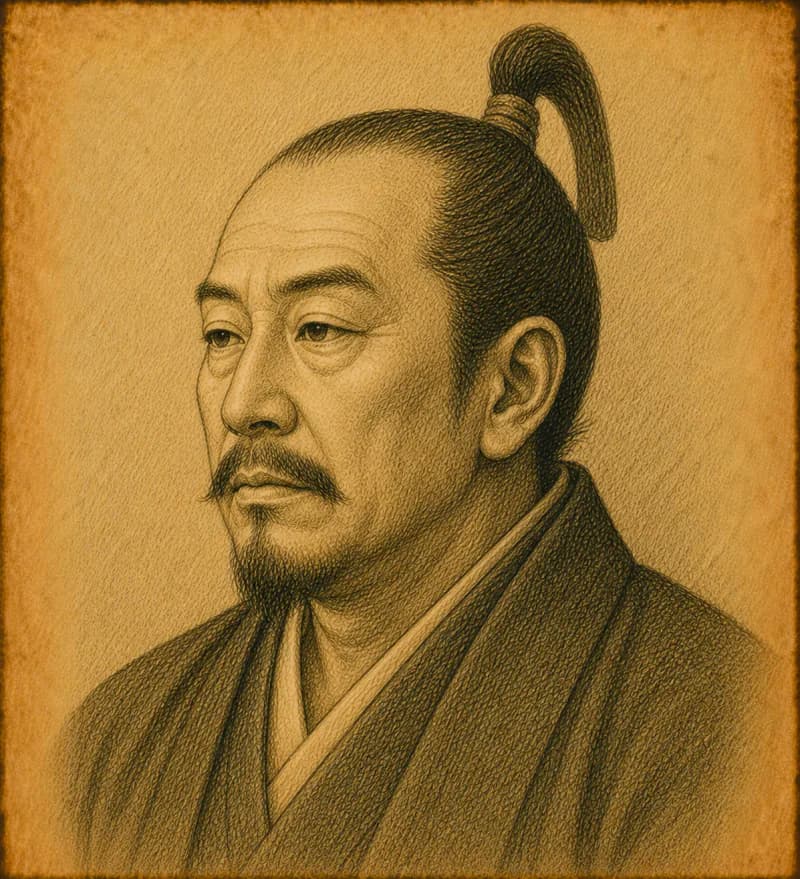
SA-0003 / JPN
Tokugawa Ieyasu
The patient warlord whose dynasty ruled Japan for 250 years
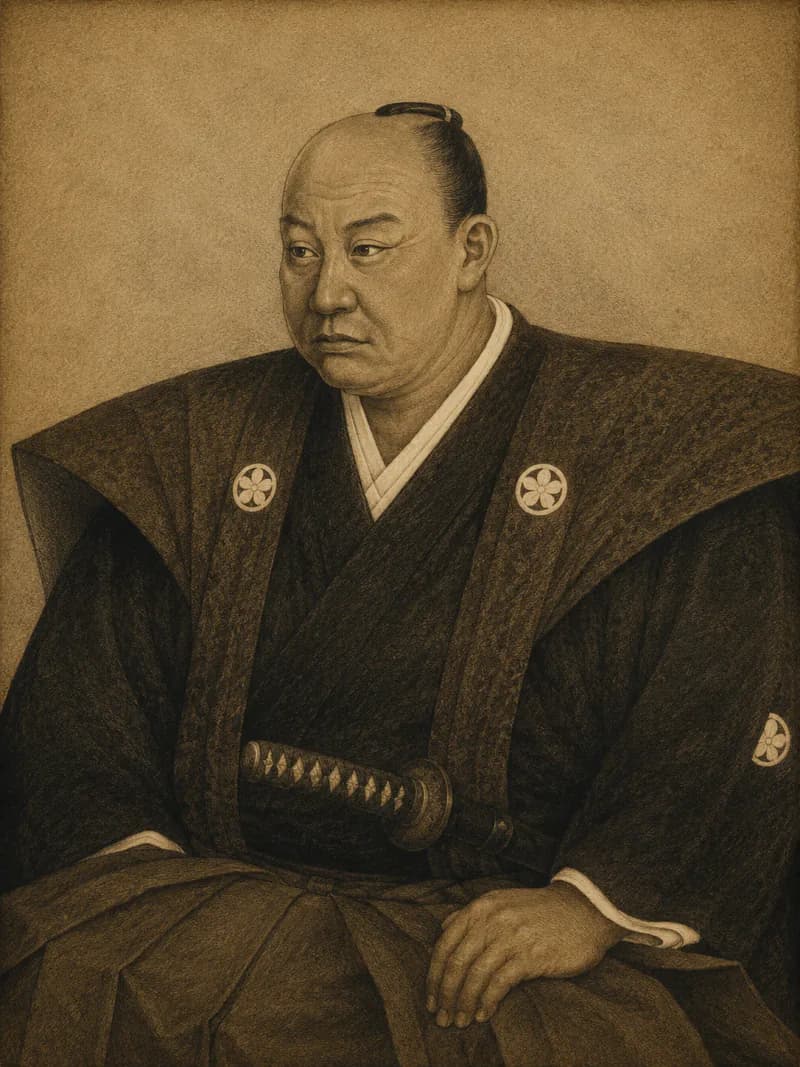
SA-0027 / JPN
Ii Naosuke
The Tairō who signed the unequal treaties — and was assassinated for it at the gates of Edo Castle
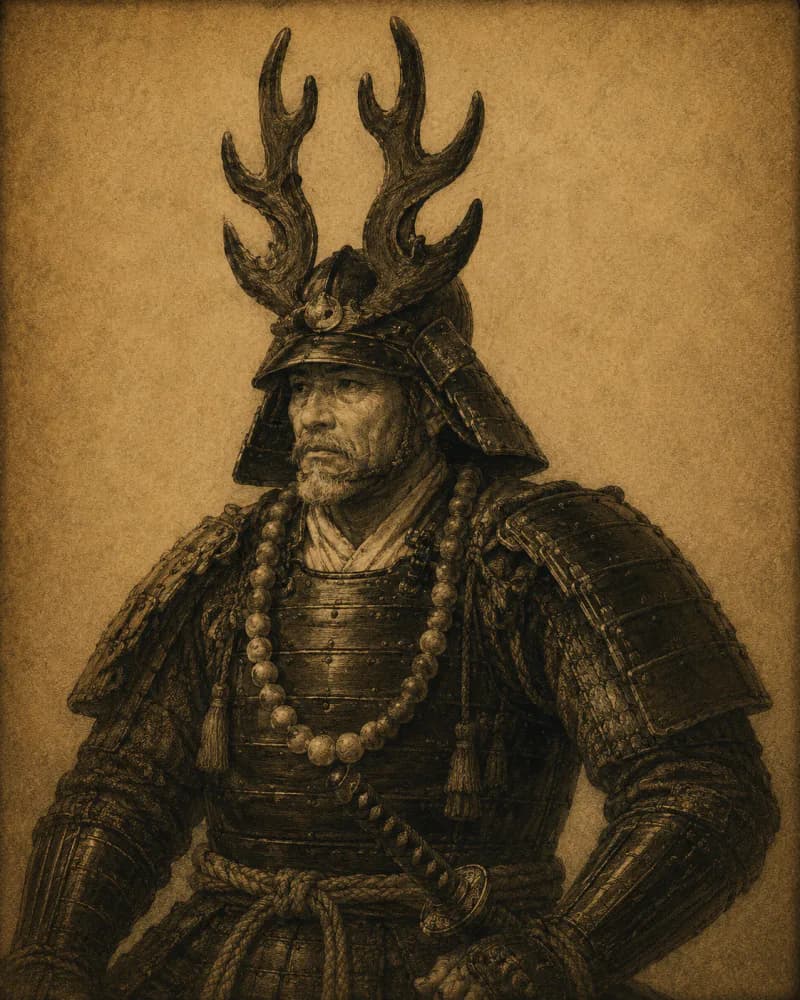
SA-0049 / JPN
Honda Tadakatsu
The spear master of the Tokugawa Four Heavenly Kings, said to have come through fifty-seven battles without a wound
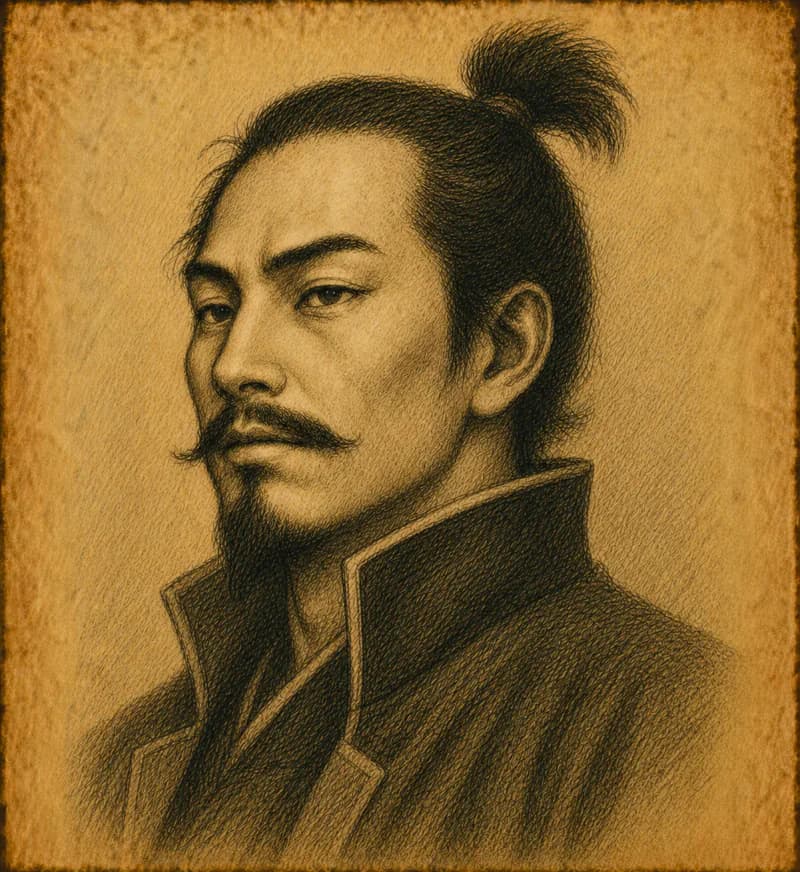
SA-0001 / JPN
Oda Nobunaga
The revolutionary who paved the path to a unified Japan
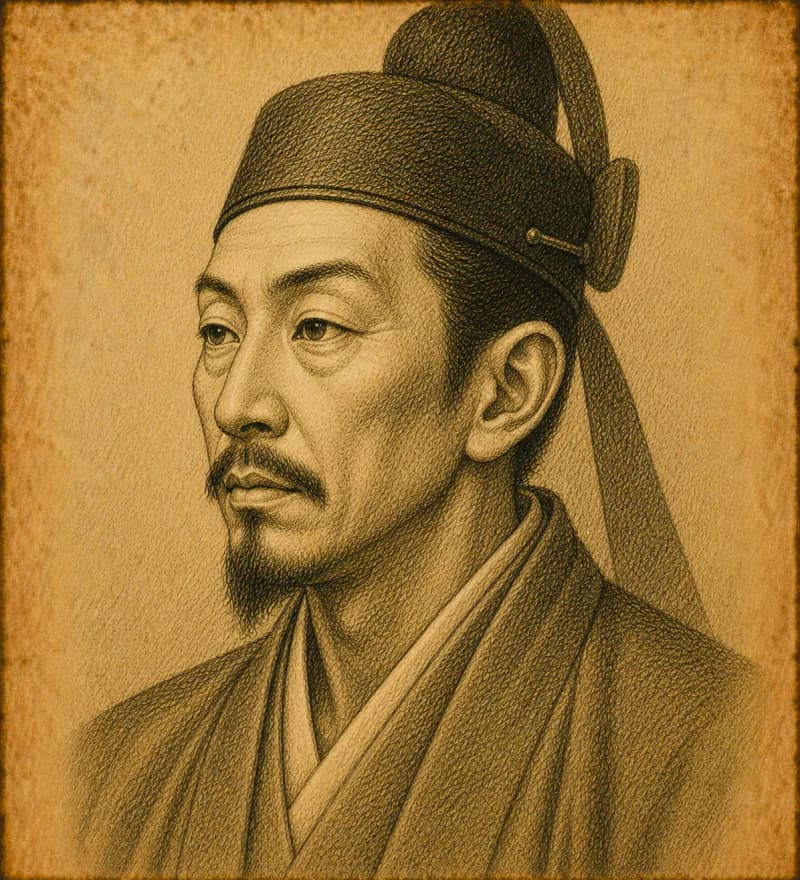
SA-0002 / JPN
Toyotomi Hideyoshi
The peasant who rose to rule all Japan
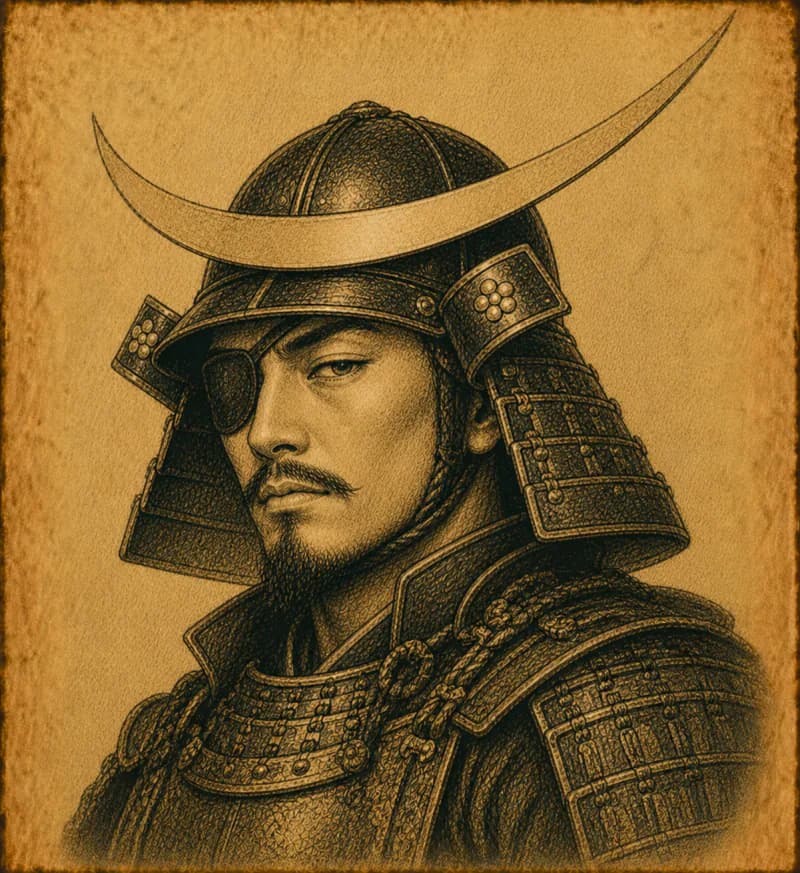
SA-0004 / JPN
Date Masamune
The One-Eyed Dragon who built Sendai
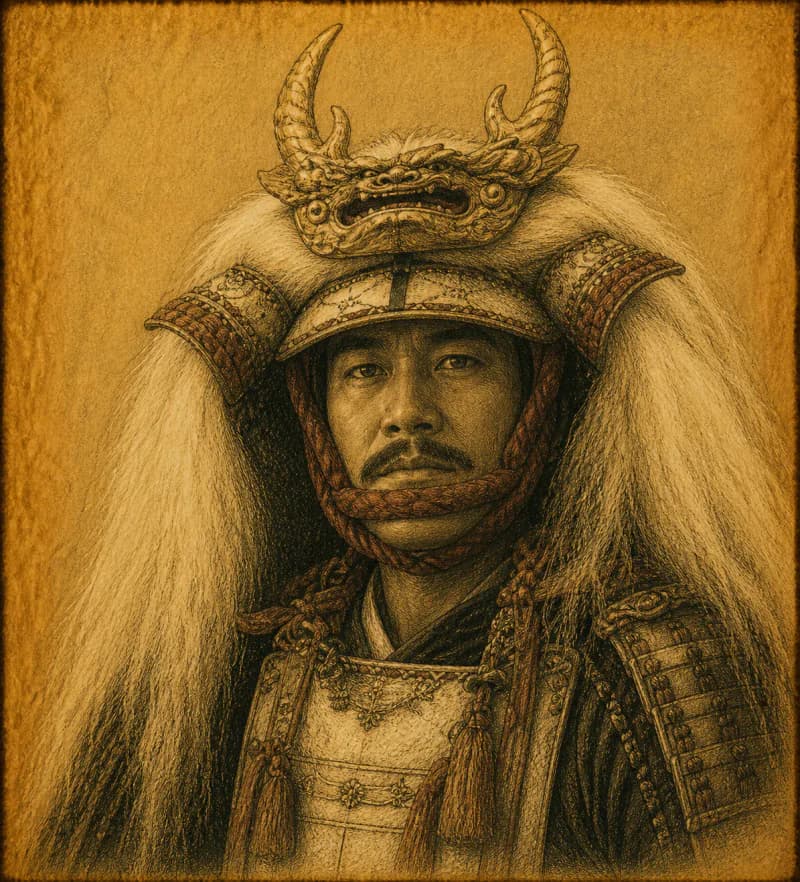
SA-0005 / JPN
Takeda Shingen
The Tiger of Kai whose cavalry shook the realm
SA-0006 / JPN
Uesugi Kenshin
The Dragon of Echigo, sword-saint of the north