SUBJECT FILE NO. SA-0009
BUSHI ARCHIVE
Sanada Yukimura
Sanada Yukimura
Hero of the Osaka Campaign
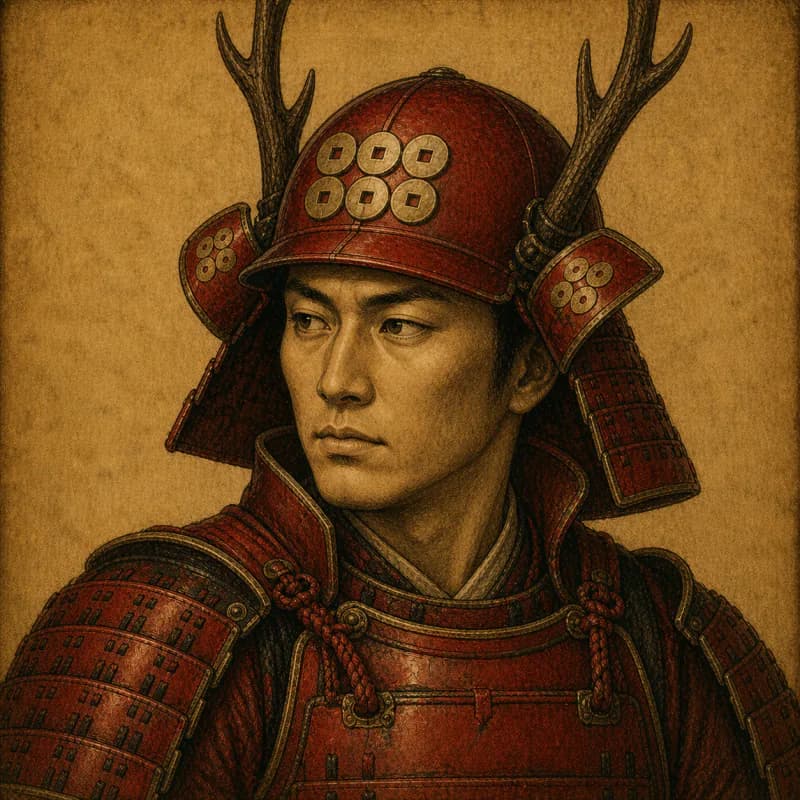
SECTION I -- SUBJECT PROFILE
| Name | Sanada Yukimura |
|---|---|
| English | Sanada Yukimura |
| Origin | Japan |
| Lifespan | 1567–1615 |
| Gender | Male |
| Century | 17th C. |
| Clan / Role | Strategist |
| Title | Hero of the Osaka Campaign |
SECTION II -- OVERVIEW
Born Sanada Nobushige in 1567 in Shinano Province, the second son of the legendary strategist Sanada Masayuki, Yukimura grew up under the cloud of his father's two miraculous defenses of Ueda Castle against the Tokugawa.
After the Sanada were divided at Sekigahara — his elder brother Nobuyuki siding with Ieyasu, Yukimura and his father with the Western Army — he spent fourteen years in exile on Mount Kudo.
In 1614, Toyotomi Hideyori summoned him to Osaka as the great rebellion brewed. Yukimura built the Sanada Maru, an outwork of Osaka Castle that humiliated three of Ieyasu's vanguards in the winter campaign.
In the final summer of 1615, with the castle's outer walls already razed, he led a desperate cavalry charge of three thousand red-armored riders straight at Ieyasu's command tent at Tennōji — a charge that nearly broke the Tokugawa army and that contemporary chroniclers, friend and foe alike, called the bravest feat of arms in the realm.
He was cut down a few hours later, but the legend was already fixed. Edo-period writers titled him 'the Number One Warrior in Japan.
SECTION III -- CHRONOLOGY
SECTION IV -- NOTABLE STATEMENTS
“A warrior must die in the field, sword in hand. To die in bed is no death at all.”
SECTION V -- FIELD NOTES
[A]Charge of the Red Devils
On the seventh day of the fifth month of 1615, Yukimura led three thousand horsemen — every man, every horse, every banner painted Sanada red — straight at Ieyasu's headquarters.
Twice he reached the command standard. Twice the Tokugawa banner fell, and twice they raised it again.
He died exhausted on the field. The poet Date Masamune later wrote of him: 'A man like that is born once in a hundred years.
SECTION VI -- LEGACY & IMPACT
Yukimura became the archetype of the heroic loser in Japanese culture — the warrior who fights brilliantly for a doomed cause.
His name was rehabilitated to 'Yukimura' from his given Nobushige in Edo-period kabuki and military romances, and that romanticized version dominates global pop culture: video games, manga, the 2016 NHK epic Sanada Maru, and the 2024 series Shōgun all draw from his myth.
SECTION VII -- MAJOR DEEDS
- [01]Defense of Ueda Castle (1600)
- [02]Construction of the Sanada Maru (1614)
- [03]Cavalry charge at Tennōji (1615)
- [04]Sanada military code preserved through Nobuyuki's branch
SECTION VIII -- REFERENCE MATERIALS
PRIMARY SOURCES & ARCHIVES
- PRIMARY
Sanada Family Documents
Held by Ueda City Museum and Matsushiro Sanada Treasury
Hereditary Sanada-clan documents including correspondence relating to Nobushige
- SCHOLARSHIP
Sanada Nobushige
Hirayama Yū / KADOKAWA (2015)
Definitive modern biography reflecting current scholarship (in Japanese)
- ARCHIVE
RECOMMENDED READING
SECTION X -- RELATED REPORTS
SA-RPT
The Last Charge at Osaka: Sanada Yukimura's Final Stand
On a single afternoon in May 1615, three thousand red-armored riders charged the largest army in Japan and nearly toppled it. The man who led them was already a legend; what he did next made him the model for every Japanese hero of doomed battle that followed.
SA-RPT
The Brother Who Outlived the Legend: Why Sanada Nobuyuki Lived to Ninety-Two
Sanada Yukimura died at Osaka in 1615, a hero. His older brother Nobuyuki — who had sided with the Tokugawa at Sekigahara — outlived him by forty-three years and built a domain that lasted to the Meiji Restoration. The contrast tells you what samurai loyalty actually required.
SA-RPT
The Battle of Dōmyōji: Matabei Died One Day Before Yukimura
On May 6, 1615, in the Battle of Dōmyōji during the Summer Siege of Osaka, Gotō Matabei was killed. Against thirty thousand Tokugawa troops, his two-thousand-strong force held the line for half a day. One day before Sanada Yukimura died at Tennōji.
SA-RPT
The Five Senior Rōnin of Osaka Castle: Why Hideyori Recruited Veterans
On the eve of the 1614 Winter Siege, Toyotomi Hideyori issued a general call and assembled a large body of rōnin produced after Sekigahara into Osaka Castle. The five at the center — Gotō Matabei, Sanada Yukimura, Mōri Katsunaga, Akashi Takenori, and Chōsokabe Morichika — became the operational core of the castle's defense.
SA-RPT
The Fall of Ōsaka: In 1615, Yodo-dono Vanished into the Flames with Her Son
In the summer of 1615, the great Tokugawa army besieged Ōsaka Castle. Yodo-dono, who had once lost her father and mother to castle-falls, was this time in the flames together with her child Hideyori. The fall of the Toyotomi house, and a third castle-fall. A life begun in loss closed in loss.
SECTION IX -- LINKED SUBJECTS
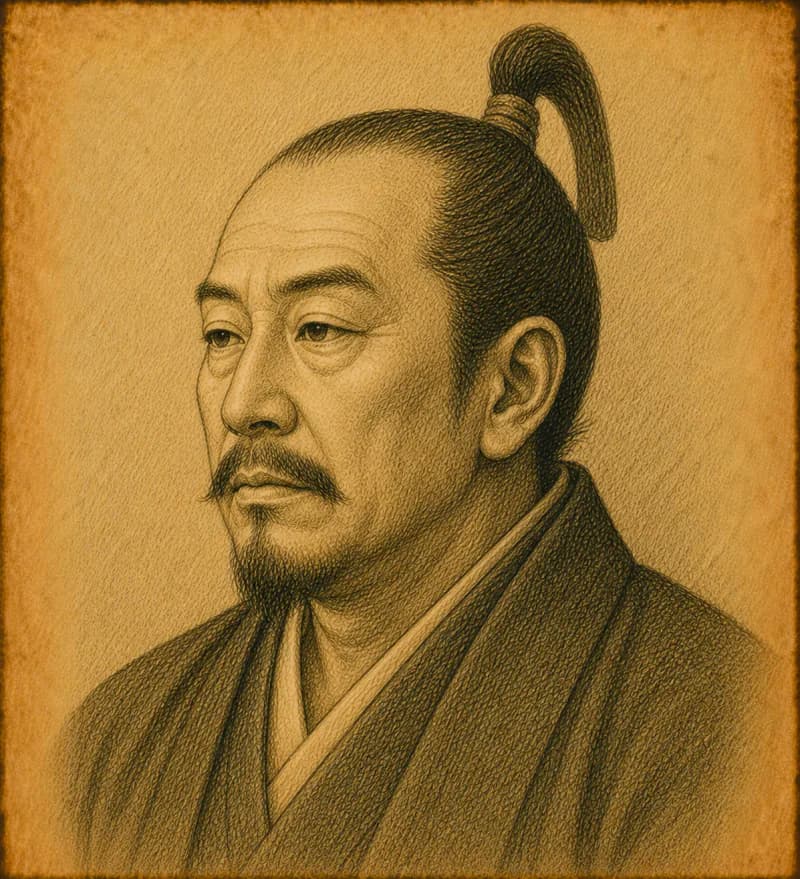
SA-0003 / JPN
Tokugawa Ieyasu
The patient warlord whose dynasty ruled Japan for 250 years
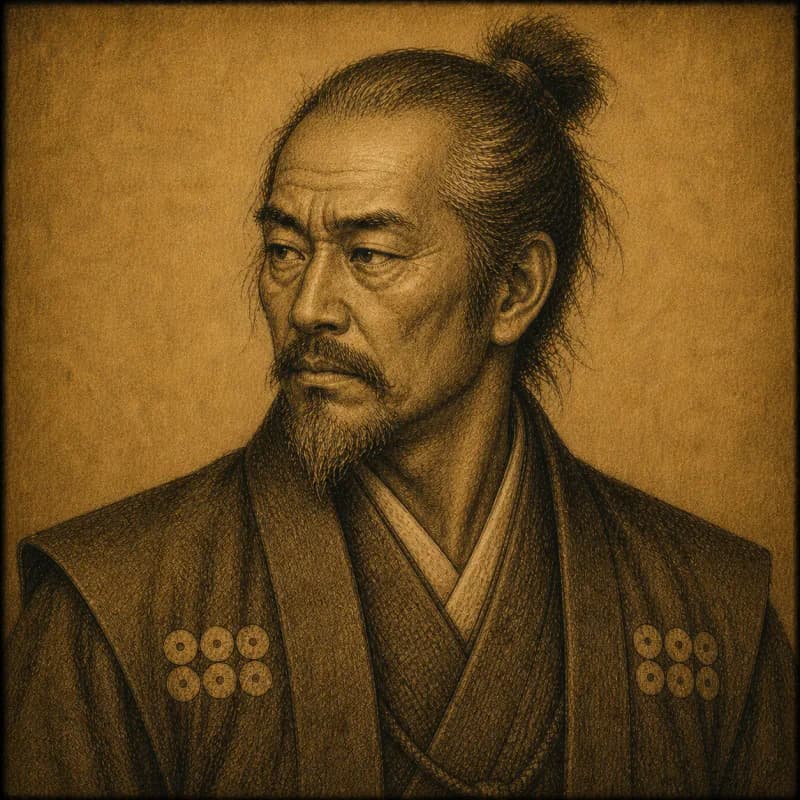
SA-0013 / JPN
Sanada Masayuki
The mountain strategist who defeated the Tokugawa twice from a single small castle
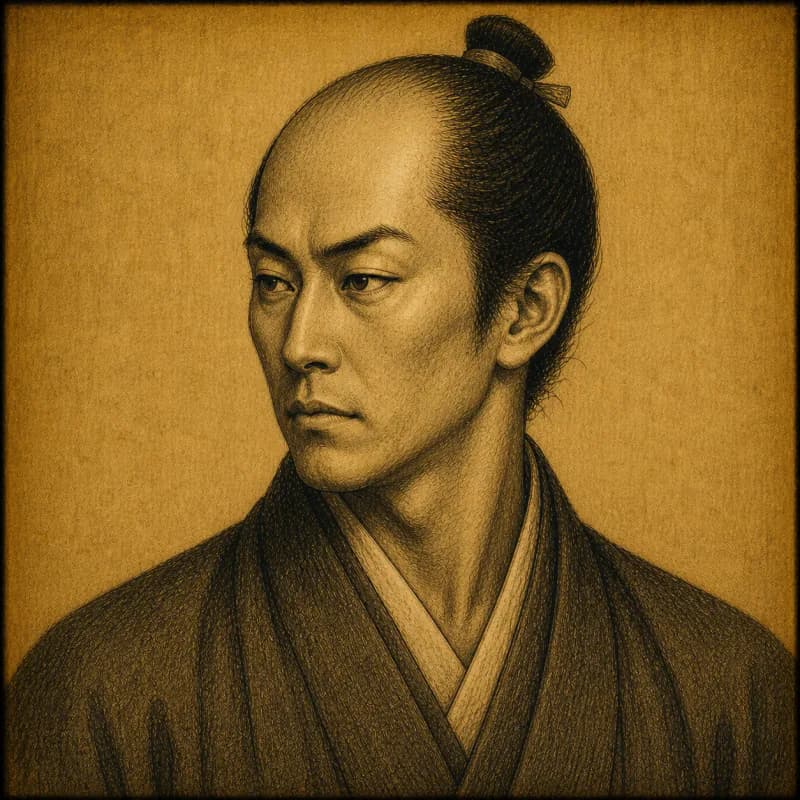
SA-0012 / JPN
Ishida Mitsunari
The administrator who fought Tokugawa for the Toyotomi succession — and lost