SUBJECT FILE NO. SA-0050
BUSHI ARCHIVE
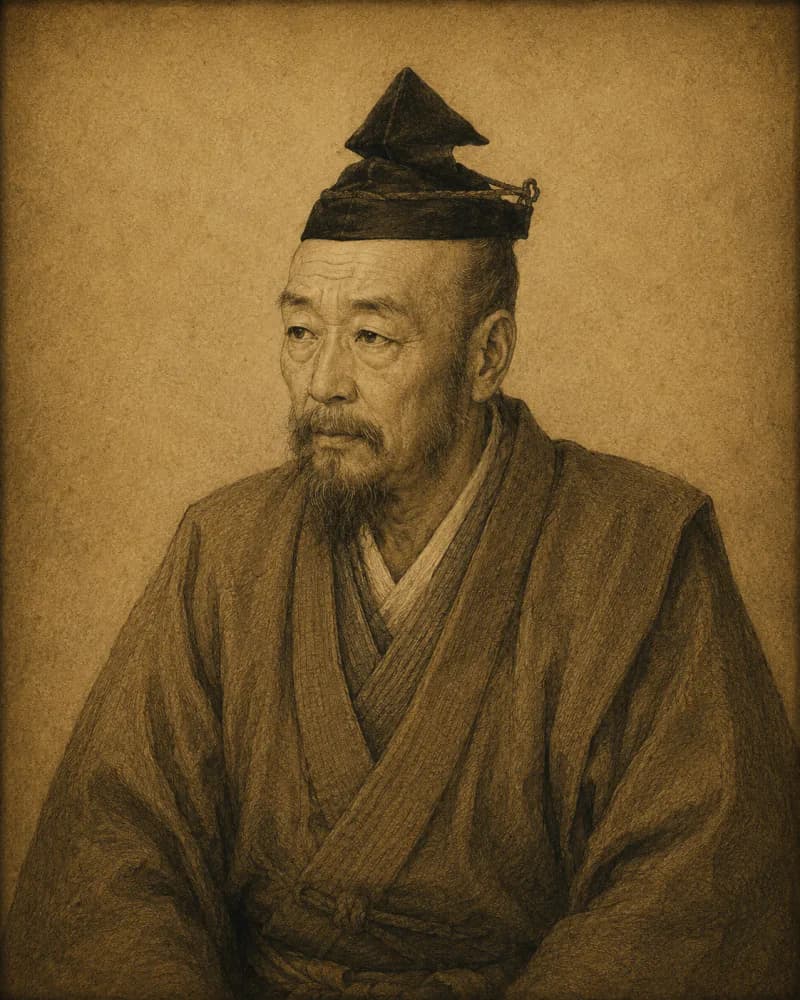
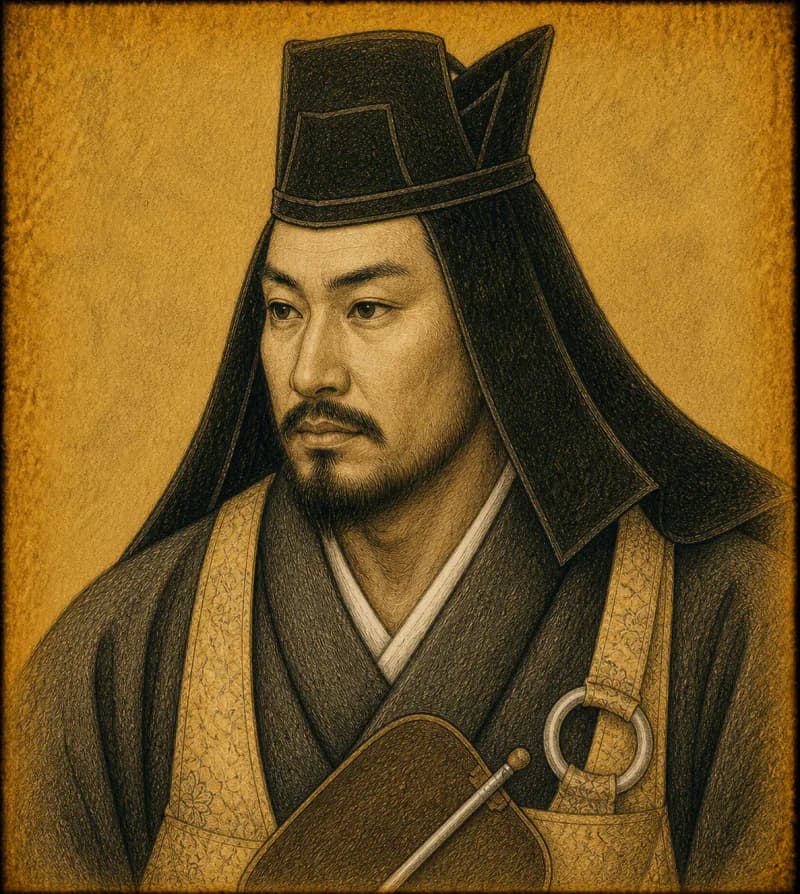
Mōri Motonari
Mōri Motonari
Lord of Yoshida-Kōriyama Castle in Aki Province; master of the Chūgoku region
SECTION I -- SUBJECT PROFILE
| Name | Mōri Motonari |
|---|---|
| English | Mōri Motonari |
| Origin | Japan |
| Lifespan | 1497–1571 |
| Gender | Male |
| Century | 16th C. |
| Clan / Role | Daimyo |
| Title | Lord of Yoshida-Kōriyama Castle in Aki Province; master of the Chūgoku region |
SECTION II -- OVERVIEW
Born in April 1497 (Meiō 6) at Yoshida-Kōriyama Castle in Aki Province, the second son of Mōri Hiromoto. His childhood name was Shōjumaru.
His father retired in 1500 and died in 1506; the early death of his elder brother Okimoto in 1516, and the early death of his nephew Kōmatsumaru in 1523, brought Motonari to the headship of the Mōri at twenty-seven.
The Mōri at the time were one of several powerful kokujin houses of Aki, a small force caught between the great Ōuchi and Amago powers.
Motonari combined careful marriage policy with military action, and over more than forty years built up his rule of the Chūgoku region.
The decisive turning point was his surprise victory over Sue Harukata's great army at the Battle of Itsukushima in 1555 (Kōji 1).
Sending his second son Motoharu in adoption to the Kikkawa and his third son Takakage to the Kobayakawa, he constructed the 'Ryōsen' (Two-River) structure that absorbed both houses, building a strong alliance body centered on the Mōri main house.
He died at Yoshida-Kōriyama Castle in June 1571 (Genki 2), aged seventy-five. Four years before his death his great domain extended across ten provinces — Aki, Suō, Nagato, Iwami, Bingo, Bitchū, Izumo, Oki, Hōki, and Inaba.
SECTION III -- CHRONOLOGY
SECTION IV -- NOTABLE STATEMENTS
“A single arrow is easily broken; three bound together are not.”
SECTION V -- FIELD NOTES
[A]Three Arrows — Tradition and Historical Record
The 'three arrows' story — in which Motonari, on his deathbed, calls his three sons (Takamoto, Motoharu, Takakage) to his side, shows that a single arrow can be broken but three bound together cannot — is one of the most widely known anecdotes in modern Japan.
But Motonari's eldest son Takamoto died of illness in 1563 at forty-one, preceding Motonari's death in 1571.
The scene in which all three brothers gathered at his pillow therefore cannot stand as historical fact.
The thought at the core of the story — the unity of brothers — is securely present in the Sanshi Kyōkunjō (a letter of fourteen articles) that Motonari issued to his three sons in 1557, and the original is preserved among the Mōri-ke Monjo.
The three-arrows scene is an anecdote that formed in the popular literature and instruction books of the Edo period and onward; the core of the thought traces to Motonari himself, but the scene of the story is a later invention.
[B]Troop Numbers at Itsukushima
In September 1555, Motonari mounted a surprise attack on Sue Harukata's great army at Itsukushima (the modern Miyajima).
Tradition gives Sue's force as 20,000 to 30,000 against a Mōri force of 4,000 to 5,000, and the figures are still cited in contemporary military narratives.
But Sengoku-period troop numbers vary widely between sources, and recent scholarship holds that exact figures are difficult to fix.
That the disparity was overwhelming is certain; the cleverness of the tactic — landing on Itsukushima in the darkness of a storm and attacking at dawn — was the cause of the victory.
Sue Harukata, in flight, took his own life.
SECTION VI -- LEGACY & IMPACT
The Mōri house that Motonari left became, in the generation of his grandson Terumoto, one of the Five Elders of Toyotomi Hideyoshi, and although it served as commander of the Western Army at Sekigahara and was defeated, it survived as the Chōshū-Hagi 360,000-koku domain through to the Meiji Restoration.
Chōshū became the core of the movement to topple the bakufu in the Bakumatsu, and produced Yoshida Shōin, Takasugi Shinsaku, Itō Hirobumi, and others (this site's persons 36-38, 47).
That is — the structure Motonari built reached, three hundred years later, into the formation of the modern Japanese state, a rare case in history.
Motonari's blood spread through the Two-River structure (Kikkawa and Kobayakawa) to the great houses of western Japan, and the Kobayakawa house was eventually inherited by Kobayakawa Hideaki (this site's id 40), the adopted nephew of his third son Takakage.
The original of the Sanshi Kyōkunjō is held by the Mōri Museum in Hōfu City, Yamaguchi Prefecture.
SECTION VII -- MAJOR DEEDS
- [01]Succession to the Mōri headship and central authority of the main house (1523-1550)
- [02]Victory at the Battle of Itsukushima (1555)
- [03]The Sanshi Kyōkunjō (1557)
- [04]Construction of the Two-River (Kikkawa-Kobayakawa) structure
- [05]Establishment of rule over ten provinces of the Chūgoku region (1566)
SECTION VIII -- REFERENCE MATERIALS
PRIMARY SOURCES & ARCHIVES
- PRIMARY
Mōri-ke Monjo (Dai Nippon Komonjo, House Documents Vol. 8)
Historiographical Institute, the University of Tokyo
Critical edition of the documents transmitted in the Mōri house, including the original of the Sanshi Kyōkunjō
- SCHOLARSHIP
Mōri Motonari
Kawai Masaharu / Yoshikawa Kōbunkan (Jinbutsu Sōsho)
Standard postwar biography of Mōri Motonari
- ARCHIVE
Mōri Museum
Hōfu City, Yamaguchi Prefecture
Holds Mōri-family materials, including the original of the Sanshi Kyōkunjō
Visit archive →
RECOMMENDED READING
SECTION X -- RELATED REPORTS
SA-RPT
Three Arrows: The Origin of the Tradition and the 1557 Letter to Three Sons
The 'three arrows' story in which Mōri Motonari taught his three sons that 'a single arrow can be broken but three bound together cannot.' But his eldest son Takamoto died eight years before Motonari, so the scene of the tradition cannot stand as historical fact. Reading Motonari's real words from the 1557 Sanshi Kyōkunjō, the original of which still survives.
SA-RPT
The Battle of Itsukushima: How Motonari Broke Sue Harukata's Great Army
On September 30, 1555, Mōri Motonari mounted a surprise attack on Sue Harukata's great army at Itsukushima (the modern Miyajima) and drove him to take his own life. The come-from-behind victory from overwhelming inferiority became the largest turning point of Motonari's life and laid the foundation for the subsequent Mōri conquest of the Chūgoku region. The tradition and reality of the troop numbers, the cleverness of the tactic, and the elements of victory, organized on the basis of sources.
SA-RPT
The Two-River Structure: How Motonari Came to Rule Ten Provinces
Mōri Motonari's true achievement is the construction of the 'Two-River structure,' sending his second son Motoharu in adoption to the Kikkawa house and his third son Takakage to the Kobayakawa house, and absorbing both houses. Reading the core of the political strategy by which a single kokujin lord of Aki rose, in one generation, to mastery of ten provinces of the Chūgoku region.
SECTION IX -- LINKED SUBJECTS
SA-0040 / JPN
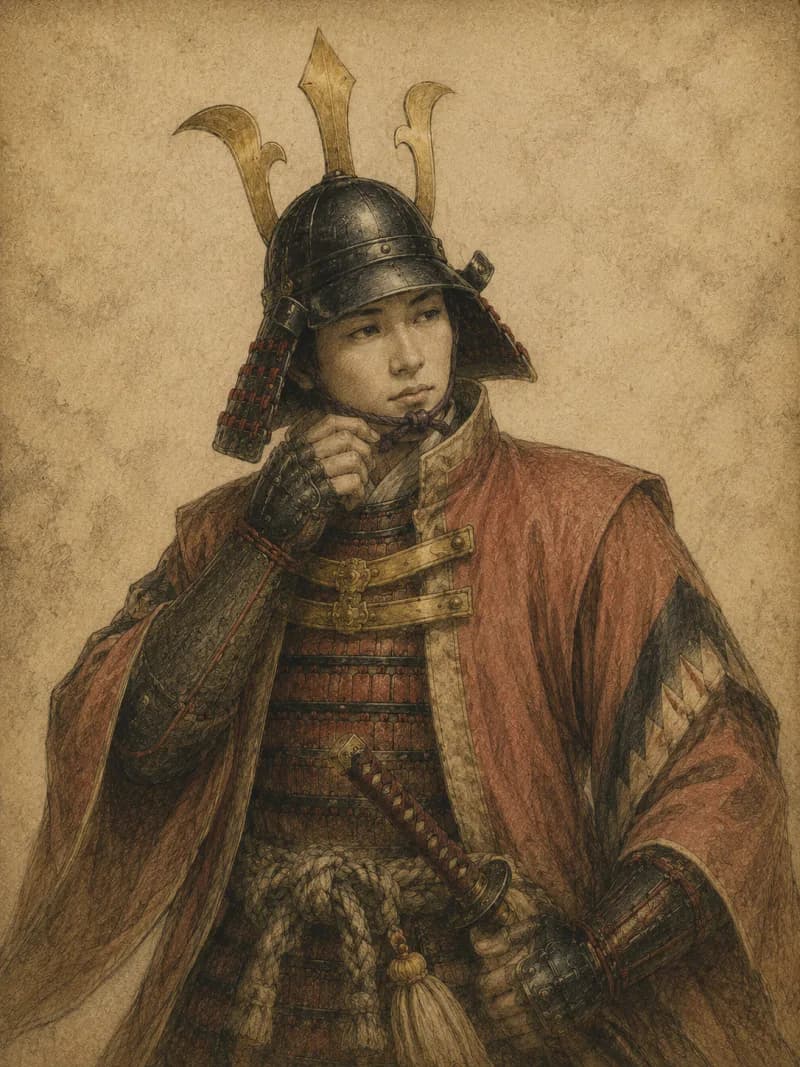
Kobayakawa Hideaki
The young defector at Matsuo Mountain whose decision ended the Sengoku era
SA-0036 / JPN
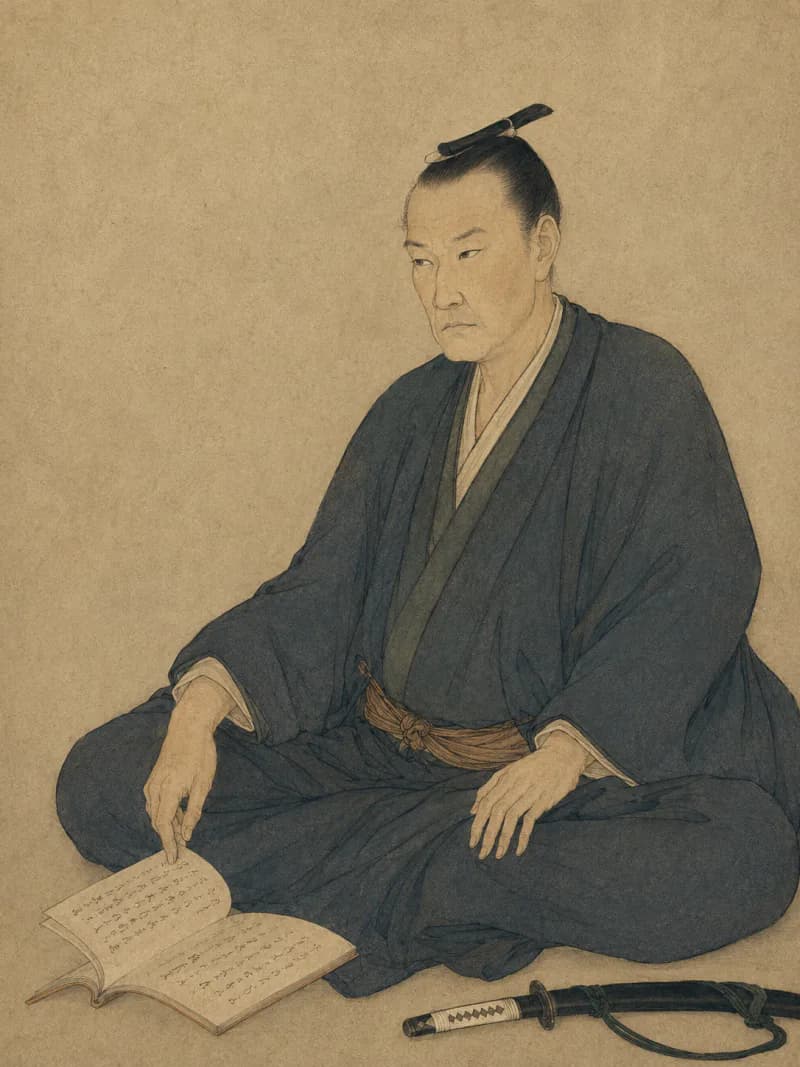
Yoshida Shōin
The Shōka Sonjuku teacher whose two-and-a-half-year school drove the Meiji Restoration
SA-0001 / JPN
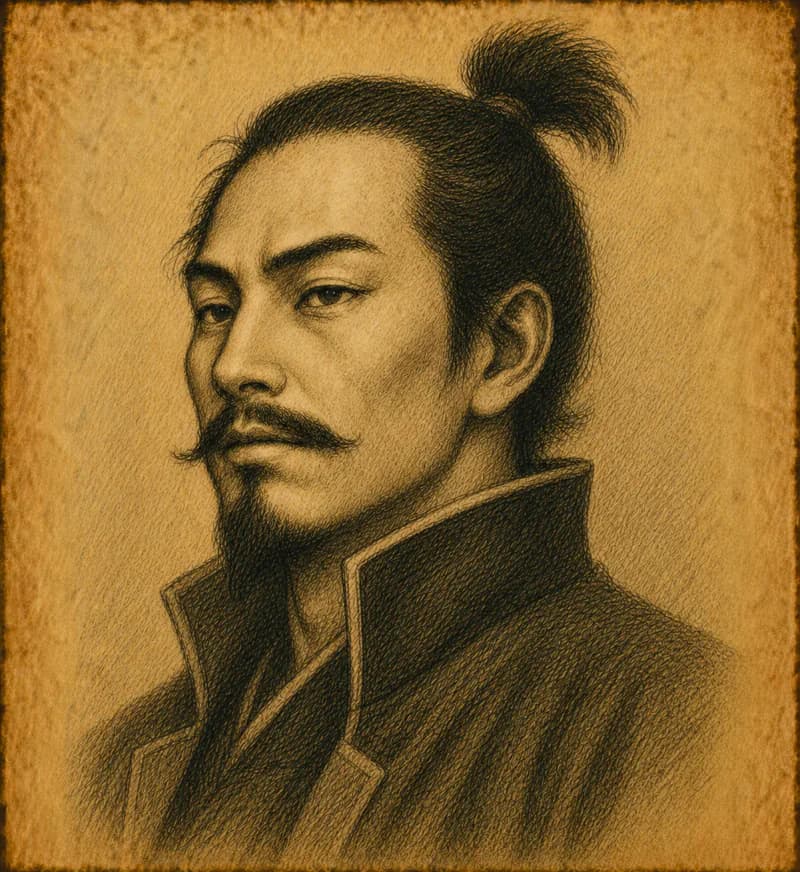
Oda Nobunaga
The revolutionary who paved the path to a unified Japan
SA-0002 / JPN
Toyotomi Hideyoshi
The peasant who rose to rule all Japan
SA-0003 / JPN
Tokugawa Ieyasu
The patient warlord whose dynasty ruled Japan for 250 years
SA-0004 / JPN
Date Masamune
The One-Eyed Dragon who built Sendai
SA-0005 / JPN
Takeda Shingen
The Tiger of Kai whose cavalry shook the realm
SA-0006 / JPN
Uesugi Kenshin
The Dragon of Echigo, sword-saint of the north