SUBJECT FILE NO. SA-0040
BUSHI ARCHIVE
Kobayakawa Hideaki
Kobayakawa Hideaki
Lord of Bizen-Okayama Domain
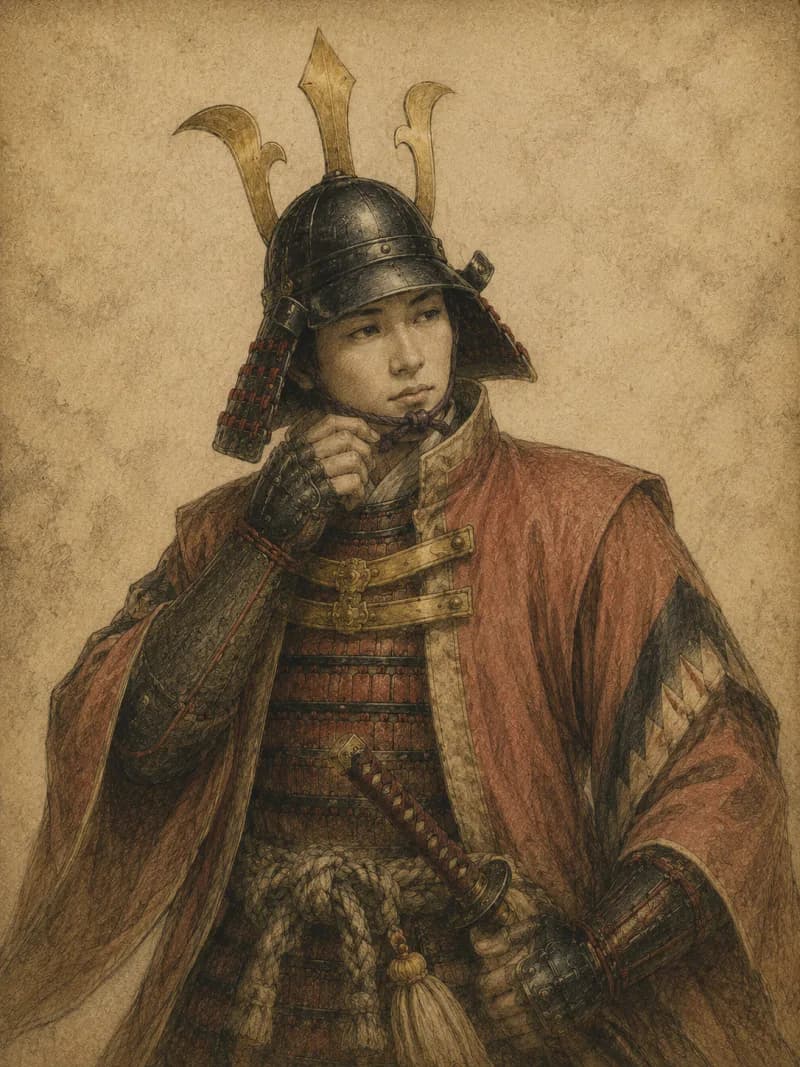
SECTION I -- SUBJECT PROFILE
| Name | Kobayakawa Hideaki |
|---|---|
| English | Kobayakawa Hideaki |
| Origin | Japan |
| Lifespan | 1582–1602 |
| Gender | Male |
| Century | 17th C. |
| Clan / Role | Daimyo |
| Title | Lord of Bizen-Okayama Domain |
SECTION II -- OVERVIEW
Born in 1582 at Takashima in Ōmi as the fifth son of Kinoshita Iesada, Hideaki was a nephew of Toyotomi Hideyoshi's principal consort Kita-no-Mandokoro.
He was adopted by Hideyoshi as a young child and bore the name Hashiba Hideyoshi for a time. When Hideyoshi's biological son Hideyori was born in 1593, Hideyoshi sent the young Hideyoshi-by-adoption to be a second-time adoptee, this time into the Mōri-affiliated Kobayakawa house under Kobayakawa Takakage.
He inherited the Kobayakawa headship in 1597 and took the name Hideaki. At Sekigahara in 1600, ostensibly aligned with the Western Army, he placed his fifteen-thousand-strong force on Matsuo Mountain and waited.
Just past noon he defected to the Eastern Army, descended the mountain, and attacked the Western Army from behind, breaking the Western line.
Tokugawa Ieyasu awarded him the 510,000-koku Bizen-Okayama domain after the battle, but he died abruptly in October 1602 at twenty-one.
Suggested causes include acute alcohol poisoning, tuberculosis, and stress-induced collapse traceable to remorse.
SECTION III -- CHRONOLOGY
SECTION IV -- NOTABLE STATEMENTS
“The decisive battle of the realm — I join it.”
SECTION V -- FIELD NOTES
[A]The Two Hours at Matsuo Mountain
On the morning of September 15, 1600, Hideaki's 15,000-strong Kobayakawa force was deployed on Matsuo Mountain south of the main Sekigahara battlefield.
The Western Army commander Ishida Mitsunari waited for Hideaki to enter the battle; Hideaki did not move through the morning.
Tokugawa Ieyasu, frustrated by the delay, is said to have fired musket volleys into the foot of the mountain to prompt a decision — the famous toihōppō.
Just past noon, Hideaki defected to the Eastern Army, descended the mountain, and struck the flank of the Western Army commander Ōtani Yoshitsugu.
The simultaneous defection of Wakizaka Yasuharu and other allied units broke the Western line.
SECTION VI -- LEGACY & IMPACT
Hideaki's defection at Sekigahara has been told ever since as the day that decided the final shape of the post-Sengoku order.
'The betrayal at Matsuo Mountain' has become, in Japanese cultural memory, the standing image of hesitation and decision at a moment that mattered, and has been dramatized continuously from Edo-period military chronicles through modern NHK historical dramas.
His abrupt death at twenty-one has been linked in legend to remorse over the defection, though modern scholarship attributes it more plausibly to a progressing illness (tuberculosis or chronic alcohol disease) already underway during his reign at Okayama.
His grave is at Kōtoku-in in Okayama City.
SECTION VII -- MAJOR DEEDS
- [01]Adoption by Hideyoshi (1585)
- [02]Inheritance of the Kobayakawa house (1597)
- [03]Defection at Sekigahara (1600)
- [04]Rule of Bizen-Okayama, 510,000 koku (1600–1602)
SECTION VIII -- REFERENCE MATERIALS
PRIMARY SOURCES & ARCHIVES
- PRIMARY
Sekigahara Gunki Taisei
Principal compendium recording Kobayakawa's movement at Sekigahara
- SCHOLARSHIP
Sekigahara Kassen to Ōsaka no Jin
Kasaya Kazuhiko / Yoshikawa Kōbunkan
Document-based analysis of Hideaki's defection decision
- ARCHIVE
Okayama Prefectural Museum
Okayama Prefecture
Holds materials on Kobayakawa's brief Okayama reign
Visit archive →
RECOMMENDED READING
SECTION X -- RELATED REPORTS
SA-RPT
Sekigahara: How Tokugawa Won Japan in a Single Afternoon
On October 21, 1600, two armies of roughly 80,000 men each met in fog on a Mino plain. By sunset, the battle that decided 250 years of Japanese history was over.
SA-RPT
The White-Veiled General's Last Stand: How Ōtani Died at Sekigahara
On the afternoon of September 15, 1600, in the third hour of the main battle, Kobayakawa Hideaki's force descended from Matsuo Mountain and struck Ōtani's flank. The simultaneous defection of four more allied commanders broke the line. Ōtani committed suicide with his retainer Yuasa Gosuke as second.
SA-RPT
The Adoption Chain: How a Boy Born Kinoshita Almost Became a Hashiba
Born to the Kinoshita house in Ōmi in 1582, one boy in ten years changed names and clans twice — first adopted as Toyotomi Hideyoshi's heir at three, then re-adopted into the Kobayakawa house at twelve. The remote cause of the Sekigahara defection lay in that chain of adoptions.
SA-RPT
The Two Hours at Matsuo Mountain: Why Hideaki Moved Only After Noon
On the morning of September 15, 1600, Kobayakawa Hideaki's fifteen-thousand-strong force on Matsuo Mountain south of Sekigahara did not move. Tokugawa Ieyasu fired musket volleys at the foot of the mountain to prompt a decision, and just past noon Hideaki defected and descended. The two hours of silence that decided the end of the Sengoku era.
SA-RPT
Twenty-One: Why the Early Death of Kobayakawa Hideaki Became a Legend
In October 1602, Kobayakawa Hideaki died abruptly at Okayama. He was twenty-one — two years after Sekigahara. Later generations told the story as 'the remorse of the betrayal manifested as illness,' but recent medical-historical work points to a different cause.
SA-RPT
The Two-River Structure: How Motonari Came to Rule Ten Provinces
Mōri Motonari's true achievement is the construction of the 'Two-River structure,' sending his second son Motoharu in adoption to the Kikkawa house and his third son Takakage to the Kobayakawa house, and absorbing both houses. Reading the core of the political strategy by which a single kokujin lord of Aki rose, in one generation, to mastery of ten provinces of the Chūgoku region.
SECTION IX -- LINKED SUBJECTS
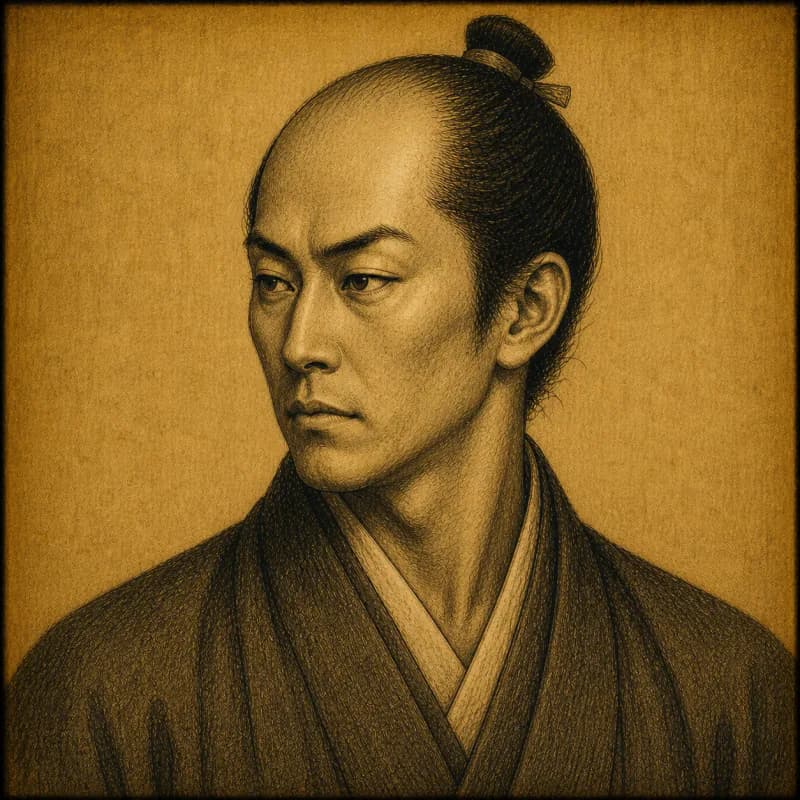
SA-0012 / JPN
Ishida Mitsunari
The administrator who fought Tokugawa for the Toyotomi succession — and lost
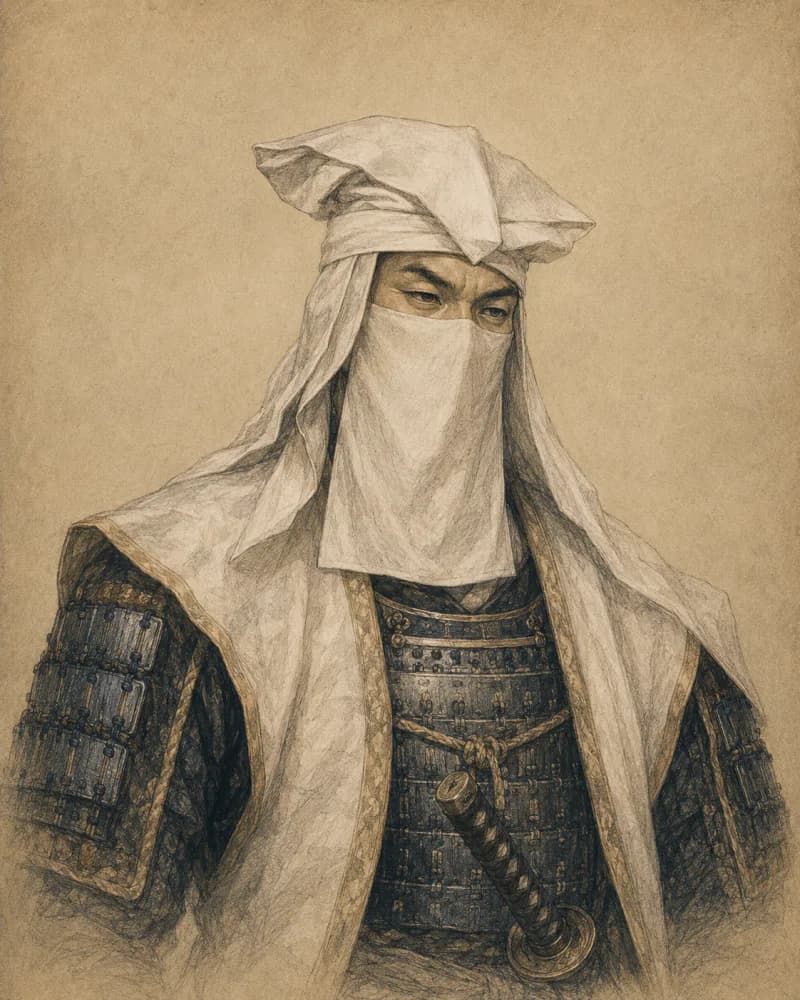
SA-0039 / JPN
Ōtani Yoshitsugu
The strategist who joined his friend Mitsunari at Sekigahara knowing they would probably lose
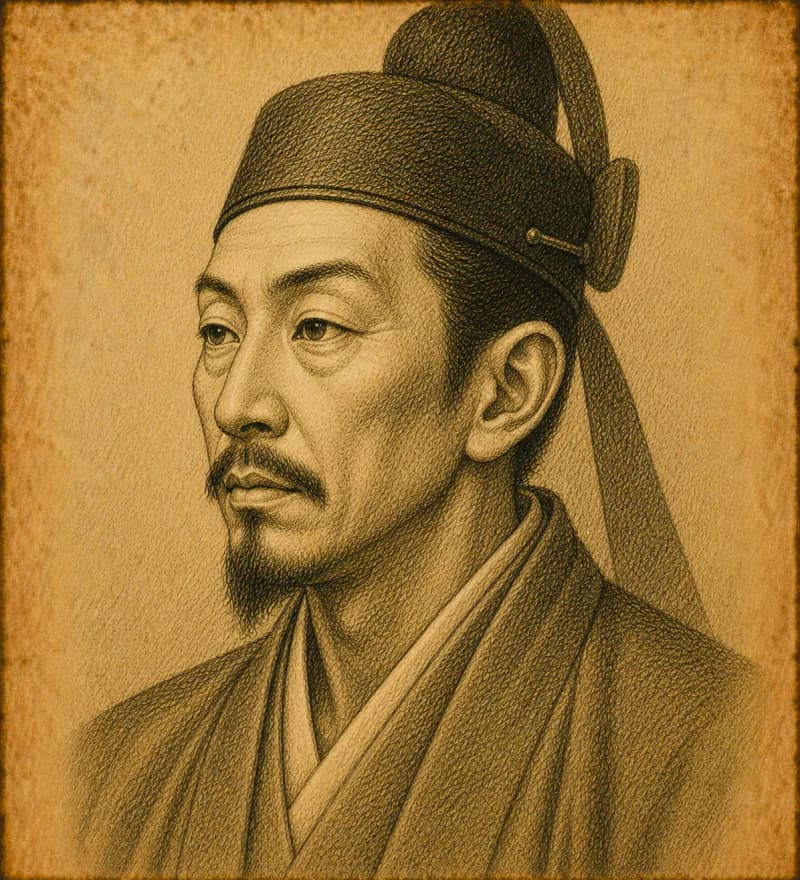
SA-0002 / JPN
Toyotomi Hideyoshi
The peasant who rose to rule all Japan
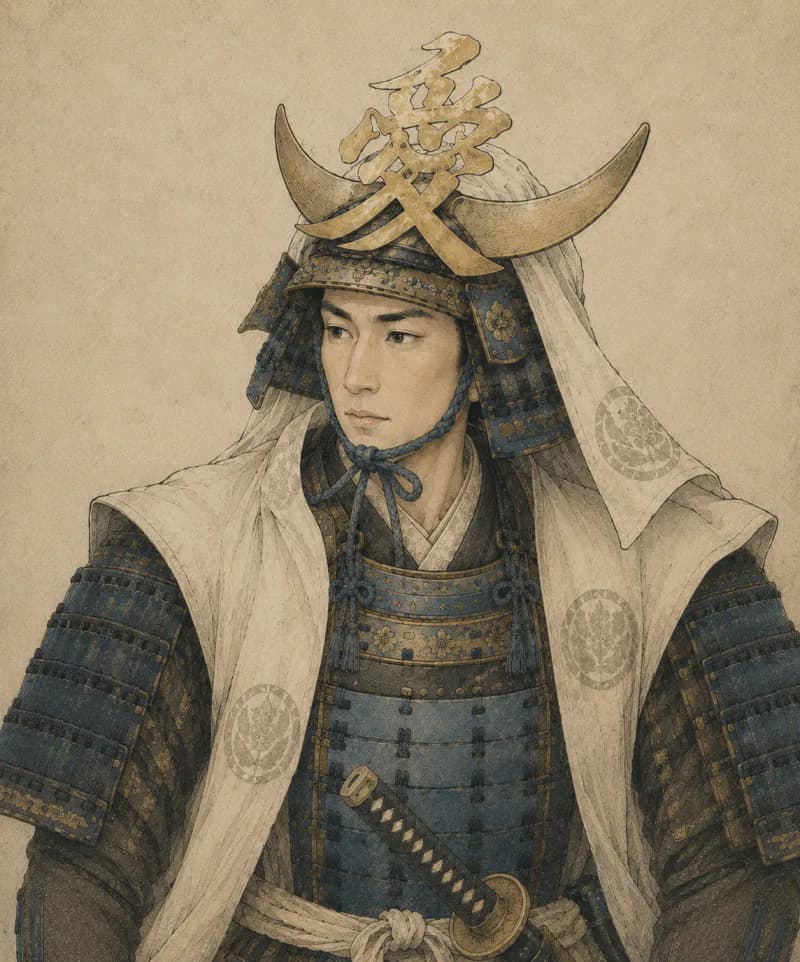
SA-0034 / JPN
Naoe Kanetsugu
The Uesugi strategist who wore the character for 'love' on his helmet
SA-0066 / JPN
Shimazu Yoshihiro
The Satsuma general feared by the Ming army as the 'Devil Shimazu' in Korea, who broke through the enemy center at Sekigahara in the 'Sutegamari' retreat