SUBJECT FILE NO. SA-0042
BUSHI ARCHIVE
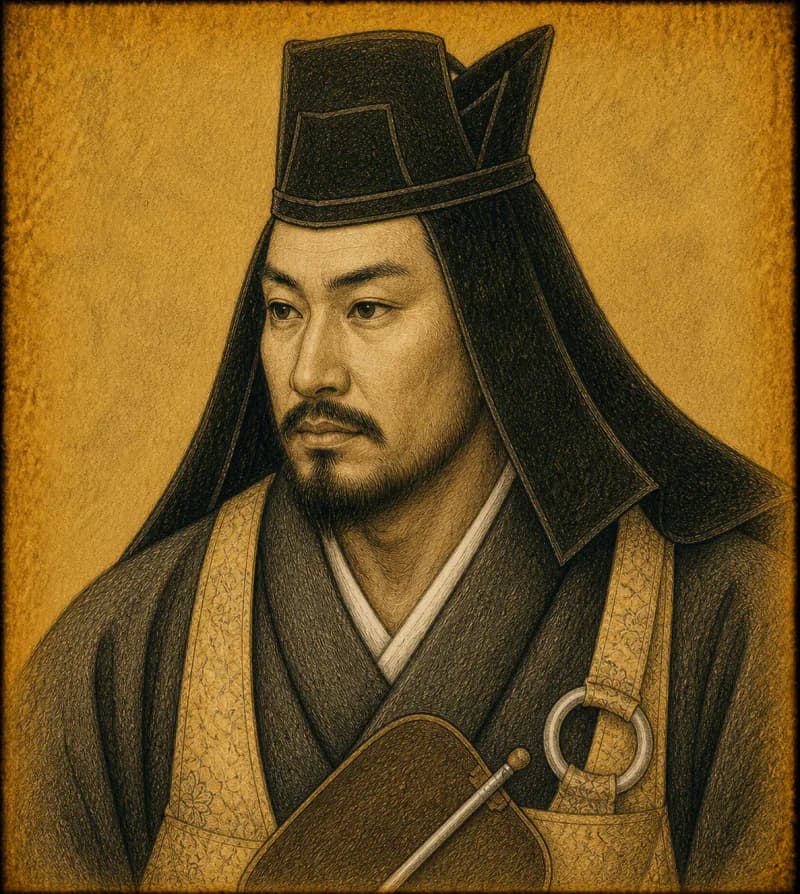
Tsukahara Bokuden
Tsukahara Bokuden
Founder of the Kashima Shintō-ryū
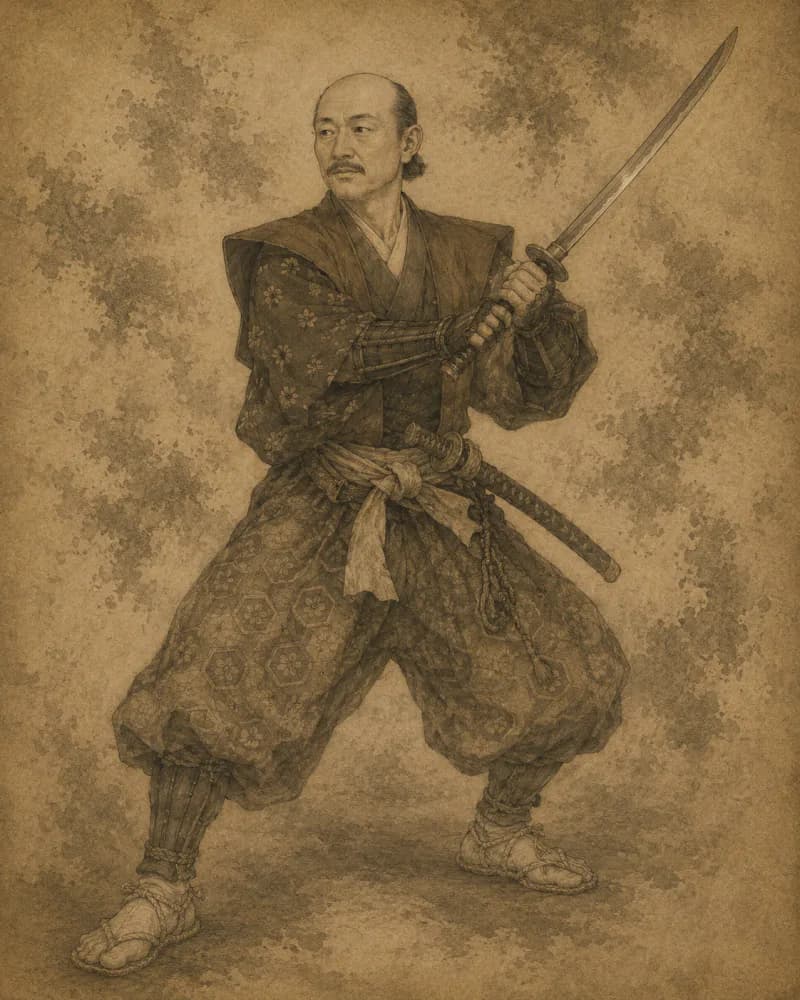
SECTION I -- SUBJECT PROFILE
| Name | Tsukahara Bokuden |
|---|---|
| English | Tsukahara Bokuden |
| Origin | Japan |
| Lifespan | 1489–1571 |
| Gender | Male |
| Century | 16th C. |
| Clan / Role | Swordsman |
| Title | Founder of the Kashima Shintō-ryū |
SECTION II -- OVERVIEW
Born in 1489 to the Urabe family at Kashima in Hitachi Province, Bokuden is said to have won his first serious duel at seventeen and gone through nineteen serious matches and several hundred school matches over the course of his life without a single loss.
Through training at Kashima Shrine and his own innovations, he established the Kashima Shintō-ryū school. He served as sword instructor to figures including the Ashikaga shogun Yoshiteru and the daimyō Kitabatake Tomonori.
Later generations awarded him the title of 'Sword Saint' as the foremost swordsman of the Sengoku. He established the tradition of itinerant training and raised many students across the country.
He died in 1571 at Kashima at the age of eighty-three. He had been a legend of the warrior ideal long before Miyamoto Musashi.
SECTION III -- CHRONOLOGY
SECTION IV -- NOTABLE STATEMENTS
“The unbeatable is the one who has not fought.”
SECTION V -- FIELD NOTES
[A]The Mutekatsu-ryū Story
In his old age, Bokuden was challenged on a lakeboat by a young swordsman of another school. Bokuden proposed that they fight on a sandbar, and the young man jumped from the boat first.
The moment he did, Bokuden ordered the boatman to push off from the shore. Calling to the now-stranded young man, Bokuden declared, 'This is my Mutekatsu-ryū — the school of winning without fighting.
' The anecdote crystallizes the idea of victory without drawing the sword and has had a strong influence on later Japanese martial-arts thought.
SECTION VI -- LEGACY & IMPACT
Bokuden's unbeaten life mixes historical fact and legend, but the Kashima Shintō-ryū lineage had a direct influence on the major Edo-period sword schools that followed.
Ashikaga Yoshiteru, the so-called 'sword-saint shogun,' is said to have learned from Bokuden, as was Kitabatake Tomonori of Ise.
The Bokuden Hyakushu — a collection of didactic poems compiled in his name — is regarded as the first systematic articulation of swordsmanship as something larger than victory, and is still quoted in modern budō philosophy.
SECTION VII -- MAJOR DEEDS
- [01]Foundation of the Kashima Shintō-ryū
- [02]Bokuden Hyakushu (didactic poetry collection)
- [03]Sword instruction of Shogun Ashikaga Yoshiteru
- [04]Establishment of the itinerant-training tradition
- [05]Mutekatsu-ryū thought
SECTION VIII -- REFERENCE MATERIALS
PRIMARY SOURCES & ARCHIVES
- PRIMARY
Bokuden Hyakushu
Tsukahara Bokuden
Bokuden's own collection of didactic poems — the earliest primary source for his thought on swordsmanship
- SCHOLARSHIP
Nihon Kengō Tan
Tobe Shinjūrō / Chūōkōronshinsha (Chūkō Bunko)
Standard popular study of Sengoku swordsmen, with a chapter on Bokuden
- ARCHIVE
Kashima Shrine
Kashima, Ibaraki Prefecture
Bokuden's training ground; holds related materials
Visit archive →
RECOMMENDED READING
SECTION X -- RELATED REPORTS
SA-RPT
A Hundred Duels Without a Loss: Why Bokuden Never Lost in His Lifetime
Across sixty-six years from seventeen to eighty-three, the Sengoku sword saint Tsukahara Bokuden is said to have fought nineteen serious duels and several hundred school matches without a single loss. Is the unbeaten legend history, exaggeration, or both?
SA-RPT
Mutekatsu-ryū: The Day Bokuden Won Without Drawing His Sword
In old age Tsukahara Bokuden was challenged on a lakeboat by a young swordsman of another school. He proposed they fight on a sandbar. The young man jumped from the boat — and Bokuden ordered the boatman to push off from the shore. 'This is my Mutekatsu-ryū,' he called back. What was the famous anecdote actually saying?
SA-RPT
From Kashima to Everywhere: How Bokuden Created the Itinerant-Training Tradition
Tsukahara Bokuden spent most of his life at Kashima Shrine, but in his later years he traveled the provinces training students. The itinerant-training tradition he established laid down the route the later swordsmen — Kamiizumi Nobutsuna, Miyamoto Musashi — would all follow, and became the standard form of Japanese martial-arts training.
SA-RPT
Teacher to the Sword-Saint Shogun: How Kamiizumi Trained Ashikaga Yoshiteru
The thirteenth Ashikaga shogun, Yoshiteru, is the figure known as the 'sword-saint shogun.' His sword talent is said to have been transmitted from both Tsukahara Bokuden and Kamiizumi Nobutsuna. When Yoshiteru was killed in the 1565 Matsunaga Hisahide raid, his sword resistance to the end was the embodiment of what Kamiizumi had taught him.
SA-RPT
Mutō-ryū: The Day Yamaoka Tesshū Integrated the Sword and Zen
In 1880, Yamaoka Tesshū founded the Ittō Shōden Mutō-ryū, a school integrating sword, Zen, and calligraphy. On the lineage of Tsukahara Bokuden's Mutekatsu-ryū and Kamiizumi Nobutsuna's Shinkage-ryū, it was an attempt to reconstruct the thought of swordsmanship for the Meiji era.
SECTION IX -- LINKED SUBJECTS
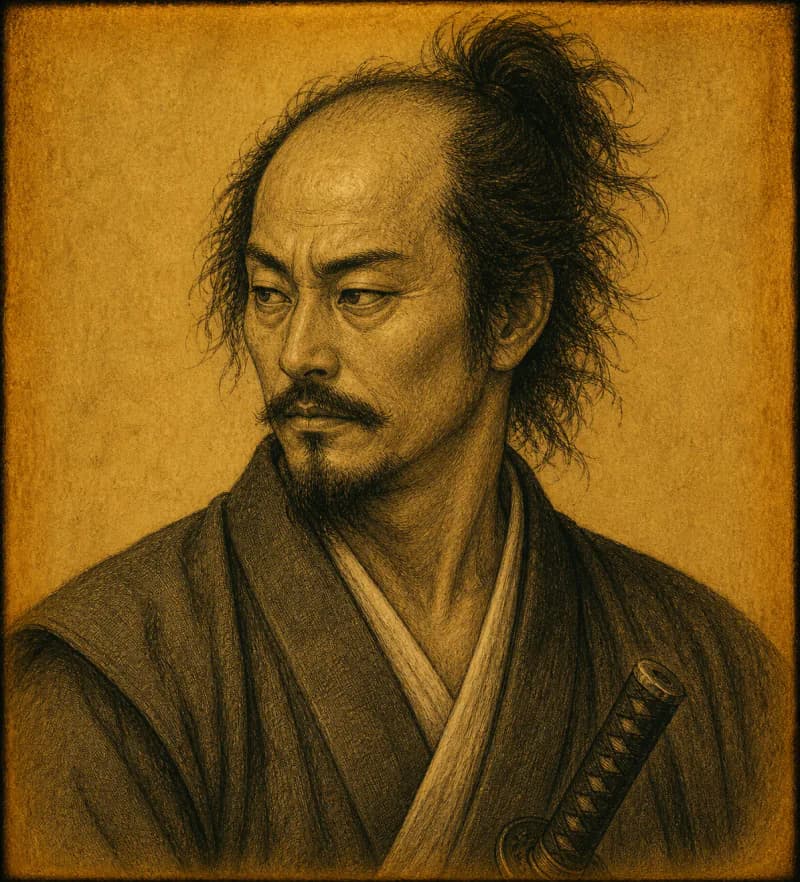
SA-0007 / JPN
Miyamoto Musashi
The undefeated swordsman who wrote The Book of Five Rings
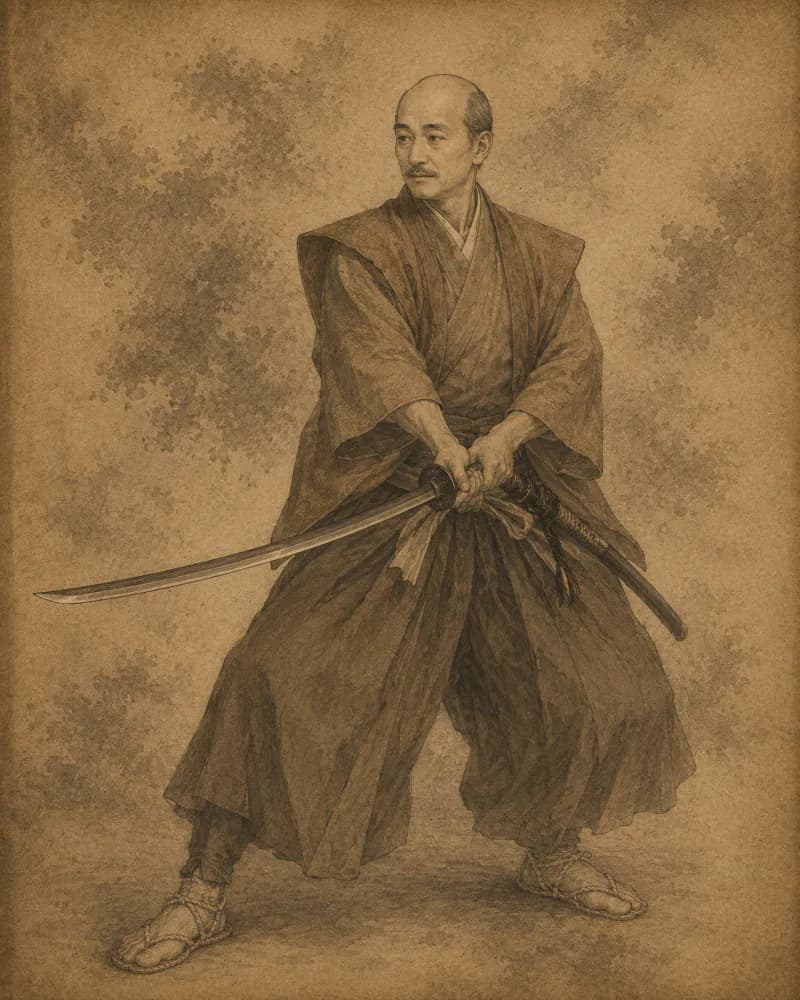
SA-0043 / JPN
Kamiizumi Nobutsuna
Founder of the Shinkage-ryū and teacher of the Sengoku 'sword-saint shogun'
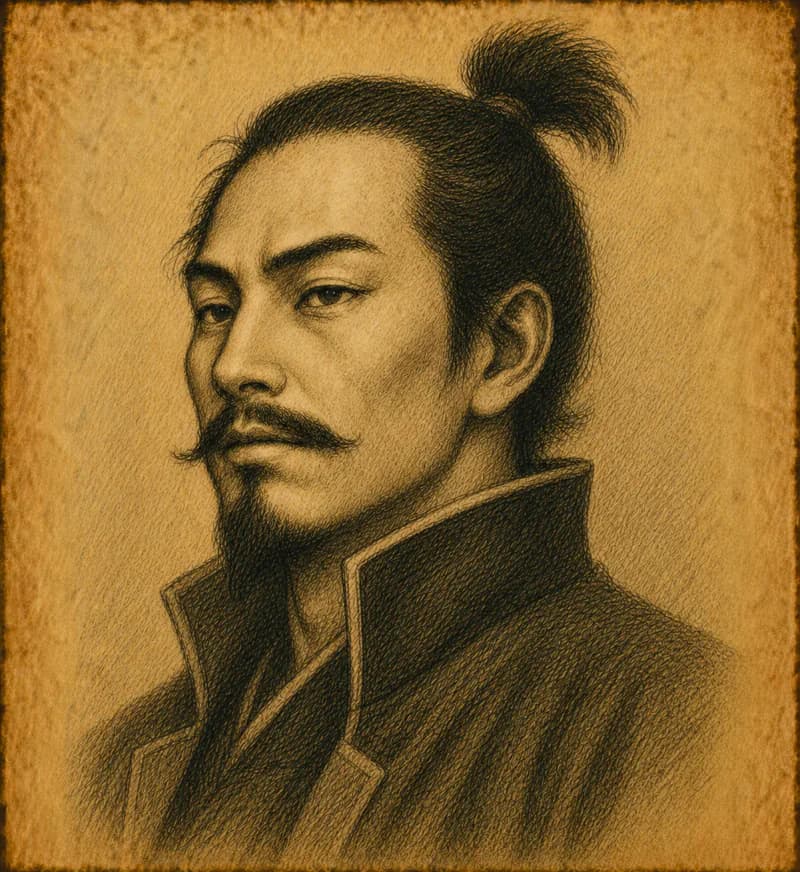
SA-0001 / JPN
Oda Nobunaga
The revolutionary who paved the path to a unified Japan
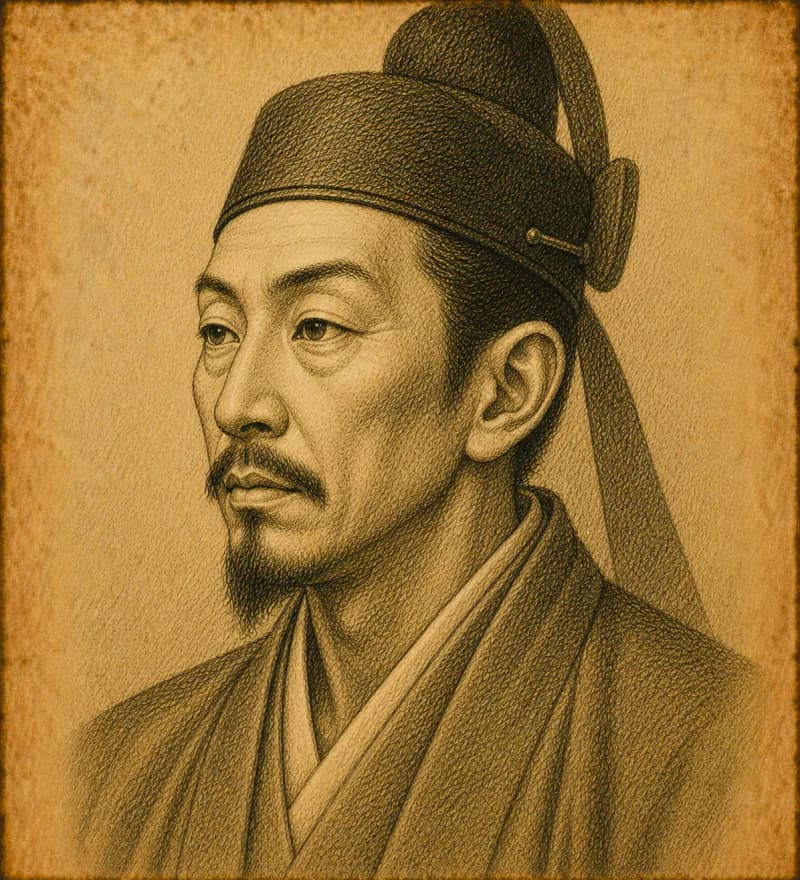
SA-0002 / JPN
Toyotomi Hideyoshi
The peasant who rose to rule all Japan
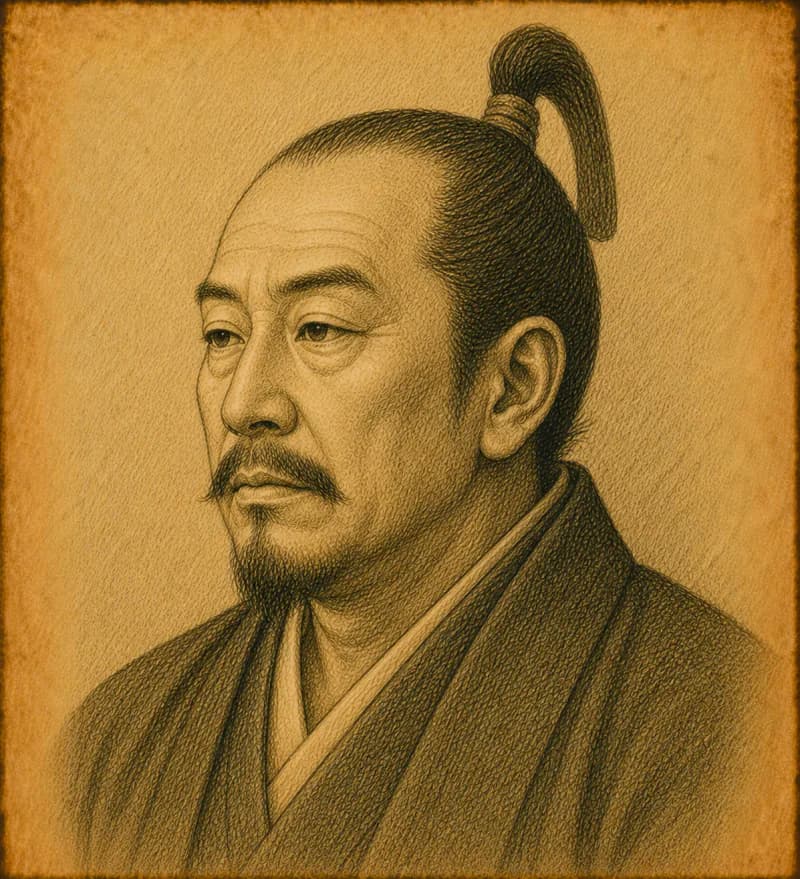
SA-0003 / JPN
Tokugawa Ieyasu
The patient warlord whose dynasty ruled Japan for 250 years
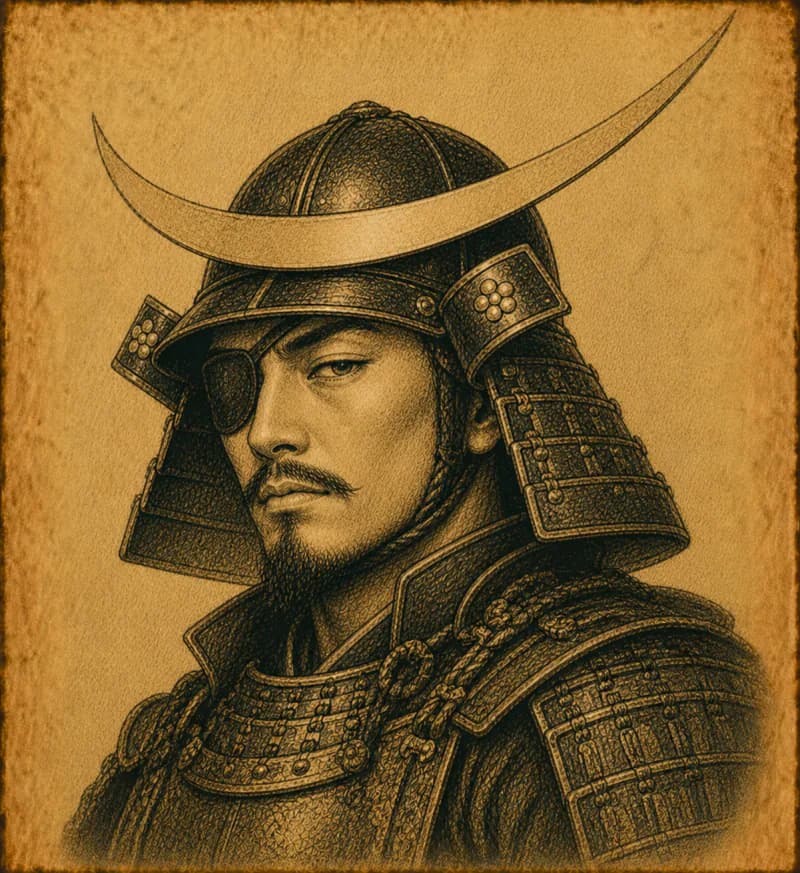
SA-0004 / JPN
Date Masamune
The One-Eyed Dragon who built Sendai
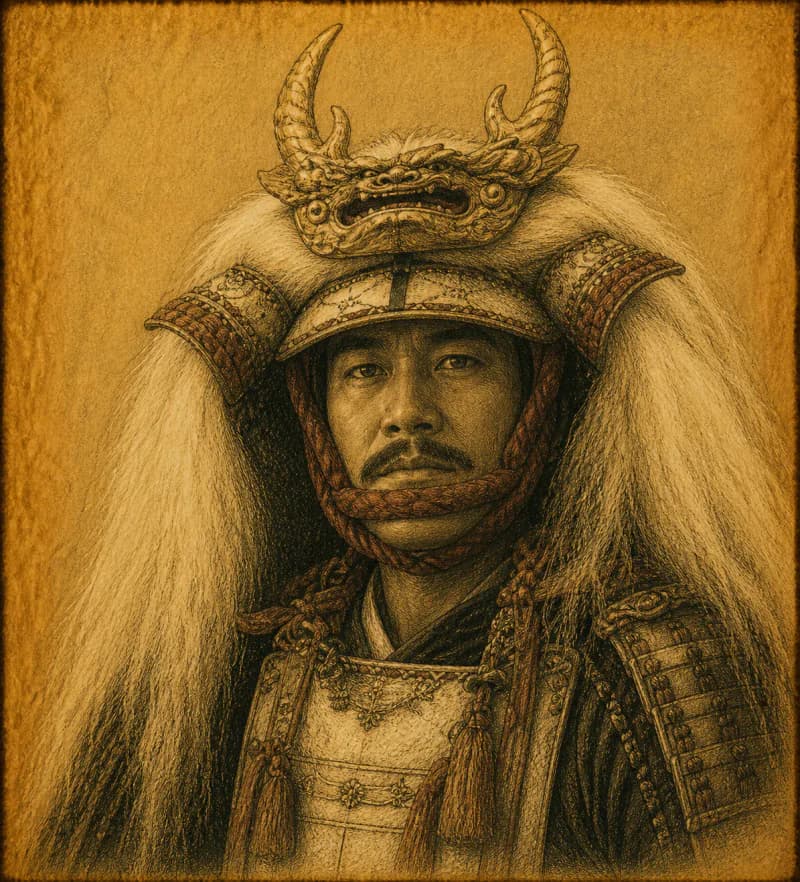
SA-0005 / JPN
Takeda Shingen
The Tiger of Kai whose cavalry shook the realm
SA-0006 / JPN
Uesugi Kenshin
The Dragon of Echigo, sword-saint of the north