SUBJECT FILE NO. SA-0041
BUSHI ARCHIVE
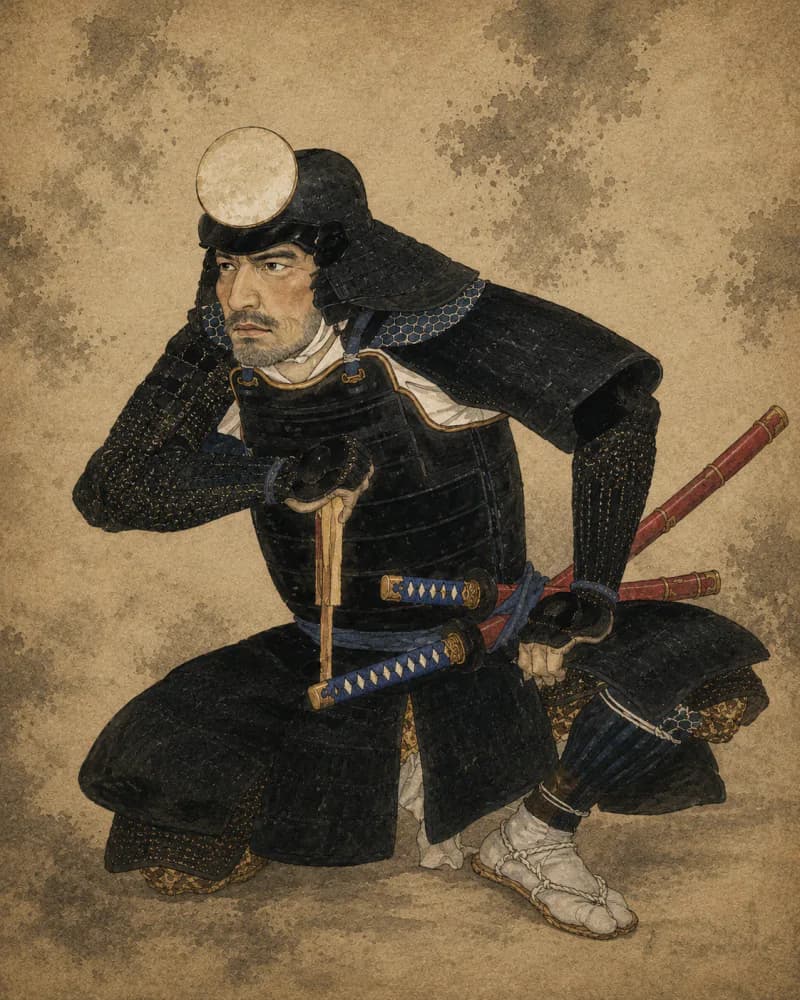
Gotō Matabei
Gotō Matabei
Kuroda-Clan Retainer and One of the Five Senior Ōsaka Rōnin
SECTION I -- SUBJECT PROFILE
| Name | Gotō Matabei |
|---|---|
| English | Gotō Matabei |
| Origin | Japan |
| Lifespan | 1560?–1615 |
| Gender | Male |
| Century | 17th C. |
| Clan / Role | Samurai |
| Title | Kuroda-Clan Retainer and One of the Five Senior Ōsaka Rōnin |
SECTION II -- OVERVIEW
Born around 1560 in Harima Province (his real name was Gotō Mototsugu; Matabei was his common-use name). He served the Kuroda clan from boyhood under both Kuroda Yoshitaka and his son Nagamasa, distinguishing himself in the Kyūshū pacification and the Korean campaign.
At Sekigahara in 1600 he fought as part of the Kuroda Eastern Army force, and was rewarded with a 16,000-koku fief in Chikuzen.
From around 1606, however, his relationship with Nagamasa deteriorated, and in 1611 he left the Kuroda clan as a rōnin.
Nagamasa issued a hōkō-gamae blocking other daimyō from hiring him, and Matabei spent the better part of a decade wandering across Japan.
In 1614 he was recruited into Osaka Castle by Toyotomi Hideyori for the coming siege, and became one of the Five Senior Rōnin defending the castle alongside Sanada Yukimura and Mōri Katsunaga.
At the Battle of Dōmyōji on May 6, 1615, he died fighting — one day before Yukimura died at Tennōji. He was about fifty-six.
SECTION III -- CHRONOLOGY
SECTION IV -- NOTABLE STATEMENTS
“A samurai does not serve two lords; but righteousness is not always only one thing.”
SECTION V -- FIELD NOTES
[A]Leaving the Kuroda
Matabei had been highly valued by Kuroda Yoshitaka, but his relations with Yoshitaka's heir Nagamasa deteriorated.
Nagamasa cooled toward him through the mid-1600s, and in 1611 Matabei left the clan. In the warrior society of the period leaving one's master was close to taboo, and Nagamasa issued a hōkō-gamae — a formal blocking notice — to prevent other daimyō from hiring him.
The result was nearly a decade of wandering across Japan as a stateless rōnin.
SECTION VI -- LEGACY & IMPACT
Matabei became, alongside Sanada Yukimura, the public face of the Ōsaka rōnin in later Japanese memory. He was dramatized repeatedly through Edo-period war chronicles, kabuki, and jōruri, and a long series of popular Gotō Matabei storytelling cycles (kōdan) were beloved by Edo audiences.
His fight and death at Dōmyōji have stood ever since as the collective story of the Sekigahara losers who tried to come back at the very end of the Sengoku period.
A traditional birthplace site is preserved in Harima, Hyōgo Prefecture, with a grave and memorial stone.
SECTION VII -- MAJOR DEEDS
- [01]Combat in the Kyūshū pacification and Korean campaign
- [02]Eastern Army participation at Sekigahara (1600)
- [03]Departure from the Kuroda (1611)
- [04]Winter and Summer Sieges of Osaka (1614–1615)
- [05]Battle of Dōmyōji (1615)
SECTION VIII -- REFERENCE MATERIALS
PRIMARY SOURCES & ARCHIVES
- PRIMARY
Ōsaka Gojin Oboegaki
Principal compendium for the Sieges of Osaka, recording Matabei's movements
- SCHOLARSHIP
Sekigahara Kassen to Ōsaka no Jin
Kasaya Kazuhiko / Yoshikawa Kōbunkan
Document-based analysis of the rōnin contingent at Osaka
- ARCHIVE
Kakogawa Cultural Center
Kakogawa, Hyōgo Prefecture
Holds materials around the Matabei birthplace tradition
Visit archive →
RECOMMENDED READING
SECTION X -- RELATED REPORTS
SA-RPT
From the Kuroda to Ōsaka: Why Matabei Became a Rōnin
In 1611, Gotō Matabei left the Kuroda clan of Chikuzen-Fukuoka and became a rōnin. The proximate cause was a long-deteriorating relationship with the lord Kuroda Nagamasa, but the cost of breaking with the conventions of the warrior society was the hōkō-gamae blocking notice — and nearly a decade of wandering across Japan.
SA-RPT
The Battle of Dōmyōji: Matabei Died One Day Before Yukimura
On May 6, 1615, in the Battle of Dōmyōji during the Summer Siege of Osaka, Gotō Matabei was killed. Against thirty thousand Tokugawa troops, his two-thousand-strong force held the line for half a day. One day before Sanada Yukimura died at Tennōji.
SA-RPT
The Five Senior Rōnin of Osaka Castle: Why Hideyori Recruited Veterans
On the eve of the 1614 Winter Siege, Toyotomi Hideyori issued a general call and assembled a large body of rōnin produced after Sekigahara into Osaka Castle. The five at the center — Gotō Matabei, Sanada Yukimura, Mōri Katsunaga, Akashi Takenori, and Chōsokabe Morichika — became the operational core of the castle's defense.