SUBJECT FILE NO. SA-0081
BUSHI ARCHIVE
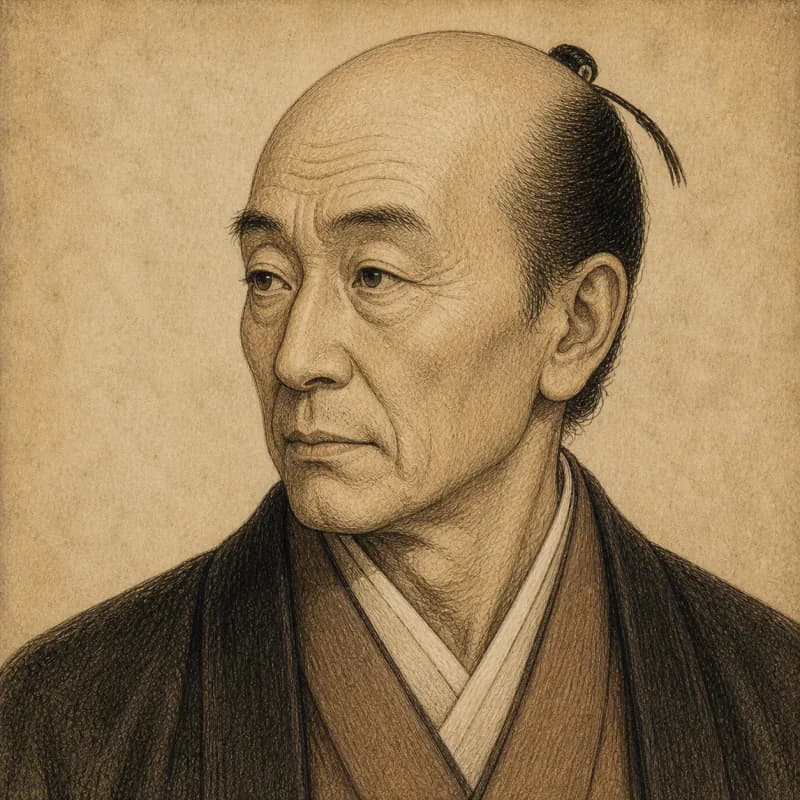
Tanuma Okitsugu
Tanuma Okitsugu
Rōjū of the Edo shogunate; lord of the Sagara domain
SECTION I -- SUBJECT PROFILE
| Name | Tanuma Okitsugu |
|---|---|
| English | Tanuma Okitsugu |
| Origin | Japan |
| Lifespan | 1719–1788 |
| Gender | Male |
| Century | 18th C. |
| Clan / Role | Statesman |
| Title | Rōjū of the Edo shogunate; lord of the Sagara domain |
SECTION II -- OVERVIEW
Born in 1719 (Kyōhō 4) in Edo. His father, Tanuma Okiyuki, was of low birth — a foot soldier of the Kii domain who became a shogunal retainer by following Tokugawa Yoshimune.
Okitsugu served the ninth shōgun Tokugawa Ieshige and the tenth shōgun Ieharu as a close attendant, achieving an exceptional rise from soba-yōnin (grand chamberlain) to rōjū (senior councillor).
Holding real power, Okitsugu turned away from the agrarianism that depended on the traditional land tax, and put forward one mercantilist policy after another that took the power of commerce into the finances.
These included the collection of levies through the official recognition of merchant guilds (kabu-nakama), the monopoly on copper and marine products and the expansion of Nagasaki trade, plans to develop Ezo, the reclamation of Lake Inba and Lake Tega, and the issue of a counting silver coin, the nanryō-nishu-gin.
These were advanced attempts aimed at rebuilding the shogunal finances. But on the charge that bribery ran rampant, the 'Tanuma era' was made a byword for corruption, and criticism piled on, compounded by the confusion of the great Tenmei famine and the eruption of Mt.
Asama. In 1784, his heir Okitomo was cut down within Edo Castle and lost his life. When shōgun Ieharu died in 1786, Okitsugu lost his backing and fell from power.
The Kansei Reforms of his successor Matsudaira Sadanobu denied all of Tanuma's policies. In 1788 (Tenmei 8), he died in despair.
He was seventy. Recent historiography re-evaluates his economic policy as ahead of its time.
SECTION III -- CHRONOLOGY
SECTION IV -- NOTABLE STATEMENTS
“A world that relies on rice alone will one day reach a dead end. To make the power of commerce the wealth of the country — what is wrong with that?”
SECTION V -- FIELD NOTES
[A]The Disgrace of Bribe-Politics — Tanuma Re-evaluated
The 'Tanuma era' has long been made the byword for corrupt politics in which bribery openly ran rampant.
It is told that those seeking office and privilege competed in gifts to Okitsugu's mansion, and that politics moved by money.
It is surely a fact that money was greatly involved in politics at the time. But recent historiography has made clear that much of this ill fame was manufactured by successors such as Matsudaira Sadanobu, who denied Tanuma utterly, and by the later ages' values that idealized agrarianism.
The official recognition of merchant guilds, the monopolies, the expansion of trade, the development of Ezo, and the currency reform that Okitsugu advanced were economic policies ahead of their time, seeking to turn the vitality of commerce into national wealth rather than relying on agriculture alone.
The very idea of rebuilding the stagnant shogunal finances possessed an advanced quality that ran, rather, toward the mercantilism of the modern age.
Behind the disgrace of bribery, Okitsugu was a reformer who attempted the structural transformation of the Japanese economy.
SECTION VI -- LEGACY & IMPACT
Tanuma Okitsugu is a man who was long disparaged throughout the Edo period as the byword for a 'bribe politician.' But historiography from the latter half of the twentieth century onward is fundamentally repainting that appraisal.
As the rice-based agrarianism reached a dead end, Okitsugu sought to take the power of commerce and the money economy into the shogunal finances.
Official recognition of merchant guilds, the monopoly system, the expansion of Nagasaki trade, the development of Ezo, the reclamation of Lake Inba, and the issue of a counting silver coin.
These were advanced policies that looked ahead to the transition from an agricultural society to a commercial one. After Okitsugu's fall, the Kansei Reforms of Matsudaira Sadanobu denied all of these and reverted to austerity and a return to agrarianism.
Some scholars argue that, had Tanuma's line continued, the modernization of Japan might have begun earlier. Having his heir Okitomo assassinated within the castle, saddled with the blame for the confusion of famine, and departing the world in despair, Okitsugu's life was also the tragedy of a reformer ahead of his time buried by the values of the old order.
The ruins of Sagara Castle in Makinohara City, Shizuoka Prefecture, convey to the present the traces of the land Okitsugu ruled as its lord.
SECTION VII -- MAJOR DEEDS
- [01]Securing revenue through the official recognition of merchant guilds
- [02]Monopoly on copper and marine products and expansion of Nagasaki trade
- [03]Plans for the development of Ezo
- [04]Reclamation works of Lake Inba and Lake Tega
- [05]Issue of the nanryō-nishu-gin (counting silver coin)
SECTION VIII -- REFERENCE MATERIALS
PRIMARY SOURCES & ARCHIVES
- PRIMARY
Tokugawa Jikki
The shogunate's compiled record, recording the shogunal government of the Tanuma era
- SCHOLARSHIP
The Age of Tanuma Okitsugu
Ōishi Shinzaburō / Iwanami Shoten
Empirically re-evaluates the advanced quality of Tanuma's politics
- ARCHIVE
Sagara Castle Ruins
Makinohara City, Shizuoka Prefecture
The castle ruins of Sagara, which Okitsugu ruled as its lord
Visit archive →
RECOMMENDED READING
SECTION X -- RELATED REPORTS
SA-RPT
A Foot Soldier's Son Rises: In 1772, Tanuma Okitsugu Stood at the Summit of Shogunal Government
Born the son of a foot soldier of the Kii domain, Tanuma Okitsugu piled up an exceptional rise from a shōgun's attendant and took the seat of rōjū in 1772. In a shogunate where birth spoke loudest, it was a rare ascent by sheer ability.
SA-RPT
Commerce into National Wealth: The Mercantilist Reform of Tanuma Okitsugu
Tanuma Okitsugu sought to rebuild the rice-dependent shogunal finances with the power of commerce. Official recognition of merchant guilds, monopolies, expansion of Nagasaki trade, development of Ezo. His policies, in an age of agrarianism, held a quality that ran ahead to the modern.
SA-RPT
The Fall: In 1788, the Reformer Was Buried Under Disgrace
His heir cut down within the castle, saddled with the confusion of the Tenmei famine, Tanuma Okitsugu fell from power with the death of the shōgun. His successor Matsudaira Sadanobu denied all his policies. The reformer ahead of his time was buried by the values of the old order.