SUBJECT FILE NO. SA-0080
BUSHI ARCHIVE
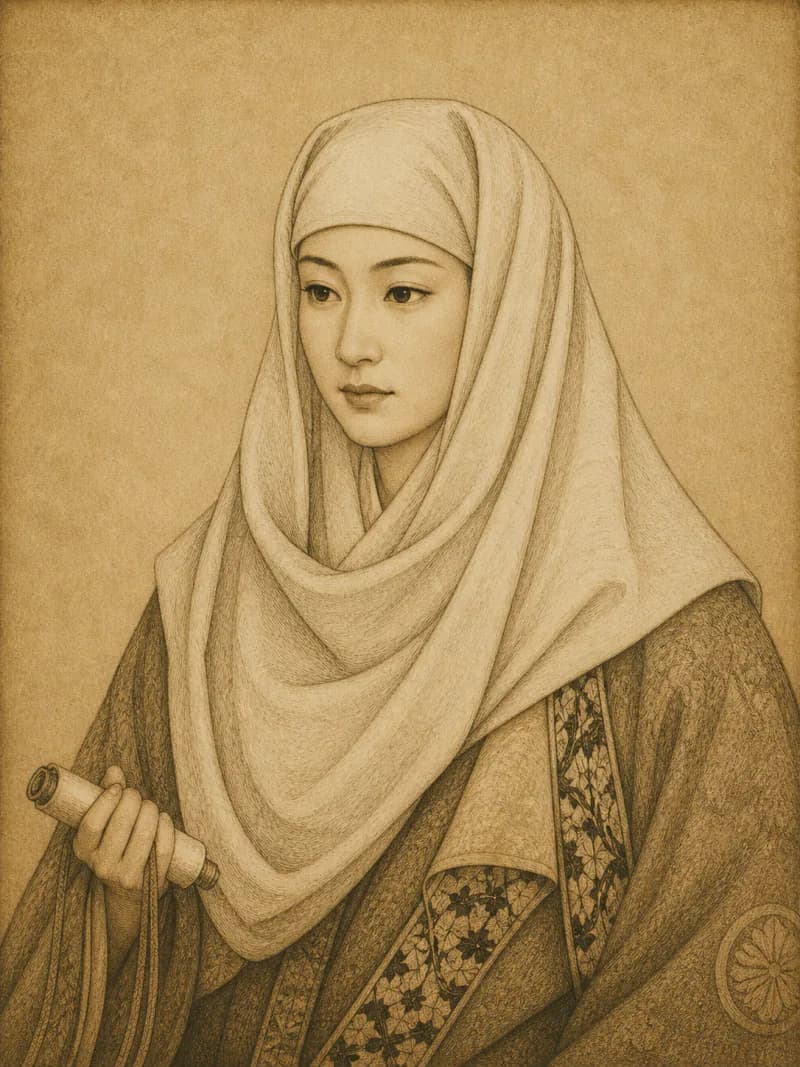
Hino Tomiko
Hino Tomiko
Consort of Ashikaga Yoshimasa, eighth shōgun of the Muromachi shogunate
SECTION I -- SUBJECT PROFILE
| Name | Hino Tomiko |
|---|---|
| English | Hino Tomiko |
| Origin | Japan |
| Lifespan | 1440–1496 |
| Gender | Female |
| Century | 15th C. |
| Clan / Role | Daimyo |
| Title | Consort of Ashikaga Yoshimasa, eighth shōgun of the Muromachi shogunate |
SECTION II -- OVERVIEW
Born in 1440 (Eikyō 12) into the Hino, a house of court nobles. The Hino was a distinguished house that generation after generation provided consorts to the Ashikaga shogunal house.
Around 1455 she became the consort (midaidokoro) of Ashikaga Yoshimasa, eighth shōgun of the Muromachi shogunate. At first, as Yoshimasa had no natural son, he had set his younger brother Yoshimi as heir; but when Tomiko bore a natural son, Yoshihisa, in 1465, the situation changed utterly as she sought to place her own child in the shōgun's seat.
The conflict between Hosokawa Katsumoto, who backed Yoshimi, and Tomiko and Yamana Sōzen, who backed Yoshihisa, joined with the power struggles of the daimyō, and in 1467 (Ōnin 1) the Ōnin War broke out.
In this great war lasting eleven years, Kyoto was reduced to scorched earth. Tomiko amassed enormous wealth through the setting of barriers, speculation in rice, and high-interest lending to the daimyō, and was denounced in later ages as a 'wicked woman' and a 'miser.
' But recent scholarship has re-evaluated her aspect as a realistic political figure who supported the shogunal finances exhausted by the war, relieved the destitution of the court and nobles, and worked toward ending the war.
In 1489 (Chōkyō 3), Yoshihisa, who had become shōgun, died of illness at twenty-five while on campaign to Ōmi. The mother had lost, before herself, the very child she had made shōgun by her obsession.
Tomiko died in 1496 (Meiō 5). She was fifty-seven.
SECTION III -- CHRONOLOGY
SECTION IV -- NOTABLE STATEMENTS
“To make Yoshihisa shōgun, I did not care though I was cursed as a demon. And now, outlived by that child — what is left?”
SECTION V -- FIELD NOTES
[A]The Disgrace of a Wicked Woman — The Reality of the Hoarding
Hino Tomiko has long been told of as a greedy 'wicked woman' who fattened her own purse — setting barriers to take tolls, speculating on the rice market, and lending money at high interest even to the daimyō of both the Eastern and Western armies.
It is true that Tomiko amassed enormous wealth. But recent scholarship has cast light on where that wealth went.
In the Ōnin War the shogunate's finances collapsed, and the court and nobles too were destitute. From her store, Tomiko is said to have aided the enthronement costs of an impoverished emperor and the repair costs of the palace, underpinning the order of a devastated Kyoto with the power of money.
It is also transmitted that she mediated among the daimyō with money toward ending the war. While men burned Kyoto in the flames of war, Tomiko kept the shogunate and the court alive with a realistic sense of finance.
The disgrace of 'wicked woman' was an appraisal into which the later ages' prejudice against a woman who wielded power was heavily mixed.
SECTION VI -- LEGACY & IMPACT
Hino Tomiko, as the woman at the center of the Ōnin War — one of the greatest upheavals in Japanese history — has long been made the byword for a 'wicked woman.
' It cannot be denied that a mother's obsession to make her son Yoshihisa shōgun was one cause of the war. But recent historiography has greatly revised that one-sided image of the wicked woman.
Supporting through her hoarding the shogunal finances that had collapsed in the war, relieving the destitution of the court, and moving realistically toward ending the war, Tomiko was a rare figure of power who, in an age when the male warriors spent their days in battle, sought to keep order through finance and negotiation.
Just as Hōjō Masako (this site's id 24) of Kamakura was a woman who supported the founding of warrior government, Tomiko was a woman who supported the age of Muromachi upheaval on the financial side.
That her appraisal is shifting from 'wicked woman' to 'figure of power' reflects the very re-examination of women's roles in history.
Kyoto, burned in the Ōnin War, gradually recovered thanks in part to the efforts of Tomiko and others, and nurtured the Higashiyama culture.
In Kyoto temples such as Shōkoku-ji, the memory of the Muromachi in which Tomiko lived remains.
SECTION VII -- MAJOR DEEDS
- [01]Involvement in shogunal government as Yoshimasa's consort
- [02]The elevation of her natural son Yoshihisa as shōgun
- [03]Securing revenue for the shogunal finances
- [04]Financial aid to the court and nobles
- [05]Involvement in the recovery of Kyoto after the Ōnin War
SECTION VIII -- REFERENCE MATERIALS
PRIMARY SOURCES & ARCHIVES
- PRIMARY
Daijōin Jisha Zōjiki
The diary of Jinson, recording the movements of Tomiko and the Ōnin War
- SCHOLARSHIP
The Ōnin War
Goza Yūichi / Chūkō Shinsho
Examines the relationship of Tomiko and the war with the latest scholarship
- ARCHIVE
RECOMMENDED READING
SECTION X -- RELATED REPORTS
SA-RPT
The Ōnin War: In 1467, a Mother's Obsession to Make Her Son Shōgun Burned Kyoto
Hino Tomiko, who wished to make her natural son Yoshihisa shōgun, and Yoshimi, already set as heir. This succession dispute of the Ashikaga shogunal house set fire to the power struggle of the daimyō. In the Ōnin War lasting eleven years, Kyoto was reduced to scorched earth.
SA-RPT
Wicked Woman, or Savior? The Reality of the Wealth Tomiko Amassed
Hino Tomiko amassed enormous wealth through barriers, rice, and lending, and was cursed in later ages as a 'miserly wicked woman.' But that wealth was also the revenue that supported a shogunate and court bankrupted by war. The other face behind the disgrace of the wicked woman.
SA-RPT
The Death of Yoshihisa: In 1489, the Child the Mother Made Shōgun Perished on Campaign
Ashikaga Yoshihisa, whom his mother Tomiko had placed in the shōgun's seat by her obsession, died of illness at twenty-five while on campaign to Ōmi. To Tomiko, who had not shrunk even from the disgrace of a wicked woman for her child's sake, what was left was only the grief of a mother outliving her son.