SUBJECT FILE NO. SA-0057
BUSHI ARCHIVE
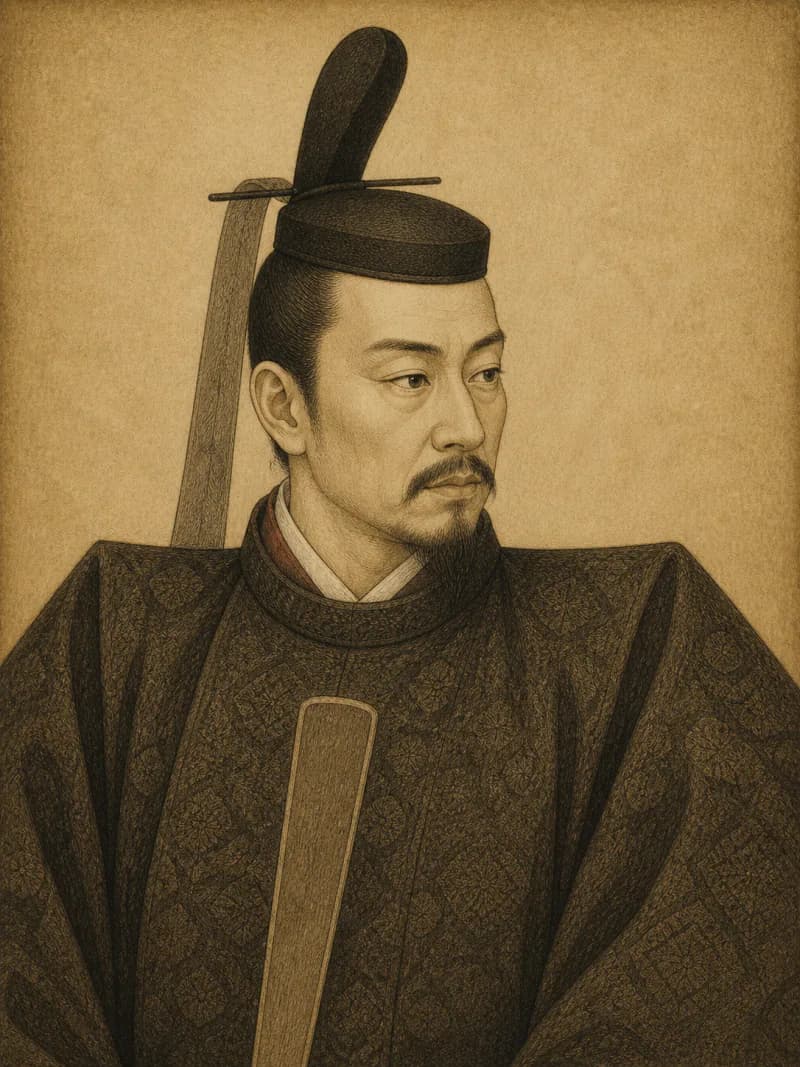
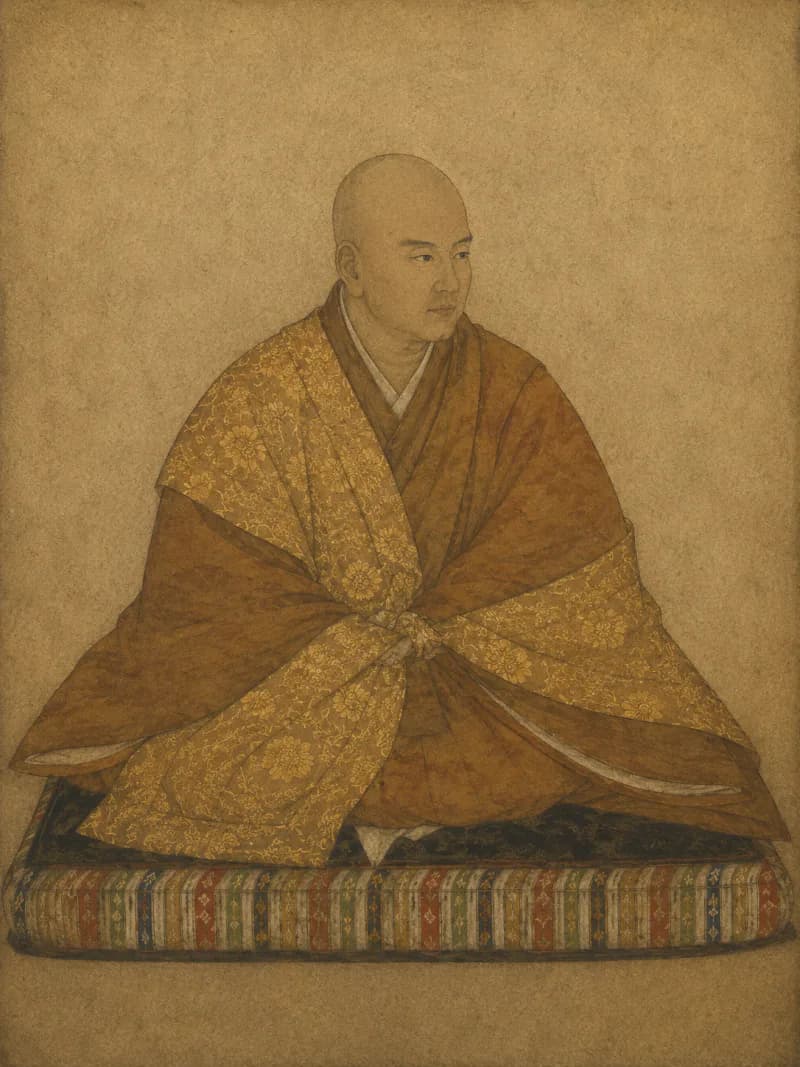
Ashikaga Yoshimitsu
Ashikaga Yoshimitsu
Third shōgun of the Muromachi shogunate; Chancellor of the Realm
SECTION I -- SUBJECT PROFILE
| Name | Ashikaga Yoshimitsu |
|---|---|
| English | Ashikaga Yoshimitsu |
| Origin | Japan |
| Lifespan | 1358–1408 |
| Gender | Male |
| Century | 14th C. |
| Clan / Role | Shogun |
| Title | Third shōgun of the Muromachi shogunate; Chancellor of the Realm |
SECTION II -- OVERVIEW
Born in 1358 (Enbun 3) as the son of the second Muromachi shōgun, Ashikaga Yoshiakira. In 1367, at ten, he inherited the family headship, and the following year became the third shōgun.
Backed by executor Hosokawa Yoriyuki and others, he rebuilt the shogunate and by around twenty had established personal rule.
In 1378 he built the lavish 'Flower Palace' shogunal residence in Muromachi, Kyoto — the origin of the name 'Muromachi shogunate.
' In 1392 (Meitoku 3), he resolved the conflict between the Northern and Southern Courts that had lasted more than fifty years, receiving the Southern Court's Emperor Go-Kameyama into the Northern Court.
In 1394 he passed the shogunal office to his son Yoshimochi and took the office of Chancellor of the Realm himself. In 1397 he built the Kitayama estate, including the Golden Pavilion (Rokuon-ji), in the Kitayama district of Kyoto — the center of the 'Kitayama culture' that fused kuge, warrior, and Zen elements.
From 1401 he opened tally trade with Ming China, and received the title 'King of Japan' from the Yongle Emperor. He died suddenly in May 1408 (Ōei 15), aged fifty-one.
He became one of the shōguns of Japanese history who most firmly grasped political power as a warrior-origin figure.
SECTION III -- CHRONOLOGY
SECTION IV -- NOTABLE STATEMENTS
“If he resides in this palace, the realm too will be like this.”
SECTION V -- FIELD NOTES
[A]The Title 'King of Japan'
In 1401, Yoshimitsu dispatched an embassy to the Yongle Emperor of Ming, and the following year received from the Yongle Emperor the title 'King of Japan, Minamoto no Dōgi.
' Cases in which a warrior shōgun was recognized as king by the Chinese emperor are rare even in Japanese history.
This title was returned by the fourth shōgun, Yoshimochi, along with the severing of Ming relations after Yoshimitsu's death; but as a symbol of Yoshimitsu's foreign policy it has remained an object of discussion into later generations.
The double character of maintaining relations with the Northern Court emperor while entering an investiture relationship with the Ming emperor shows Yoshimitsu's political flexibility.
SECTION VI -- LEGACY & IMPACT
Yoshimitsu was the shōgun who maximized the power of the Muromachi shogunate, realizing the two historical watersheds of Nanboku-chō unification and the opening of Japan-Ming trade.
The Golden Pavilion (Rokuon-ji) of the Kitayama estate symbolizes the cultural peak of the Muromachi period, and was inscribed as a UNESCO World Heritage Site (Historic Monuments of Ancient Kyoto) in 1994.
The fused form of kuge, warrior, and Zen culture established in Yoshimitsu's era is called 'Kitayama culture' and forms an important stage in Japanese cultural history.
The Ming diplomacy, including the title 'King of Japan,' continues to be one of the central points of discussion in the history of Japanese foreign relations.
SECTION VII -- MAJOR DEEDS
- [01]Unification of the Northern and Southern Courts (Meitoku Reconciliation, 1392)
- [02]Construction of the Flower Palace (1378)
- [03]Construction of the Kitayama estate and Golden Pavilion (1397)
- [04]Opening of Japan-Ming tally trade (1401)
- [05]Appointment as Chancellor of the Realm (1394)
SECTION VIII -- REFERENCE MATERIALS
PRIMARY SOURCES & ARCHIVES
- PRIMARY
Mansai Jugō Nikki
Mansai
Diary of Mansai, abbot of the Sanbō-in of Daigo-ji; transmits political conditions of the Yoshimitsu era
- SCHOLARSHIP
Ashikaga Yoshimitsu
Ogawa Takeo / Chūkō Shinsho
Standard modern study of Yoshimitsu, examining both political and cultural history
- ARCHIVE
Rokuon-ji (Kinkaku-ji)
Kita Ward, Kyoto City, Kyoto Prefecture
Core of the Kitayama estate built by Yoshimitsu; the Golden Pavilion is a World Heritage Site
Visit archive →
RECOMMENDED READING
SECTION X -- RELATED REPORTS
SA-RPT
The Meitoku Reconciliation: How Yoshimitsu Ended a Fifty-Year Division
On the fifth of the leap tenth month of 1392, in Kyoto. Emperor Go-Kameyama of the Southern Court handed the Three Sacred Treasures to Emperor Go-Komatsu, and the division of the Northern and Southern Courts that had lasted more than fifty years ended. Tracing the diplomatic settlement by the thirty-five-year-old Yoshimitsu at the peak of his power.
SA-RPT
The Golden Pavilion: The Peak of Warrior Power That Yoshimitsu Built at Kitayama
In 1397, Yoshimitsu began construction of a massive estate called the Kitayama estate in the Kitayama district of Kyoto. The core three-story pavilion (later the Golden Pavilion) was a building that stacked three layers — kuge, warrior, Zen — atop one another. The architecture speaks the political conception of Yoshimitsu.
SA-RPT
'King of Japan Minamoto no Dōgi': Why Yoshimitsu Accepted Ming Investiture
In 1402, the Yongle Emperor of Ming conferred on Ashikaga Yoshimitsu the title 'King of Japan Minamoto no Dōgi.' Tracing the background and controversy of the unprecedented event in which a warrior shōgun in Japan — a country under an emperor — was recognized as king by the Chinese emperor.