SUBJECT FILE NO. SA-0029
BUSHI ARCHIVE
Hōjō Tokimune
Hōjō Tokimune
Eighth Regent of the Kamakura Bakufu
SECTION I -- SUBJECT PROFILE
| Name | Hōjō Tokimune |
|---|---|
| English | Hōjō Tokimune |
| Origin | Japan |
| Lifespan | 1251–1284 |
| Gender | Male |
| Century | 13th C. |
| Clan / Role | Daimyo |
| Title | Eighth Regent of the Kamakura Bakufu |
SECTION II -- OVERVIEW
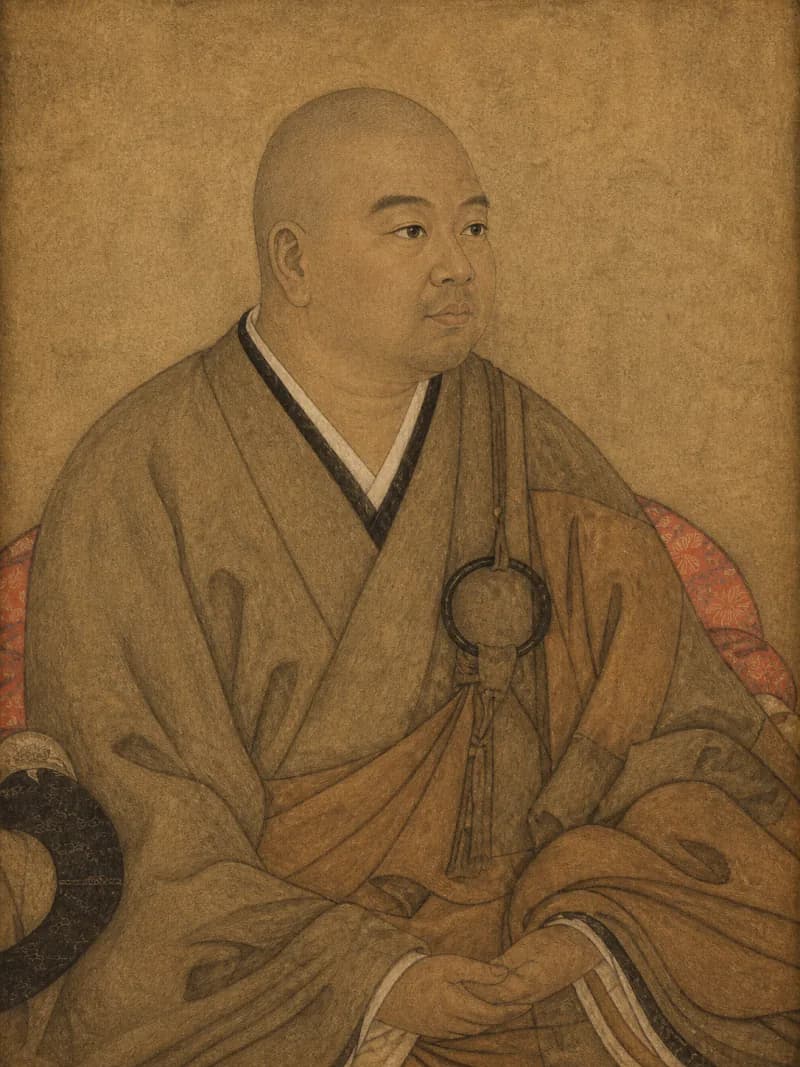
Born in 1251 as the eldest son of Hōjō Tokiyori, Tokimune became Shikken (regent) of the Kamakura Bakufu in 1268 at age seventeen, just as the first Mongol envoys reached Japan demanding submission to the Yuan dynasty.
His refusal to receive the envoys, and his execution of the second Mongol embassy in 1275, set up the two great seaborne invasions of his reign: Bun'ei in 1274 and Kōan in 1281.
The Mongol forces — combined Yuan, Korean, and South Chinese fleets — were the largest invasion forces ever to threaten the Japanese mainland.
Both were defeated, Bun'ei by a combination of Japanese resistance and a typhoon that destroyed the Mongol fleet, Kōan by a sustained two-month resistance that exhausted the invaders before another typhoon arrived.
The kamikaze — divine wind — entered Japanese consciousness as the explanation. Tokimune himself, having spent his youth on Zen meditation under his master Mugaku Sogen, met the strain of command with disciplined calm.
He died in 1284 at thirty-three, exhausted, having protected the realm but without resources to reward the warriors who had defended it.
The impossibility of paying that bill set up the Hōjō collapse fifty years later.
SECTION III -- CHRONOLOGY
SECTION IV -- NOTABLE STATEMENTS
“Throw away cowardice.”
SECTION V -- FIELD NOTES
[A]The Beheading of the Envoys
When the second Mongol embassy arrived at Hakata in 1275, Tokimune ordered the five envoys taken to Kamakura, paraded through the city, and beheaded at Tatsunokuchi.
The act was a deliberate, irrevocable repudiation of the Mongol demand. The Mongols, predictably, returned six years later with a fleet of 4,400 ships — the largest invasion force in pre-modern world history.
Tokimune's defenses, prepared in the intervening years, held them on the beaches of Kyūshū until the typhoons came.
SECTION VI -- LEGACY & IMPACT
Tokimune is the figure to whom the modern Japanese phrase 'kamikaze' historically refers. He patronized Rinzai Zen on a vast scale and founded Engaku-ji in Kamakura in 1282, the temple that would shape Japanese Zen for the next seven centuries.
His leadership in the Mongol crisis is conventionally rated, alongside the work of Saigō Takamori in 1868 and the negotiating team of August 1945, as one of the moments when Japanese sovereignty was preserved against an existential foreign threat.
The financial cost of paying off the warriors who had won the wars without conquering new territory broke the bakufu fifty years later, and his successors could not restore the Hōjō finances his survival had drained.
SECTION VII -- MAJOR DEEDS
- [01]Defeat of first Mongol invasion (1274)
- [02]Defeat of second Mongol invasion (1281)
- [03]Founding of Engaku-ji (1282)
- [04]Patronage of Rinzai Zen Buddhism
SECTION VIII -- REFERENCE MATERIALS
PRIMARY SOURCES & ARCHIVES
- PRIMARY
Mōko Shūrai Ekotoba (Illustrated Account of the Mongol Invasions)
Held by the Imperial Household Agency, Sannomaru Shōzōkan
Contemporary illustrated scroll by Takezaki Suenaga — the foremost surviving primary source on the Mongol invasions
- SCHOLARSHIP
Hōjō Tokimune and the Mongol Invasions
Murai Shōsuke / NHK Books
Standard reinterpretation of the Mongol invasions in an East Asian context (in Japanese)
- ARCHIVE
Engaku-ji
Kamakura City
Head Rinzai Zen temple founded by Tokimune to memorialize the Mongol-invasion war dead
Visit archive →
RECOMMENDED READING