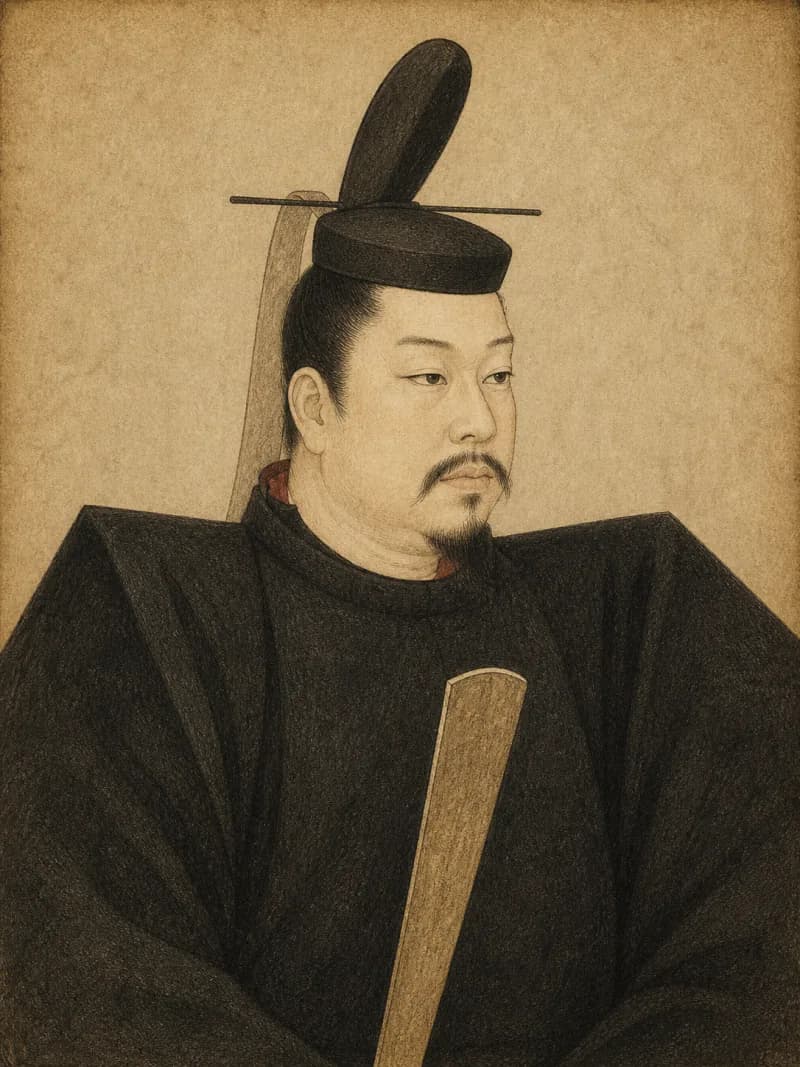
SUBJECT FILE NO. SA-0074
BUSHI ARCHIVE
Sakanoue no Tamuramaro
Sakanoue no Tamuramaro
Sei-i Taishōgun; early-Heian military commander
SECTION I -- SUBJECT PROFILE
| Name | Sakanoue no Tamuramaro |
|---|---|
| English | Sakanoue no Tamuramaro |
| Origin | Japan |
| Lifespan | 758–811 |
| Gender | Male |
| Century | 9th C. |
| Clan / Role | Shogun |
| Title | Sei-i Taishōgun; early-Heian military commander |
SECTION II -- OVERVIEW
Born in 758 (Tenpyō-hōji 2) into the Sakanoue, a family of warriors of immigrant descent. His father Sakanoue no Karitamaro also made his name as a military officer.
Excelling from a young age in the martial arts and in command, he was employed as a general in Emperor Kanmu's management of the northeast.
In 797 (Enryaku 16), he was appointed Sei-i Taishōgun and led the expeditionary army to pacify the Emishi. From 801 to 802 he pacified Isawa (the area of present-day Ōshū City, Iwate Prefecture) and brought the Emishi leader Aterui into surrender.
Tamuramaro pleaded with the court to spare Aterui's life, but was not heeded, and Aterui was executed. Tamuramaro built Isawa Castle and Shiwa Castle as bases for the management of the northeast.
Kiyomizu-dera on Higashiyama in Kyoto is said to have been founded with his involvement out of devotion to Kannon. In the Kusuko Incident of 810 (Kōnin 1), as a general on the side of Emperor Saga, he blocked the Retired Emperor Heizei's move to the eastern provinces and quelled the coup.
He died of illness in 811 (Kōnin 2). He was fifty-four. He is said to have been buried standing and in armor, and to have been made a guardian deity protecting the capital.
In later ages he was passed down as a martial deity and hero in the 'Tamura tales,' and his title of 'Sei-i Taishōgun' was taken as the highest rank of the warrior order by the warrior governments from Minamoto no Yoritomo onward.
SECTION III -- CHRONOLOGY
SECTION IV -- NOTABLE STATEMENTS
“To subdue the barbarians is not for the sake of killing. It is to bring peace to the people.”
SECTION V -- FIELD NOTES
[A]The Plea to Spare Aterui — The Conscience of a Conqueror
In 802, after a persistent campaign, Tamuramaro brought into surrender the Emishi leader Aterui, who had long repelled the court's armies.
Aterui surrendered together with his sworn friend More, leading more than five hundred people, and Tamuramaro, valuing his valor and capacity highly, brought the two men up to the capital with him.
Tamuramaro pleaded with the court to spare Aterui's life, arguing that to kill a valiant general who had surrendered was a shame for a commander, and that their strength was needed for the rule of the northeast as well.
But the court nobles, fearing that keeping the Emishi leaders alive would sow the seed of renewed rebellion, executed the two men in Kawachi Province.
It was a tragedy for both — the one who subdues and the one who is subdued. In the northeast today, Aterui is remembered as a hero of the homeland, together with Tamuramaro, his worthy rival.
At places connected to both men, monuments of reconciliation and commemoration have been raised.
SECTION VI -- LEGACY & IMPACT
Sakanoue no Tamuramaro was the first hero to lead the early-Heian management of the northeast and to embody the title of 'Sei-i Taishōgun' that later warrior governments took as their model.
Born into a family of warriors of immigrant descent, and combining martial arts, command, and devotion to Kannon, he left to later ages an ideal image of martial power and virtue.
In the pacification of the Emishi, the anecdote of his plea to spare Aterui's life conveys the conscience of a commander who was more than a mere conqueror.
In the Kusuko Incident of his later years, he quelled the coup almost without armed clash and supported the order of the early Heian period.
After his death he was revered even as an incarnation of the martial deity Bishamonten, and was passed down as a hero through the founding legend of Kiyomizu-dera and the 'Tamura tales.
' Four centuries later, when Minamoto no Yoritomo (this site's id 23) was appointed Sei-i Taishōgun as the head of a warrior government, the source of that title lay in the memory of Tamuramaro.
Kiyomizu-dera in Kyoto is said to have been founded by Tamuramaro, and the Isawa Castle ruins in Ōshū City, Iwate Prefecture, as a base for the management of the northeast — each conveys the achievements of Tamuramaro to the present day.
SECTION VII -- MAJOR DEEDS
- [01]Pacification of the Emishi as Sei-i Taishōgun (797-)
- [02]Construction of Isawa Castle and Shiwa Castle
- [03]The surrender of Aterui (802)
- [04]Involvement in the founding of Kiyomizu-dera
- [05]Quelling of the Kusuko Incident (810)
SECTION VIII -- REFERENCE MATERIALS
PRIMARY SOURCES & ARCHIVES
- PRIMARY
Nihon Kōki
Official history recording Tamuramaro's appointments, campaigns, and obituary
- SCHOLARSHIP
Sakanoue no Tamuramaro
Takahashi Takashi / Yoshikawa Kōbunkan (Jinbutsu Sōsho)
Representative modern biography of Tamuramaro
- ARCHIVE
Kiyomizu-dera
Higashiyama Ward, Kyoto City, Kyoto Prefecture
Kannon sanctuary said to have been founded by Tamuramaro
Visit archive →
RECOMMENDED READING
SECTION X -- RELATED REPORTS
SA-RPT
Sei-i Taishōgun: The First Hero Born of a Martial House, 797
In 797, Sakanoue no Tamuramaro was appointed Sei-i Taishōgun by Emperor Kanmu. Born into a family of warriors of immigrant descent, Tamuramaro became the first hero to embody the title 'Sei-i Taishōgun' that later warrior governments took as their model.
SA-RPT
The Pacification of Isawa: Tamuramaro and Aterui Face to Face, 802
In 802, Sakanoue no Tamuramaro pacified the land of Isawa and brought the Emishi leader Aterui into surrender. Tamuramaro pleaded with the court to spare Aterui's life, but was not heeded, and the brave enemy general was executed. It was a tragedy for both the one who subdues and the one who is subdued.
SA-RPT
The Kusuko Incident: The Order of Heian an Old General Protected, 810
In 810, the Kusuko Incident arose, in which the Retired Emperor Heizei and Emperor Saga were in conflict. The aged Sakanoue no Tamuramaro led the army of Emperor Saga's side, blocked the Retired Emperor Heizei's move to the eastern provinces, and quelled the coup. It was his last great task as a warrior.