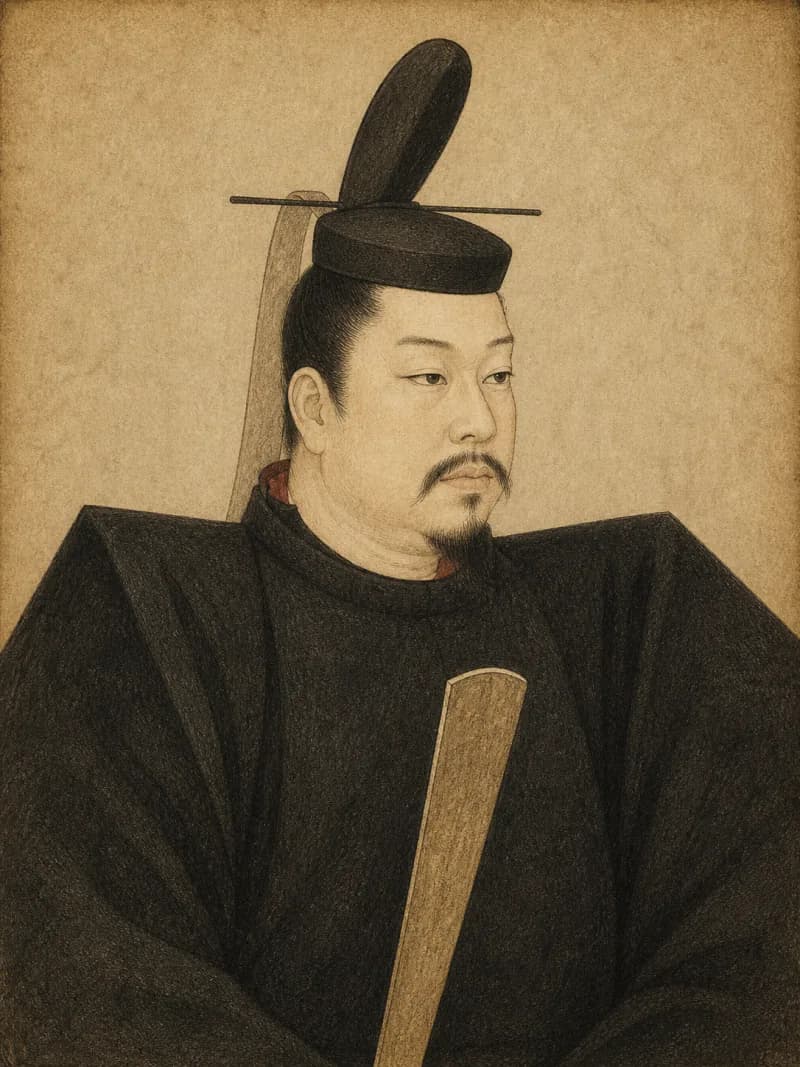
SUBJECT FILE NO. SA-0060
BUSHI ARCHIVE
Taira no Masakado
Taira no Masakado
Self-proclaimed 'New Emperor'; leader of the Kantō independence force
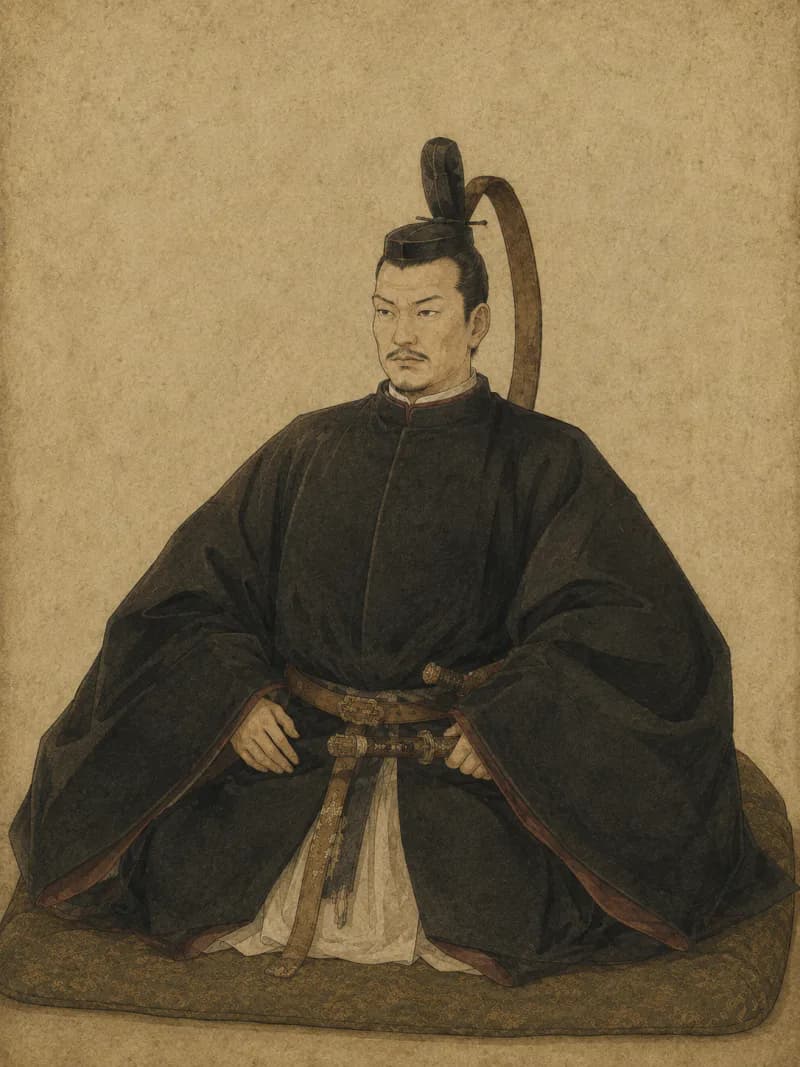
SECTION I -- SUBJECT PROFILE
| Name | Taira no Masakado |
|---|---|
| English | Taira no Masakado |
| Origin | Japan |
| Lifespan | 903?–940 |
| Gender | Male |
| Century | 10th C. |
| Clan / Role | Samurai |
| Title | Self-proclaimed 'New Emperor'; leader of the Kantō independence force |
SECTION II -- OVERVIEW
Born around 903 in the Toyoda District of Shimōsa Province (around the modern Jōsō City, Ibaraki Prefecture) as the son of Taira no Yoshimochi of the Kanmu Taira.
After his father's death, he became the young head of a warrior body with a base in Kantō Shimōsa. Kantō at the time was weakly controlled by the central government, and estate disputes within the Taira clan were frequent.
In November 939 (Tengyō 2), Masakado attacked the provincial capital of Hitachi, expelled the governor, and then subdued the provincial capitals of Shimotsuke and Kōzuke, bringing nearly all of the eight Kantō provinces under his sphere.
In the first month of 940, Masakado styled himself 'New Emperor' (Shinnō) and declared the establishment of an independent Kantō regime separate from the Kyoto court.
It was the first case in Japanese history of a declaration of state-establishment under a title other than 'emperor.' But only two months after the declaration of independence, on February 14, 940, he was defeated by the government army of Fujiwara no Hidesato and Taira no Sadamori, and was killed in Shimōsa Sashima District (around the modern Bandō City, Ibaraki Prefecture) by a stray arrow.
He is estimated to have been around thirty-eight. Masakado's head was carried to Kyoto and exposed at the Shichijō riverbed, but by later tradition the head flew and landed in Musashi Province (the modern Ōtemachi in Chiyoda Ward, Tokyo), where Masakado's Kubizuka (Head Mound) still stands.
SECTION III -- CHRONOLOGY
SECTION IV -- NOTABLE STATEMENTS
“To desire the imperial capital's land is not my intent. Independence of Kantō — this I call the New Emperor.”
SECTION V -- FIELD NOTES
[A]Masakado's Head Mound and Ōtemachi in Tokyo
By later tradition, Masakado's head, after being exposed in Kyoto, flew eastward and fell in the Toshima District of Musashi Province (the modern Ōtemachi in Chiyoda Ward, Tokyo).
At this ground, the 'Taira no Masakado Kubizuka' (Head Mound) is preserved today, occupying an unusual space among the surrounding high-rise office district.
From the modern period onward, urban development plans that tried to relocate the Kubizuka are said to have failed repeatedly, and it has become an urban legend as 'the Head Mound that curses.
' There is no corroboration in contemporary sources — it is a later tradition. But the fact itself that the Head Mound has remained for over a thousand years on the first-class ground in front of Tokyo Station does not move.
A rare case that speaks to the depth of the Masakado cult in the Kantō region.
SECTION VI -- LEGACY & IMPACT
Masakado is the figure who symbolizes the birth of the class of 'samurai' in Japanese history. As the first large-scale case of forming an independent political force based on military power outside the control of the central aristocratic government, he is positioned at the origin of the prehistory that leads to the later warrior governments (Minamoto no Yoritomo's Kamakura shogunate).
The Masakado cult in the Kantō region has left deep traces to the present — the Taira no Masakado Kubizuka in Chiyoda Ward, Tokyo; Naritasan Shinshō-ji (founded in prayer for the subjugation of the Jōhei-Tengyō rebellion).
The historical Masakado was a rebel aiming at Kantō independence, but for the later Kantō populace he was seen as a hero who defied the central regime.
Overseas as well, the name Masakado is mentioned as the origin figure of the birth of the samurai class as prehistory of the Genpei War.
SECTION VII -- MAJOR DEEDS
- [01]Subjugation of the Kantō provincial capitals (939)
- [02]'New Emperor' declaration (940) and establishment of Kantō independent regime
- [03]First large-scale organization of samurai-style armed force
- [04]Formation of the origin of the Masakado cult in Kantō
SECTION VIII -- REFERENCE MATERIALS
PRIMARY SOURCES & ARCHIVES
- PRIMARY
Shōmon-ki (Record of the Rebel Gate)
War narrative compiled close to the time of the Jōhei-Tengyō rebellion; the most important quasi-primary source for Masakado's life
- SCHOLARSHIP
Taira no Masakado and the Tengyō Rebellion
Kawajiri Akio / Kōdansha Sensho Métier
Standard modern study of Masakado, examining the political-history meaning of the rebellion
- ARCHIVE
Taira no Masakado Kubizuka
Ōtemachi, Chiyoda Ward, Tokyo
One of the traditions of Masakado's end; a distinctive space preserved in front of the modern Tokyo Station
Visit archive →
RECOMMENDED READING
SECTION X -- RELATED REPORTS
SA-RPT
The 'New Emperor' Declaration: Why Did Masakado Style Himself Emperor in 940?
In the first month of 940, Masakado of Shimōsa Province had subdued the eight Kantō provinces and styled himself 'New Emperor.' The declaration of an independent Kantō regime separate from the Kyoto court was the first attempt in Japanese history at state-establishment under a title other than 'emperor.'
SA-RPT
The Kubizuka at Ōtemachi: Why Has the Head Mound of Masakado Remained in Front of Tokyo Station for a Thousand Years?
In the Ōtemachi high-rise office district in front of Tokyo Station, the head mound of a Heian-period rebel is preserved. Tracing the millennium of a story of historical fact and tradition, and of 'the cursing Head Mound' that kept halting urban development.
SA-RPT
The Origin of the Samurai: Can Masakado Be Called the Founder of the Warrior Class?
In modern historical research, the birth of the class of 'samurai' in Japan is said to go back to the 10th-11th centuries. As the first large-scale case in that process, Masakado's name is often cited. Examining Masakado's position as the origin of the samurai.